
SX Type Cross-Bar Static Mixer
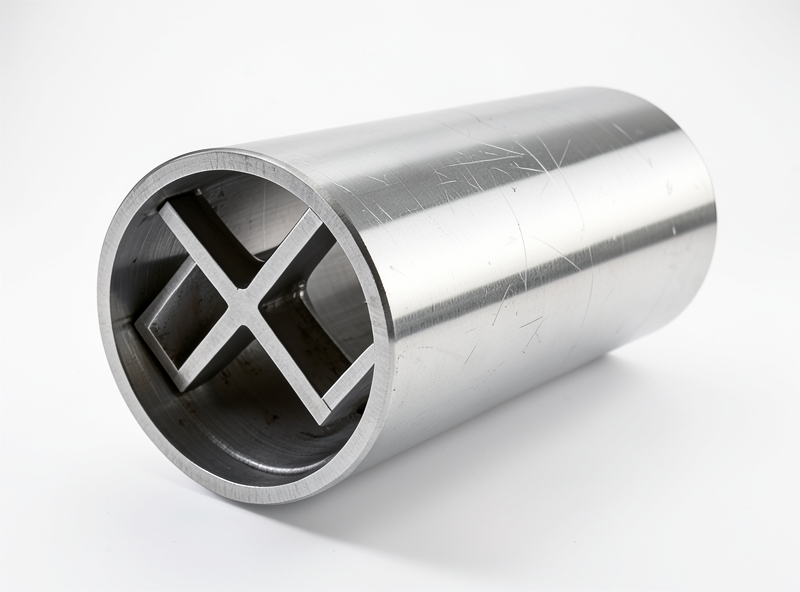
X-bar element geometry for the middle of the ywmixing range — fine enough for chemical reactions, open enough for mildly dirty service.
Product Overview
The SX type cross-bar static mixer is the most versatile model in the ywmixing catalog. Where the SV is the precision specialist and the SK is the heavy-industrial workhorse, the SX sits in the middle and handles roughly 60% of the static-mixing duties we encounter. Its internal element is a set of flat bars — typically four per element — arranged in an X pattern, rotated 90° between successive elements. The result is a series of intersecting flow channels that split, rotate, and recombine the stream in a way that achieves 2-5 μm dispersion precision while keeping the pressure drop moderate and the channel free-section around 70% of the pipe bore.
The 70% open area is the SX's defining operational advantage over the SV. In practical terms, the SX can pass suspended particles up to 3-5 mm without clogging — a level of solids tolerance that makes it the default choice for partially filtered process streams, polymer melts with trace gel particles, and food products that contain pulp or fibre inclusions. The mixer will also tolerate gas-liquid two-phase flow and modest slug flow without waterhammer-style pressure excursions, which is not true of the plate or single-X geometries.
Viscosity-wise, the SX covers 1 cP to 10,000 cP — a band that includes the vast majority of industrial chemicals, polymers, food products, and pharmaceuticals. Above 10,000 cP, the bar geometry starts to act as a complete obstruction rather than a mixer, and the SK or SH becomes the appropriate choice. Below 100 cP, the SV or SL is preferred for finer dispersion or heat-transfer enhancement respectively. Within its viscosity window, the SX delivers σX ≤ 1-5% with 4-6 elements, which is the same uniformity band as the more expensive SV plate mixer — at a meaningfully lower pressure drop.
Working Principle
An SX element is a fabricated assembly of four rectangular bars welded or mechanically fastened at the centerline to form an X when viewed along the pipe axis. The bar width is typically 0.1-0.15 times the pipe diameter, and the bar thickness is 3-6 mm for SS316L or 5-10 mm for carbon steel. The element length is normally 1.0-1.5D. Six to ten elements are stacked in a cylindrical housing, with each element rotated 45° or 90° relative to its neighbor depending on whether the design intent is X-on-X (intersecting channels) or X-on-plus (offset channels).
As fluid enters an SX element, it meets the four bars and is split into four quadrants. Each quadrant stream then has to flow around the outside of the bar and re-merge with its neighbor on the other side. The 90° rotation of the next element forces each of these quadrant streams to be split again — but in a different geometric orientation. Over 4-6 elements, the original fluid has been divided and recombined 4ⁿ times (where n is the element count), so by the sixth element the fluid has experienced 4,096 split-and-recombine events. This is the mathematical basis of the SX's σX ≤ 1-5% performance.
The hydrodynamic regime matters. In the turbulent regime (Re > 10,000), the bar wakes contribute additional mixing through eddy shedding, and the effective dispersion is finer (2-3 μm) than the laminar case. In the laminar regime (Re < 2,300), mixing is purely by stream-tube splitting and folding, giving 3-5 μm dispersions. For transitional flow, the SX still performs well but the element count should be increased by 50% to maintain the same uniformity — an adjustment that we apply during the selection process when the operating Re falls in the 2,300-10,000 range.
Technical Specifications
| Parameter | Value |
|---|---|
| Internal Structure | Crossed bars forming X-shaped channels; successive elements rotated 90° (or 45° for X-on-plus) |
| Dispersion Precision | 2-5 μm (turbulent: 2-3 μm; laminar: 3-5 μm) |
| Viscosity Range | 1 cP to 10,000 cP (medium-high) |
| Pressure Drop | Moderate; typically 2-5 velocity heads per element |
| Non-Uniformity Coefficient | σX ≤ 1-5% with 4-6 elements (6-10 for transitional Re) |
| Material Options | SS304, SS316L, Carbon Steel, PVC, PP, Hastelloy C-276 |
| Connection Types | Flange (ANSI / DIN / JIS), Threaded (NPT / BSP), Welded, Tri-Clamp |
| Temperature Range | -50°C to +300°C (metallic) / -10°C to +80°C (PVC/PP) |
| Pipe Diameter Range | DN25 to DN800 |
| Flow Rate Range | 0.2 to 1,800 m³/h (model and pipe-size dependent) |
| Clogging Risk | Moderate — open area ~70% of pipe bore; particles < 3-5 mm pass freely |
Material Options
SS316L is the default material for SX elements in chemical and pharmaceutical service. The bar geometry puts less mechanical stress on the material than the twisted SK plate, so sensitization is less of a concern — but the L-grade is still specified whenever the element-to-housing weld is in a corrosive atmosphere, because the welded joint is the long-term corrosion hotspot in 80% of field failures we have investigated. SS304 is used for less aggressive service (water treatment, food thickeners, dilute chemicals below 200 ppm chloride), typically at a 15-20% cost saving.
Carbon steel (A36 plate, A193 B7 bar stock) is the workhorse for large-diameter SX mixers above DN400 in non-corrosive service. The bars are usually 6-10 mm thick for mechanical rigidity; the housing is fabricated from rolled-and-welded plate with a 4-6 mm wall. For mildly corrosive service, the carbon steel components are hot-dip galvanized or coated with a fusion-bonded epoxy (FBE) at 200-300 μm thickness.
PVC and PP are used in the SX geometry for low-temperature chemical service where stainless would be over-specified. The plastic bars are machined from solid stock rather than fabricated, because welded plastic bars have a tendency to crack along the weld line under thermal cycling. Hastelloy C-276 is specified for hot sulfuric acid, wet chlorine, and any service where the chloride concentration exceeds 5,000 ppm — conditions that would pit SS316L within 6-12 months. The SX geometry in Hastelloy is the most expensive variant in the entire product line, but it is the only practical solution for some of the most aggressive chemistries in chlor-alkali and metal-refining plants.
Installation Methods
The four standard connection types apply to the SX, with the same selection logic as for the other models. Flanged connections (ANSI B16.5 Class 150, DIN PN16, JIS 10K) are the most common — specified for DN50 and above whenever the mixer is to be removed for periodic inspection. The flange bolts are torqued in a star pattern to avoid warping the housing, and the gaskets are replaced at every disassembly.
Threaded connections (NPT or BSP) are used for the small end of the SX range (DN25-DN50), typically in skid packages and OEM equipment where the mixer is supplied pre-installed and the skid is connected to the process piping by a single set of threaded couplings. Welded connections are preferred for permanent installations, especially in high-pressure service (above 16 bar) or high-temperature service (above 200°C) where a flanged joint would be a leak risk.
Tri-clamp connections (ISO 2852 or DIN 32676) are mandatory for food, dairy, beverage, and pharmaceutical SX installations. The mixer housing and elements are specified to Ra ≤ 0.8 μm, and the design is fully drainable with no dead legs. CIP cleaning is straightforward — the open X-bar geometry allows the cleaning fluid to reach every surface, and the absence of crevices at the bar-to-housing weld (which is ground flush and polished in sanitary SX mixers) eliminates the biofilm risk that is the most common failure mode in pharmaceutical mixers from other suppliers.
For all installation types, the SX requires a minimum straight-pipe run of 2-3D upstream and 2-3D downstream. The bar geometry is moderately tolerant of inlet velocity-profile distortion, so 2D is acceptable for clean service; 3D is required when the upstream pipe has elbows or tees within 5D of the mixer inlet.
Typical Applications
Medium-viscosity chemical reactions. Many industrial reactions — sulfonation, nitration, neutralization, condensation — need a feed stream of two reagents blended to within σX ≤ 2% before they enter the reactor. The SX mixer is installed in the feed line immediately upstream of the reactor, and the residence time through the mixer is set to 0.3-1.0 seconds. For a 1,000 cP reagent at 5 m/s in a DN50 line, the SX provides the required uniformity in a mixer length of 250 mm — replacing a 5-meter agitated pre-mix tank and saving both capital cost and floor space.
Polymer fluid mixing. Polymer solutions used in paper manufacturing, textile sizing, and water treatment have viscosities of 100-5,000 cP depending on concentration. The SX is used to dilute high-concentration polymer emulsion (typically 30-50% active) into the process water at 0.1-1.0% concentration. The mixer's open geometry prevents the polymer from shearing, which would reduce its molecular weight and its functional performance (flocculation, sizing, or coating strength).
Food additive blending. Beverage manufacturers, sauce producers, and dairy processors use SX mixers to incorporate colors, flavors, vitamins, and stabilizers into the base product. A typical application is vitamin fortification of fruit juice — a 1% vitamin premix is dosed into the juice stream at the 50 m³/h rate, and the SX delivers coefficient of variation below 1.5% in a single pass. The sanitary tri-clamp design allows the mixer to be CIP-cleaned in place between flavor-change campaigns.
Large flow rate processes. The SX is produced in sizes up to DN800, which translates to flow rates above 1,500 m³/h at typical process velocities. Typical installations include refinery wastewater neutralization (DN300-DN500), pulp-mill bleach chemical blending (DN200-DN400), and large-scale effluent treatment plants (DN400-DN800). In these large sizes, the SX is segmented for shipping and field-assembled inside the housing — a procedure our installation team has refined to under 4 hours for a DN600 unit.
High-viscosity resin blending. Unsaturated polyester resins, vinyl ester resins, and epoxy resins (viscosity 500-8,000 cP at 25°C) are blended with catalysts, accelerators, pigments, and fillers before being used in composite manufacturing. The SX mixer handles these viscosities without the high pressure drop that would force a larger pump, and the open geometry accommodates the trace gel particles that are common in bulk resin deliveries.
Model Comparison
| Parameter | SX | SV | SK | SH | SL |
|---|---|---|---|---|---|
| Internal Structure | Crossed bars | Corrugated plates | Helical twist | Dual-channel helical | Single-X bars |
| Dispersion Precision | 2-5 μm | 1-2 μm | ≤ 10 μm | 1-2 mm | Medium |
| Max Viscosity (cP) | 10,000 | 100 | 1,000,000 | 1,000,000 | 10 (or polymer) |
| Pipe Diameter | DN25-DN800 | DN15-DN1000 | DN15-DN500 | DN15-DN200 | DN15-DN600 |
| Clogging Risk | Moderate | High | Lowest | Moderate | Low |
| Best For | Mid-range | Fine dispersion | High-viscosity | High-viscosity clean | Heat transfer |
Frequently Asked Questions
The SX handles kinematic viscosities up to 10,000 cP. This covers most polymer solutions, mid-viscosity resins, food syrups, and chemical intermediates — a band roughly 100× wider than the SV plate mixer but well below the 10⁶ cP ceiling of the SK helix.
SX elements are X-shaped crossed bars mounted in a single housing. SH elements are dual channels with internal helical vanes and redistribution chambers between elements. SH produces coarser dispersions (1-2 mm) for high-viscosity clean media; SX produces finer dispersions (2-5 μm) for medium-viscosity service.
Yes — the crossed-bar geometry leaves a free cross-section of about 70% of the pipe bore. Particles below 3-5 mm will pass without clogging, which is the practical limit for most polymer and food applications that need fine dispersion but cannot be filtered.
Most chemical reactor-feed applications use 4-6 SX elements to reach σX ≤ 1-5%. For competitive consecutive reactions where selectivity matters (e.g. sulfonation, nitration), up to 10 elements are specified to minimize local concentration gradients.
Yes. The SX is produced in sizes up to DN800. Above DN600, the bars are made in two or more segments that are bolted together inside the housing to allow field assembly through standard pipe flanges.
Related Products
SV Type Corrugated Plate Static Mixer
Multi-layer plates for sub-5μm dispersion of low-viscosity fluids.

SK Type Helical Static Mixer
180°/270° twist for high-viscosity fluids up to 106 cP.

SH Type Dual-Channel Static Mixer
For high-viscosity clean media and precision color blending.

SL Type Single-X Static Mixer
Single X-units for heat transfer and low-viscosity blending.