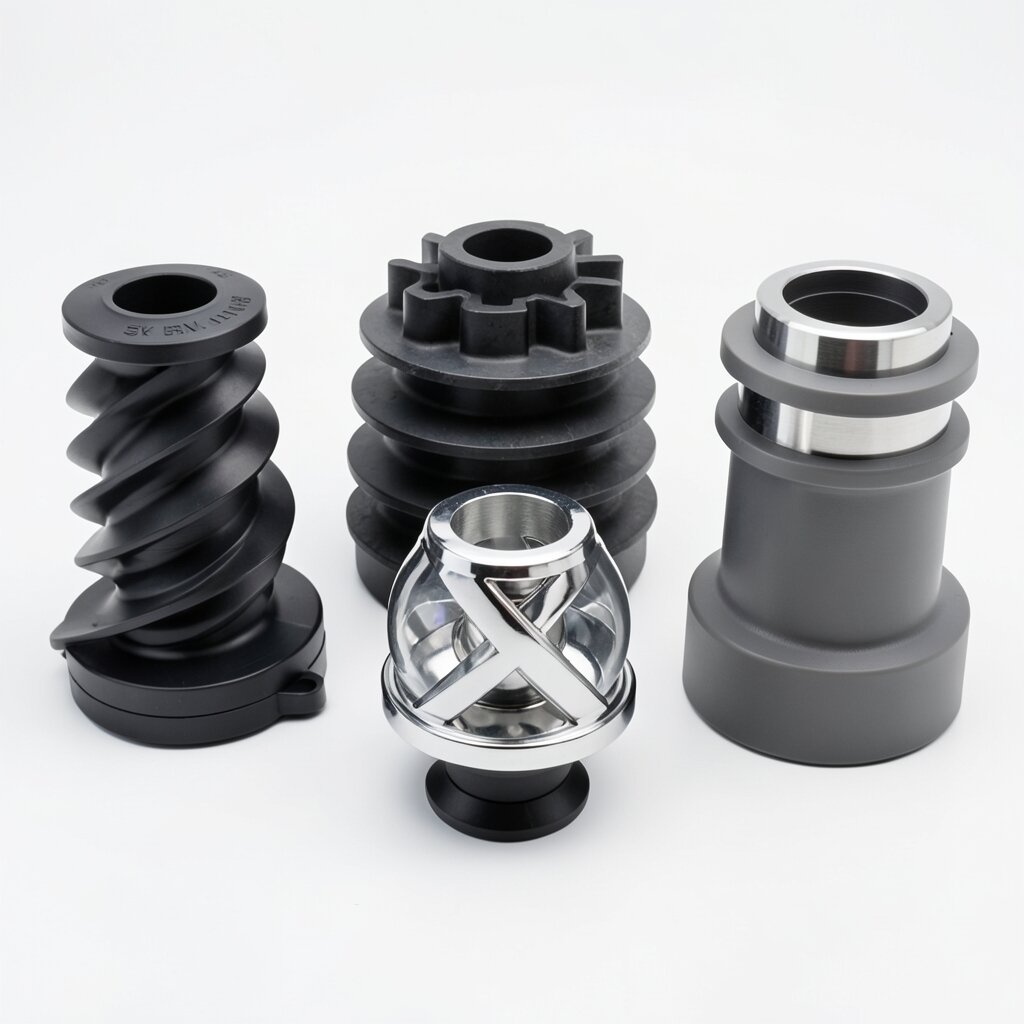
PVC Color-Mixing Nozzle
Static Mixer Nozzle for Injection Molding
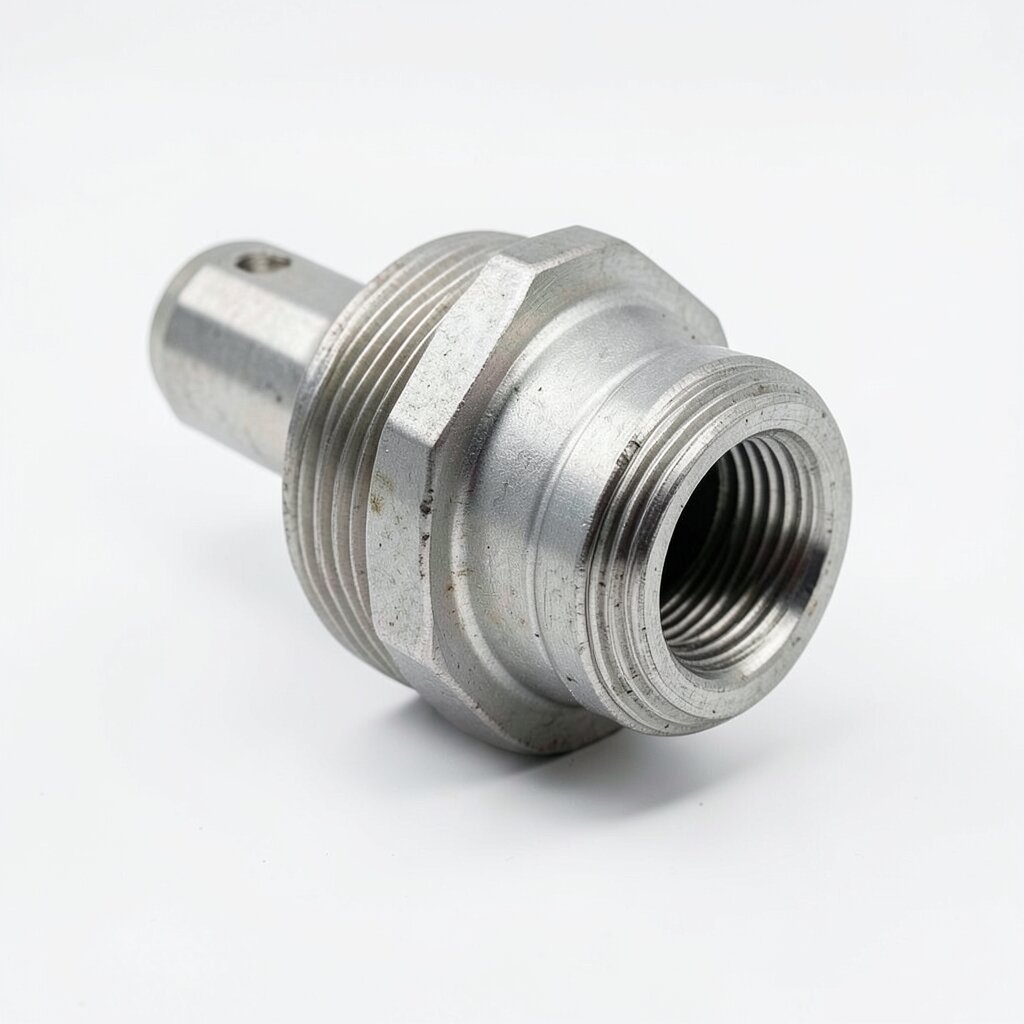
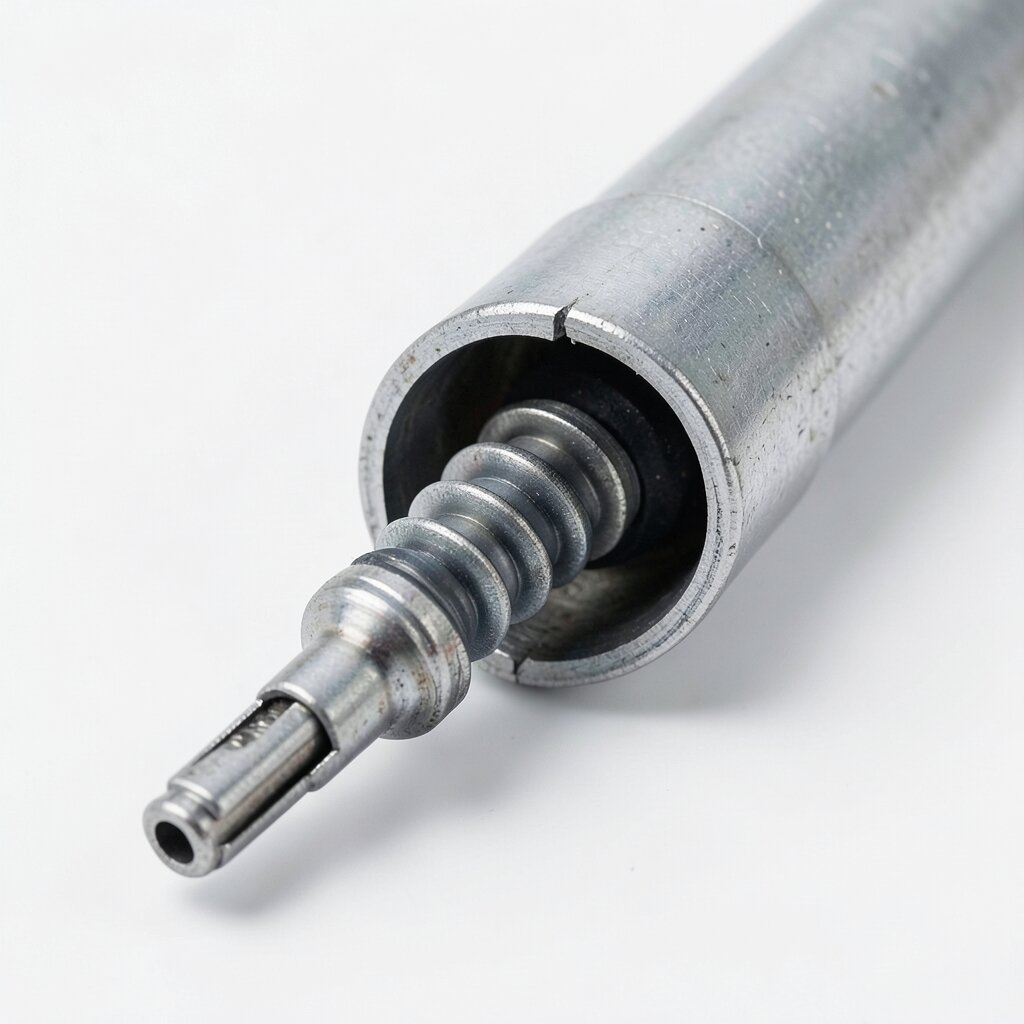
Static-mixing nozzle that homogenizes masterbatch colorant into PVC melt directly on the injection molding machine, eliminating streaking and lowering colorant dosage by 10-30%.
Product Overview
The PVC color-mixing nozzle replaces the standard injection nozzle on molding machines processing rigid and flexible PVC compounds. It integrates four to eight helical mixing elements into a compact nozzle body mounted between the machine barrel and the mold sprue bushing. As the PVC melt flows through the nozzle, the element geometry repeatedly divides and re-orients the flow, breaking up masterbatch agglomerates that survive the screw plasticizing stage. The result is a uniform color distribution at the gate — visible immediately as the elimination of tiger-striping, weld-line color bands, and speckled defects that plague conventionally molded PVC parts. Because mixing occurs in the melt channel rather than by increased screw back-pressure, the nozzle also reduces colorant consumption: processors routinely lower masterbatch loading from 2-3% to 1.5-2% while achieving equal or better color consistency.
Why PVC Requires a Dedicated Nozzle Design
PVC is the most thermally sensitive commodity thermoplastic. Its degradation temperature (around 200°C for rigid formulations, 160-180°C for plasticized grades) sits dangerously close to its processing temperature window. A poorly designed mixing device creates dead zones where stagnant melt dwells, cross-links, and releases hydrogen chloride — turning the nozzle into a scorch source that contaminates every subsequent shot. The ywmixing PVC nozzle avoids this with three design commitments. First, every internal corner is radiused and the element edges are chamfered so there are no stagnant pockets. Second, the element pitch and twist angle are tuned for PVC melt rheology (power-law index n ≈ 0.3-0.5, high melt viscosity of 10³-10⁴ Pa·s) so that mixing energy is delivered as distributive shear rather than intensive shear heating. Third, the flow channel is kept short — typically 5-6D total length — to limit residence time to under 10 seconds even at slow shot cycles.
Construction and Materials
The nozzle body is machined from chrome-vanadium alloy steel and nitrided to 900 HV for wear resistance against glass-filled PVC compounds, then the bore is chrome-plated to 0.02-0.03 mm to prevent corrosive attack by HCl released during processing. The mixing elements are fabricated from the same alloy with a mirror-polished surface finish (Ra ≤ 0.4 μm) to discourage melt adhesion. For machines running plasticized PVC with low filler loading, a hard-anodized aluminum version cuts nozzle weight by 40%. Every nozzle is supplied with a draw-in thread matched to the machine spindle (M80×2, M95×2, M110×2, or M125×2 per Euromap 11/13 nozzle standards) and a radiused tip (R5-R15) compatible with the sprue bushing seat. Optional hardened-tip inserts extend service life beyond 2 million cycles on abrasive compounds.
Element Geometry and Mixing Performance
Standard configurations use six SK-style helical elements with 180° twist per element, adjacent elements rotated 90° to create alternating left/right flow divisions. This produces a theoretical 2⁶ = 64 flow divisions per pass. For thin-wall parts (wall thickness below 1.5 mm) where streak tolerance is minimal, an eight-element configuration raises divisions to 256 and cuts the coefficient of variation of color intensity to below 2% at the gate. The measured pressure drop across the nozzle is 3-8 MPa depending on flow rate and PVC grade — a penalty that is recovered in practice because the screw can run 5-10% faster when color distribution no longer depends on intensive screw mixing. Thermal uniformity also improves: the nozzle's continuous melt flow eliminates the temperature stratification that develops in the barrel, reducing gate blush and improving surface gloss consistency shot to shot.
Technical Specifications
| Parameter | Value |
|---|---|
| Body Material | Chrome-vanadium alloy steel, nitrided 900 HV, bore chrome-plated 0.02-0.03 mm |
| Element Material | Alloy steel, mirror polish Ra ≤ 0.4 μm; optional hard-anodized aluminum body |
| Connection Thread | M80×2, M95×2, M110×2, M125×2 (Euromap 11/13) |
| Melt Channel Diameter | DN20 to DN80 (nozzle bore 20-80 mm) |
| Elements per Nozzle | 4 / 6 / 8 (SK helical, 180° twist, 90° cross-rotation) |
| Total Nozzle Length | 5D to 6D (e.g., 250-300 mm at DN50) |
| Melt Temperature Rating | 150-250°C continuous (PVC processing window) |
| Pressure Drop | 3-8 MPa at typical PVC shot rates |
| Flow Divisions | 2⁶ = 64 (6 elements); 2⁸ = 256 (8 elements) |
| Color Mixing Precision | σX ≤ 2% (8-element, thin-wall parts) |
| Tip Radius | R5-R15, hardened tip insert optional |
| Service Life | 1-2 million cycles; 2M+ with hardened tip |
Frequently Asked Questions
No. Although the nozzle adds 3-8 MPa pressure drop, the screw can run faster when intensive mixing is no longer required. Most molders report neutral or slightly shorter cycles after installation.
Typically yes — most customers drop from 2-3% to 1.5-2% masterbatch loading while achieving equal color consistency, saving 20-30% on colorant cost.
The nozzle uses standard Euromap nozzle threads (M80/M95/M110/M125) and radiused tips, so it mounts on virtually all injection molding machines. Provide your thread size and tip radius when ordering.
For color changes, purge with cleaning compound. For maintenance, disassemble and inspect elements every 500,000 cycles; PVC processors typically clean elements during scheduled barrel maintenance.
Related Products