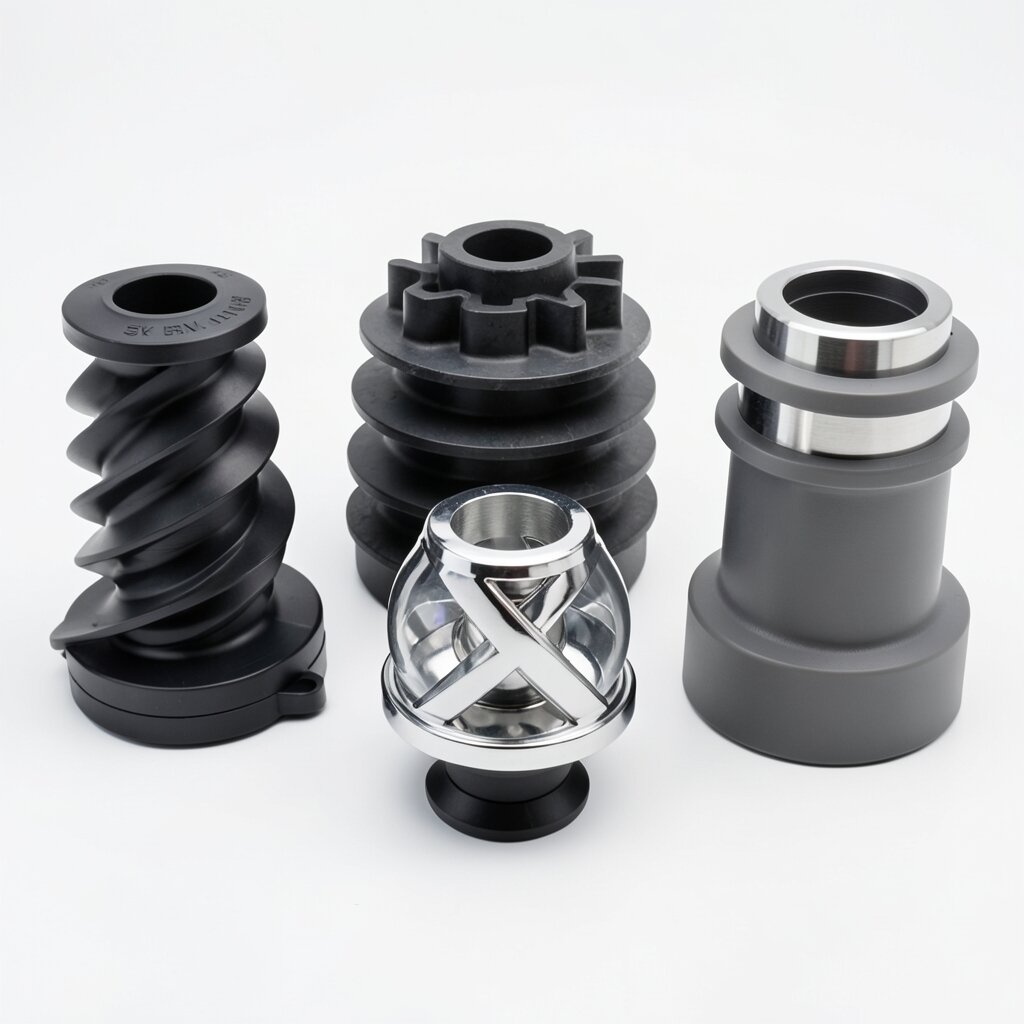
SV Type Corrugated Plate Static Mixer
Corrugated Plate Static Mixer
Multi-element plate mixer for sub-5μm dispersion in low-viscosity service — gas-gas blending, fine emulsification, and chemical dosing in water treatment.
Product Overview
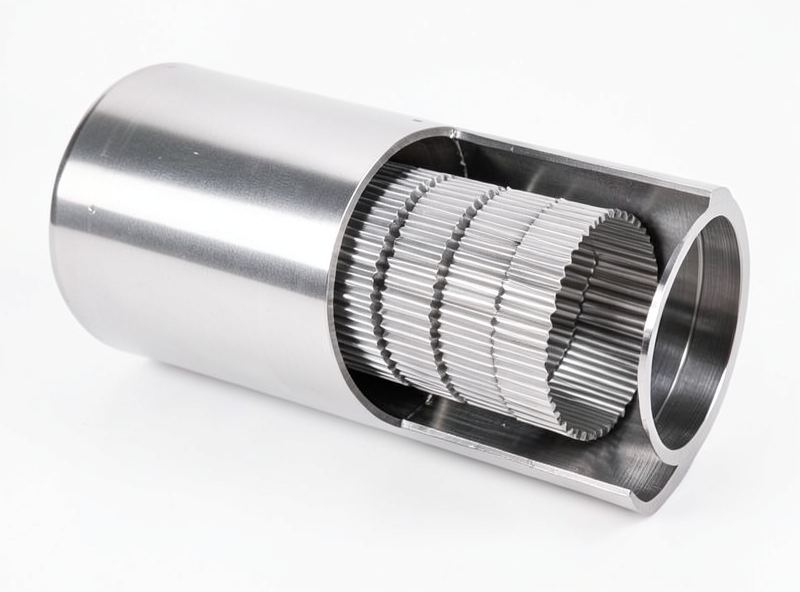
The SV type corrugated plate static mixer is the highest-precision model in the ywmixing product line. Its internal geometry consists of multiple flat plates that have been press-formed into a sinusoidal corrugation, then stacked crosswise inside a cylindrical shell. Adjacent plates are rotated 90° relative to one another, so the flow is forced to split, rotate, and recombine as it passes through each successive layer. This repeated radial-and-axial redistribution is what produces the mixer's signature 1-2 μm dispersion precision — finer than any of the other four models in our range.
The SV type is the model of choice when the process involves clean, low-viscosity fluids where the engineer must hit a tight coefficient of variation, usually σX ≤ 1-5%, in a compact footprint. It is the smallest of our mixers in terms of free channel width (typically 2-5 mm between adjacent corrugations), which is also its main limitation: the unit must not see suspended solids above 0.5 mm, fibers, or viscosities above 100 cP. Used within those limits, the SV delivers the best mixing efficiency per unit length of any inline static mixer on the market, with typical L/D ratios of 5-12 and pressure drops 30-50% lower than equivalent-duty orifice-plate or perforated-element designs.
Across the five-model family (SV, SK, SX, SH, SL), the SV occupies the top end of the dispersion-precision scale and the bottom end of the viscosity scale. Where the SK and SH handle viscosities up to 1,000,000 cP and the SX covers the middle ground, the SV is reserved for clean, low-μ, high-precision work — gas blending, fine chemical dosing, and the production of tight emulsions where droplet size directly controls downstream product quality.
Working Principle
Inside the SV housing, a series of pressed metal plates (typically 0.5-1.0 mm thick for SS316L, up to 3 mm for carbon steel) are stacked with their corrugations rotated 90° to one another. The corrugation pitch is usually 5-15 mm, with a depth of 1.5-4 mm; these dimensions are selected to keep the Reynolds number inside the plates within the desired mixing regime while maintaining a free cross-section of 60-75% of the pipe bore.
As the two (or more) feed streams enter the mixer, the first corrugated plate splits each stream into two sub-streams along the corrugation valleys. The 90° rotation of the next plate then turns each sub-stream 90°, forcing it to cross the channels of the previous plate. This is repeated 4-8 times along the housing length. The net effect over the full mixer length is several hundred split-and-recombine events — by the time the fluid exits the last plate, the residence-time distribution has narrowed to within σX ≤ 1-5% of the theoretical ideal.
Two operating regimes are relevant. In the turbulent regime (Re > 10,000), the dominant mixing mechanism is eddy breakup of the laminar sub-layers, giving droplet sizes in the 1-2 μm range. In the laminar regime (Re < 2,300), mixing is driven by the repeated folding of stream tubes, which produces somewhat coarser dispersions (3-5 μm) but still acceptable for most low-μ applications such as polymer solution make-up or acid-base neutralization. For Re between 2,300 and 10,000 (transitional), the SV still performs well but the residence time should be increased by selecting a housing with 1-2 additional elements.
Technical Specifications
| Parameter | Value |
|---|---|
| Internal Structure | Multi-layer corrugated plates stacked crosswise (90° rotated) in cylindrical housing |
| Dispersion Precision | 1-2 μm (turbulent regime) / 3-5 μm (laminar) |
| Viscosity Range | ≤ 100 cP (kinematic) |
| Pressure Drop | Low to moderate; typically 0.1-0.5 bar across 8 elements at 2 m/s |
| Non-Uniformity Coefficient | σX ≤ 1-5% depending on L/D and element count |
| Material Options | SS304, SS316L, Carbon Steel, PVC, PP, Hastelloy C-276 |
| Connection Types | Flange (ANSI / DIN / JIS), Threaded (NPT / BSP), Welded, Tri-Clamp |
| Temperature Range | -50°C to +300°C (metallic) / -10°C to +80°C (PVC/PP) |
| Pipe Diameter Range | DN15 to DN1000 |
| Flow Rate Range | 0.1 to 2,500 m³/h (model and pipe-size dependent) |
| Clogging Risk | High — channel width 2-5 mm; particulate must be < 0.5 mm |
| Internal Structure | Corrugated plates Helical twist Crossed bars Dual-channel helical Single-X bars |
| Dispersion Precision | 1-2 μm ≤ 10 μm 2-5 μm 1-2 mm Medium |
| Max Viscosity (cP) | 100 1,000,000 10,000 1,000,000 10 (or polymer) |
| Pipe Diameter | DN15-DN1000 DN15-DN500 DN25-DN800 DN15-DN200 DN15-DN600 |
| Clogging Risk | High Lowest Moderate Moderate Low |
| Best For | Fine dispersion High-viscosity Mid-range High-viscosity clean Heat transfer |
Frequently Asked Questions
SV type mixers are designed for low-viscosity media with kinematic viscosity ≤100 cP. Above this threshold, the small flow channels between corrugated plates cause excessive pressure drop and risk of incomplete mixing.
Standard SV housings contain 4 to 8 corrugated plate elements. The actual number is calculated from the target coefficient of variation (typically σX ≤ 1-5%) and the L/D ratio, which usually falls between 5 and 12.
No. The plate channel width is typically 2-5 mm, so any particulate above 1 mm will cause clogging. For slurries or fibrous media, use SK or SX type mixers with open geometry.
Plates are available in SS304, SS316L, carbon steel with PTFE coating, PVC, PP, and Hastelloy C-276. The housing follows the same material options. For highly corrosive acids above 10% concentration, Hastelloy is recommended.
SV mixers are installed as in-line units using flanged, threaded, welded, or tri-clamp connections. The mixing length adds 5-12 pipe diameters to the run, so straight upstream and downstream pipe sections of at least 3D each are required.
Related Products