Product Overview

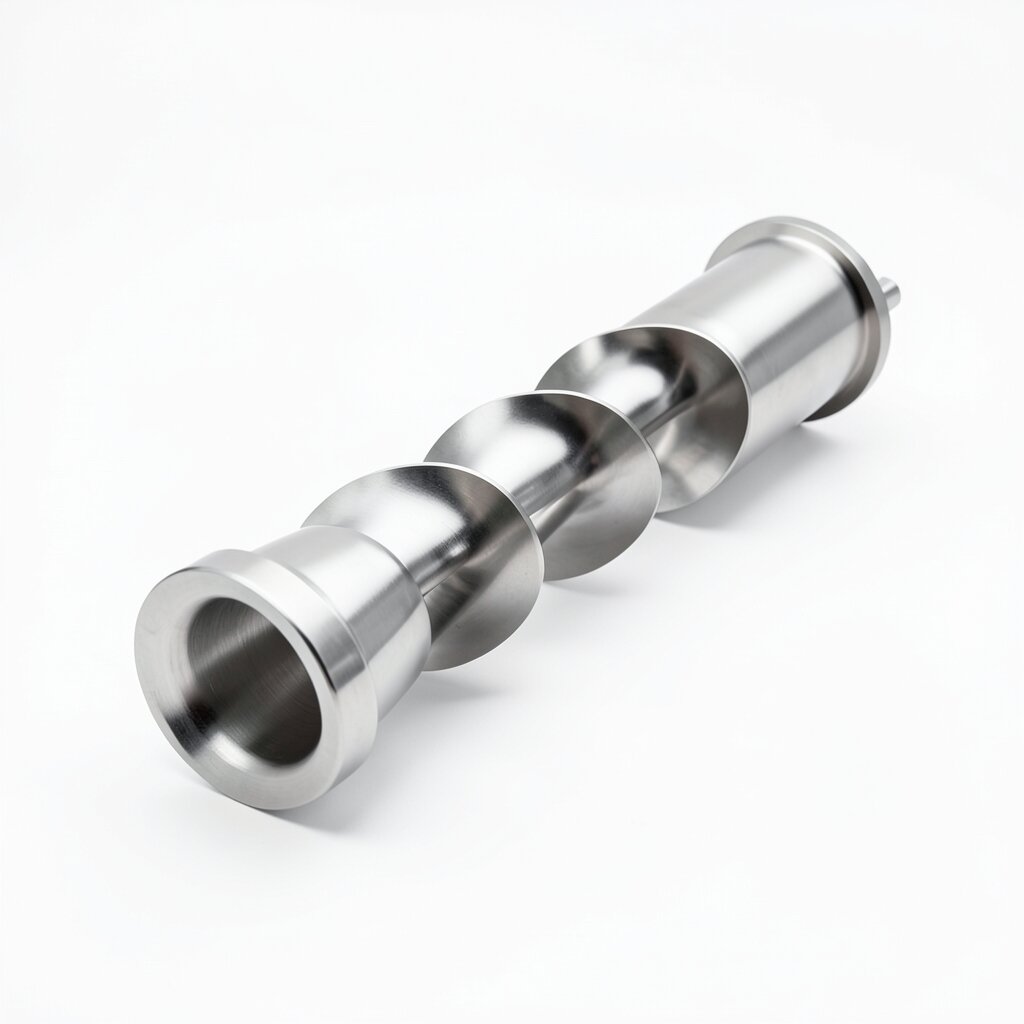
The SLB type long helical static mixer is the low-pressure-drop specialist of the ywmixing product line. Inside a cylindrical housing, a single helical element — typically with a pitch of 1.5-3.0 pipe diameters per turn and a total length of 8-15 pipe diameters — imparts a gentle, continuous swirl to the process flow. The element is fabricated from sheet metal (typically 1.0-2.0 mm thick for SS316L, 2.0-4.0 mm for carbon steel) twisted to the specified helix angle, with edge profiles designed to minimize flow separation. The result is a mixer that delivers 3-8 μm dispersion precision with σX ≤ 3% while losing only 0.03-0.08 bar at 1.5 m/s water service in a DN100 housing — about 5-10× lower pressure drop than the equivalent SV corrugated plate mixer.

This combination of fine dispersion and very low ΔP makes the SLB the mixer of choice for processes where the pumping-energy penalty is a constraint: gravity-flow lines, long transfer pipelines, in-pipe heat-exchanger and reactor cooling circuits, and any service where the system pressure budget is already allocated to other equipment. It is also the preferred model for viscous service up to 100,000 cP, where the long-helix geometry provides smooth flow transition and avoids the flow separation that limits the more aggressive SK mixer above 1,000,000 cP.

Across the ywmixing family (SV, SK, SX, SH, SL, plus the new SD, SDB, SLB), the SLB occupies a unique position: it is the only model that approaches the SV's 1-2 μm dispersion precision without paying the SV's pressure-drop penalty, while still handling the medium-viscosity range that the SV cannot reach. For a process engineer sizing a low-ΔP continuous blending line, the SLB is typically the first mixer considered before falling back on the SD or SDB plate mixers or the SK helical-twist mixer.

Working Principle

The mixing action of the SLB is generated by the continuous swirl imparted to the flow as it traverses the long helical element. Unlike the short-helix SK mixer — which forces the flow through 180°/270° turns every 1-1.5 pipe diameters and produces intense but localized radial mixing — the SLB's gentle, progressive twist distributes the mixing over the full element length. At any cross-section, the flow has both an axial component (carrying it down the pipe) and a tangential component (imparted by the helix), and the radial concentration profile is continuously reworked by the secondary swirl as the fluid advances.

Quantitatively, the tangential velocity at the housing wall is vθ = vaxial · tan(α), where α is the helix angle. For the standard SLB geometry (1.5-3.0 pipe diameters per turn), α is in the range 12-25°, giving vθ/vaxial = 0.21-0.47. This ratio is the dimensionless swirl number S = vθ/vaxial of the geometry, and it controls the radial mixing rate. Higher S (tighter helix) produces faster mixing at higher ΔP; lower S (looser helix) produces gentler mixing at lower ΔP. The SLB is biased toward lower S (1.5-2.0 D per turn is most common) to keep ΔP minimal while still meeting the σX ≤ 3% target over an 8-15D housing length.

Pressure drop across the SLB is governed by Δp = ½·ρ·v²·K·(L/D), where the loss coefficient K per unit L/D is in the range 0.4-0.8 for the standard helix geometry. This compares to K = 1.5-2.5 per plate for the SD and K = 1.2-2.0 per SK element. For a 10D housing, the total Δp at 1.5 m/s water service in a DN100 unit is approximately 0.04-0.08 bar — low enough that the SLB can be installed in gravity-flow lines and long transfer pipelines without requiring pump upgrade. In the turbulent regime (Re > 4,000), the SLB achieves 3-8 μm dispersion precision with σX ≤ 3%. In the laminar regime (Re < 2,300), the mixing is driven by the secondary flow pattern (Dean vortices in the curved flow) and the dispersion coarsens to 8-15 μm with σX in the 5-8% range.

Two additional effects make the SLB particularly useful beyond simple blending. First, the swirl component augments radial heat transport; the inside-to-outside heat-transfer coefficient is 1.5-2.5× higher than an empty pipe at the same flow rate. This makes the SLB an effective in-pipe heat-transfer enhancement device for reactor cooling and viscous-fluid heating. Second, the swirl persists for 3-8 pipe diameters downstream of the housing, so the mixing continues to develop in the downstream pipe — a useful effect when the immediate downstream fitting (a valve, an instrument, or a reactor inlet) would otherwise see an unmixed stream.

SLB Type Static Mixer Structure

Technical Specifications

ParameterValue
Internal StructureSingle long-helix element, 1.5-3.0 pipe diameters per turn, total length 8-15D
Helix Angle12-25° (standard); custom 8-35° available
Element Count1 (continuous helix); occasionally 2 in series for extended L/D
Housing L/D8-15 (typical); 6-20 (extended)
Dispersion Precision3-8 μm (turbulent) / 8-15 μm (laminar)
Viscosity Range1-100,000 cP (kinematic), 10⁵ cP upper limit
Pressure Drop0.03-0.08 bar typical at 1.5 m/s water in DN100; lowest in product line
Loss Coefficient K (per L/D)0.4-0.8 (standard helix); 0.2-0.4 (low-S variant)
Non-Uniformity CoefficientσX ≤ 3% (turbulent design) / σX 5-8% (laminar)
Heat-Transfer Augmentation1.5-2.5× over empty pipe at same Re
Downstream Swirl Persistence3-8 pipe diameters
Material OptionsSS304, SS316L, Carbon Steel, PP
Connection TypesFlange (ANSI / DIN / JIS), Threaded (NPT / BSP), Welded
Temperature Range-50°C to +300°C (metallic) / -10°C to +80°C (PP)
Pipe Diameter RangeDN15 to DN500
Flow Rate Range0.1 to 1,500 m³/h (model and pipe-size dependent)
Clogging RiskLow; channel width equal to housing bore, particulate tolerance 3-5 mm

Material Options

The SLB helix element is available in four standard material grades, with the housing matched to the element selection unless otherwise specified. SS304 (1.4301, AISI 304) is the default for potable water, dilute inorganic chemicals, and food-grade service at temperatures up to 80°C. It tolerates chloride concentrations up to 200 ppm continuous without pitting risk and is the lowest-cost stainless option. For most municipal water-treatment, food-processing, and dilute-chemical applications, SS304 SLB helices are the standard.

SS316L (1.4404, AISI 316L) is the workhorse for chemical industry service. The low-carbon formulation eliminates sensitization at the helix-to-end-ring welds and the structural support welds that hold the element centered in the housing, and the improved chloride resistance (1,000 ppm continuous) makes it suitable for chlor-alkali plant service, brackish-water desalination, and most mineral-acid applications. SS316L is also the standard for pharmaceutical and biotechnology installations where the surface finish must be ≤ Ra 0.8 μm for CIP-cleaning validation. The SLB is particularly well suited to pharmaceutical service because the smooth, continuous helix geometry has no crevices or stagnation zones where product residue can accumulate.

Carbon steel (A516 Gr.70 plate / SA-106 pipe) is the most common material for large-diameter SLB mixers in DN200-DN500 service, particularly in oil-and-gas pipeline service, mineral processing, and large-scale municipal water transmission where the cost premium for stainless would be prohibitive. Carbon-steel SLB helices are usually supplied bare (without internal lining) for hydrocarbon service, or with an internal rubber or PTFE lining for chemical service. The rubber lining is bonded to the helix during vulcanization and is rated for 60-80°C continuous service depending on compound. For higher temperatures, PTFE or ETFE lining is used.

PP (polypropylene, homopolymer) is used for corrosive inorganic service (HCl, H2SO4, NaOCl) at temperatures up to 80°C. The mechanical strength of PP limits its use to DN200 maximum and pressures below 6 bar. PP SLB helices are widely used in laboratory and pilot-plant installations, in chemical skid packages, and in small-bore chemical dosing lines where the temperature is below 80°C and the pressure rating is adequate. For temperatures above 80°C in corrosive service, metallic construction (SS316L or Hastelloy) is mandatory regardless of line size.

Gasket and seal selection follows the housing material. EPDM is standard for water, dilute bases, and food service; FKM (Viton) for hydrocarbons, oils, and most organic solvents; PTFE envelope gaskets for high-temperature acid service above 150°C; and graphite-clad stainless for steam and high-temperature hydrocarbons above 200°C. For PP housings, EPDM or FKM O-rings are used; PTFE is preferred for chemical dosing where the gasket will see prolonged contact with the process fluid.

Installation Methods

SLB mixers are installed in-line in the process pipe using one of three standard connection types. Flanged connections (ANSI B16.5 Class 150, DIN PN16, or JIS 10K) are by far the most common. They allow the entire mixer to be removed for helix inspection and cleaning without cutting the pipe, and they accommodate the thermal expansion of the housing when the process sees more than 80°C differential. Flanged SLB mixers are specified for DN50 and above, or whenever the unit will see periodic maintenance, which is typical in water-treatment and chemical-dosing service.

Threaded connections (NPT or BSP) are used for small-diameter SLB mixers (DN15 to DN50) in low-pressure service — typically instrument-air lines, water-treatment skid packages, and lab-pilot installations. They are quick to install and disassemble, but limited to about 16 bar at DN50 and 40 bar at DN15. Welded connections are specified for high-pressure or high-temperature service where threaded joints would be a leak risk, and for permanent installations in long-distance pipeline service where the mixer is not expected to be removed during the pipeline's operating life.

The installation geometry follows the standard static-mixer practice with two SLB-specific considerations. First, because the SLB's low pressure drop means the mixer sees little mechanical resistance to flow, the engineer should verify that the upstream pump can deliver the design flow rate against the now-higher system curve. In retrofit applications, this may require a pump impeller trim or a variable-frequency drive to maintain the design flow. Second, the downstream swirl persistence of 3-8D should be considered when locating the next fitting: a check valve, control valve, or flow meter should be placed at least 8D downstream of the mixer outlet to avoid swirl-induced measurement error or valve instability.

For gravity-flow service (such as water transmission lines, irrigation systems, and gravity-fed process lines), the SLB is the preferred static mixer because its low ΔP allows it to be installed without intermediate pumping. A typical 10D SLB housing in a DN300 water transmission line at 1.0 m/s adds only 5-10 mm of head loss — negligible compared to the available head in the system. For long-distance pipeline service (oil and gas, water, slurry), the SLB is often installed in series at intervals of 50-100D to maintain mixing throughout the line, with the cost of multiple mixers offset by the elimination of intermediate pumping.

Typical Applications

Polymer solution make-up and dilution. Emulsion polyacrylamide and other water-soluble polymers are supplied at 30-50% active concentration and diluted to 0.1-0.5% working concentration at the point of use. The SLB mixer's low pressure drop is particularly advantageous in this service because the diluted polymer solution is typically viscous (1,000-10,000 cP at the working concentration) and high ΔP would require large pumps and frequent maintenance. The SLB provides 3-8 μm dispersion precision and σX ≤ 3% in this service, more than adequate for uniform polymer activation. A DN80 SLB housing is typical for 30 m³/h of diluted polymer solution.

Crude oil pipeline blending. Crude oil pipelines often transport blends of crude from multiple fields, each with different viscosity, sulfur content, and API gravity. The SLB mixer installed at pipeline junctions and at custody-transfer points provides continuous blending without the high ΔP that would limit throughput. A DN500 SLB housing in a 500,000 bbl/d crude pipeline at 1.5 m/s adds approximately 0.02-0.04 bar of pressure drop — small enough that no pump upgrade is required. The 3-8 μm dispersion precision is sufficient to meet ASTM D5854 multi-sample blend uniformity requirements for custody transfer.

In-pipe heat-transfer augmentation. Reactor cooling and exothermic-reactor temperature control often require higher inside-to-outside heat-transfer coefficients than an empty pipe can provide. The SLB's long-helix geometry produces a swirl component that augments radial heat transport; heat-transfer coefficients are typically 1.5-2.5× higher than an empty pipe at the same Reynolds number. This allows the engineer to use a smaller shell-and-tube or double-pipe exchanger for the same duty, or to operate at a lower flow rate for the same heat removal. The SLB is also used in jacketed-pipe service where the outer jacket cannot be sized to provide the required heat-transfer area at the available flow rate.

Gravity-flow water treatment. Municipal water-treatment plants with gravity-fed raw-water intakes (no raw-water pumps) cannot tolerate high-ΔP mixers in the chemical dosing lines. The SLB mixer is the preferred choice for polymer, coagulant, and pH-adjustment chemical injection in these plants because its 0.03-0.08 bar pressure drop is well within the available head. A DN100 SLB housing in a gravity-fed coagulation line at 1.0 m/s adds only 30-80 mm of head loss, allowing the existing hydraulic profile to be maintained without pump addition.

Long-distance slurry pipelines. Mineral concentrate, coal-water slurry, and tailings pipelines often run 50-200 km from mine to port, with multiple intermediate pumping stations. Replacing one or two pumping stations with a series of SLB mixers (installed at 50-100D intervals) provides continuous in-line mixing of any chemical additions (anti-scalant, flocculant, pH adjuster) without the ΔP penalty that would limit throughput. The SLB's tolerance to 3-5 mm particulates is adequate for most concentrate slurries; for coarser slurries, the SDB is preferred.

Hot-melt polymer extrusion. Polymer melt blending in extrusion lines requires mixing at temperatures of 200-300°C and pressures of 50-150 bar. The SLB's long-helix geometry handles these conditions well: the smooth, continuous element avoids the stagnant zones that would degrade the polymer, and the low ΔP (typically 1-3 bar across a 10D housing at 0.5 m/s melt velocity) is acceptable in the extrusion pressure budget. SS316L SLB helices with PTFE coating are the standard for polymer melt service.

Model Comparison

ParameterSLBSVSKSDSDB
Internal StructureLong helixCorrugated platesShort-helix twistPerforated platesDual perforated plates
Dispersion Precision3-8 μm1-2 μm≤ 10 μm5-10 μm5-15 μm
Max Viscosity (cP)100,0001001,000,00010,000100,000
Pressure Drop (relative)Lowest (1×)Very high (5-10×)High (3-5×)Moderate (2-3×)Moderate-high (3-4×)
Pipe DiameterDN15-DN500DN15-DN1000DN15-DN500DN15-DN600DN25-DN600
Heat Transfer Aug.Yes (1.5-2.5×)LimitedModerateLimitedLimited
Best ForLow-ΔP continuousFine dispersionHigh-viscosityGeneral medium-μFouling service

Frequently Asked Questions

The SLB is the lowest-ΔP mixer in the ywmixing range. At 1.5 m/s water service in a DN100 housing, pressure drop is typically 0.03-0.08 bar across the full element length — about 5-10× lower than an equivalent SV corrugated plate mixer and 3-5× lower than the SD perforated plate model.

The SK uses short-helix 180°/270° elements stacked in alternating left/right pairs, producing aggressive radial mixing at moderate ΔP. The SLB uses a single long-helix element (typically 1.5-3.0 pipe diameters per turn, total length 8-15D) for gentler, more progressive mixing with much lower pressure loss.

SLB mixers are rated for kinematic viscosities up to 100,000 cP (10⁵ cP). The long-helix geometry provides smooth flow transition and avoids the flow separation that limits the SK above about 1,000,000 cP; the SLB is preferred when the design is ΔP-limited rather than viscosity-limited.

Yes. The SLB's long helical element produces a swirl component that augments radial heat transport; heat-transfer coefficients are typically 1.5-2.5× higher than an empty pipe at the same Reynolds number. This makes the SLB a common choice for in-pipe heat-exchanger and chemical-reactor cooling service.

The SLB produces 3-8 μm dispersion precision with coefficient of variation σX ≤ 3% in turbulent service. This is finer than the SK (≤ 10 μm) and the SDB (5-15 μm) but coarser than the SV (1-2 μm); the trade-off is the very low pressure drop that distinguishes the SLB from the other plate and helical models.

Related Products
15+
Years Experience
500+
Projects Delivered
6
Industries Served
5
Mixer Models
24h
Response Time