PVC-Lined Static Mixer
Steel-Shell PVC Liner Economy Corrosion Mixer
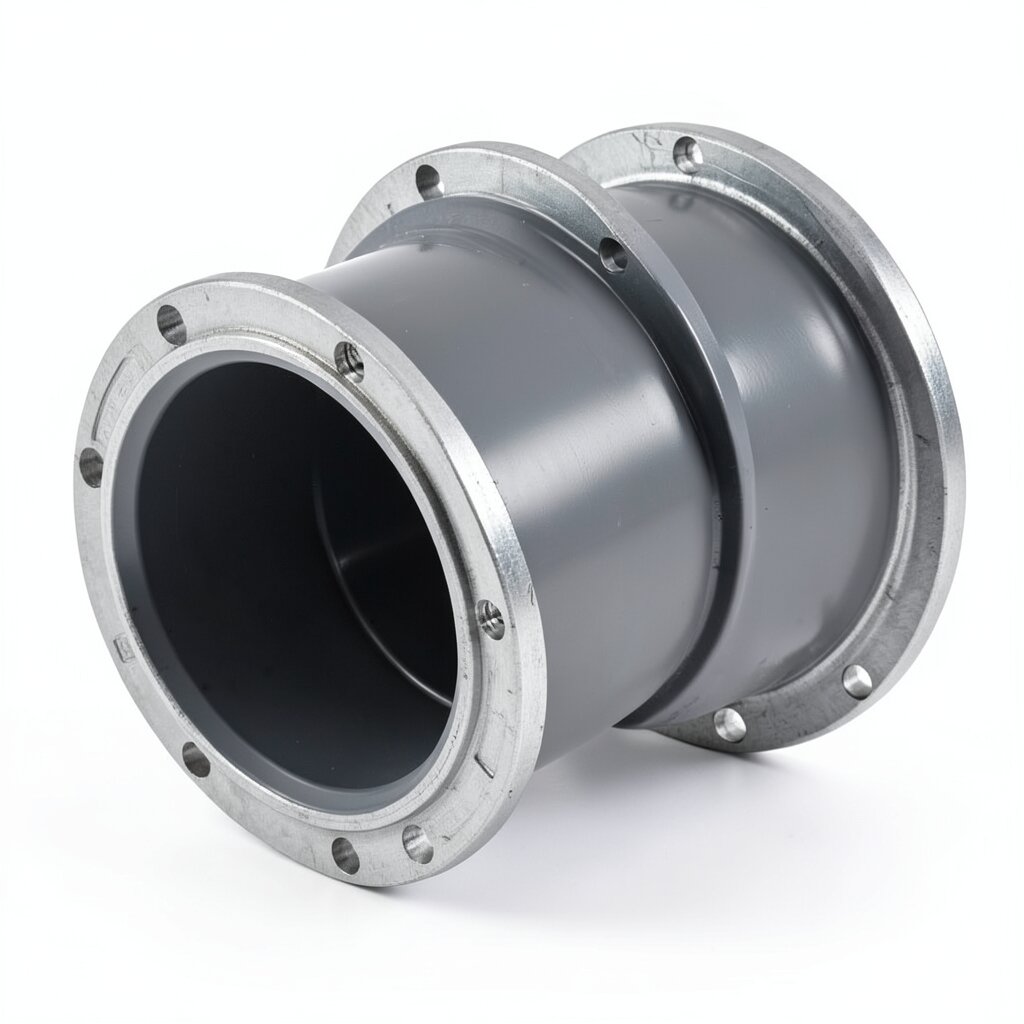
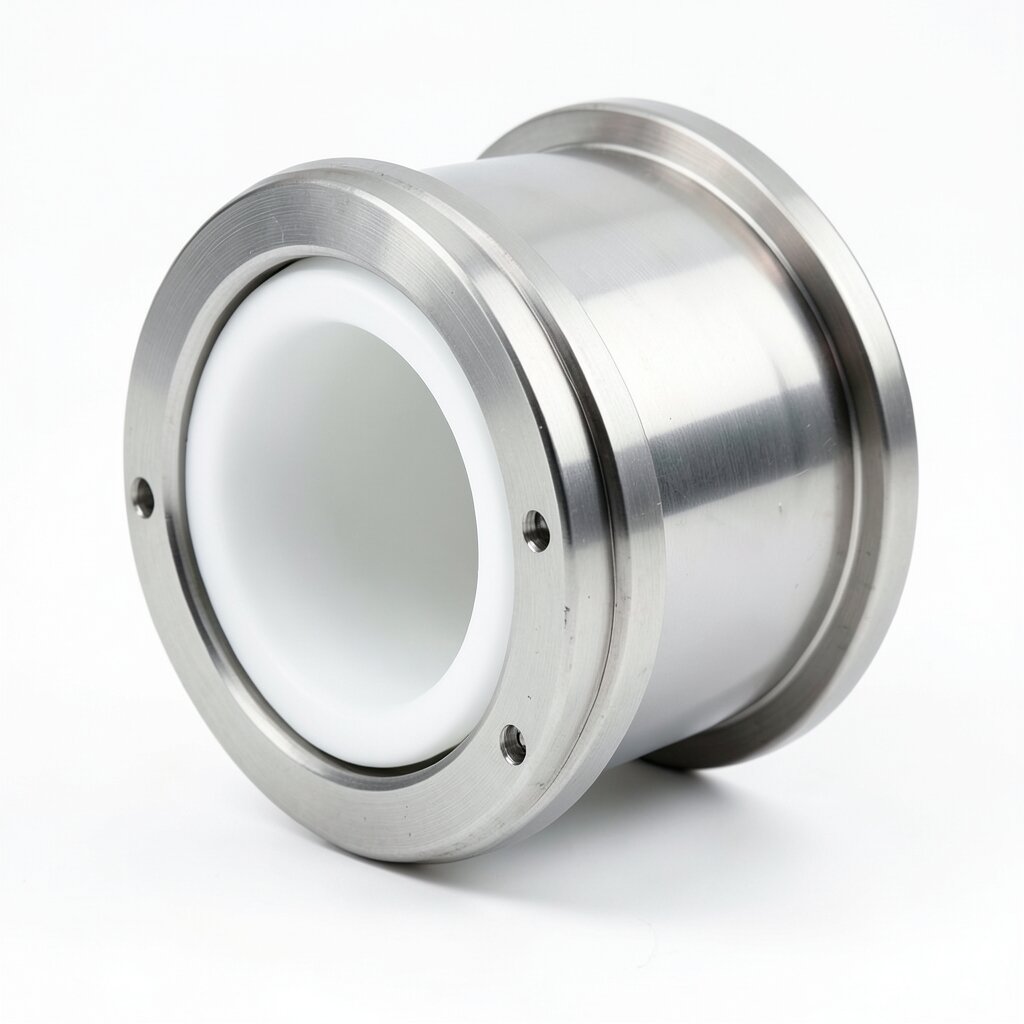
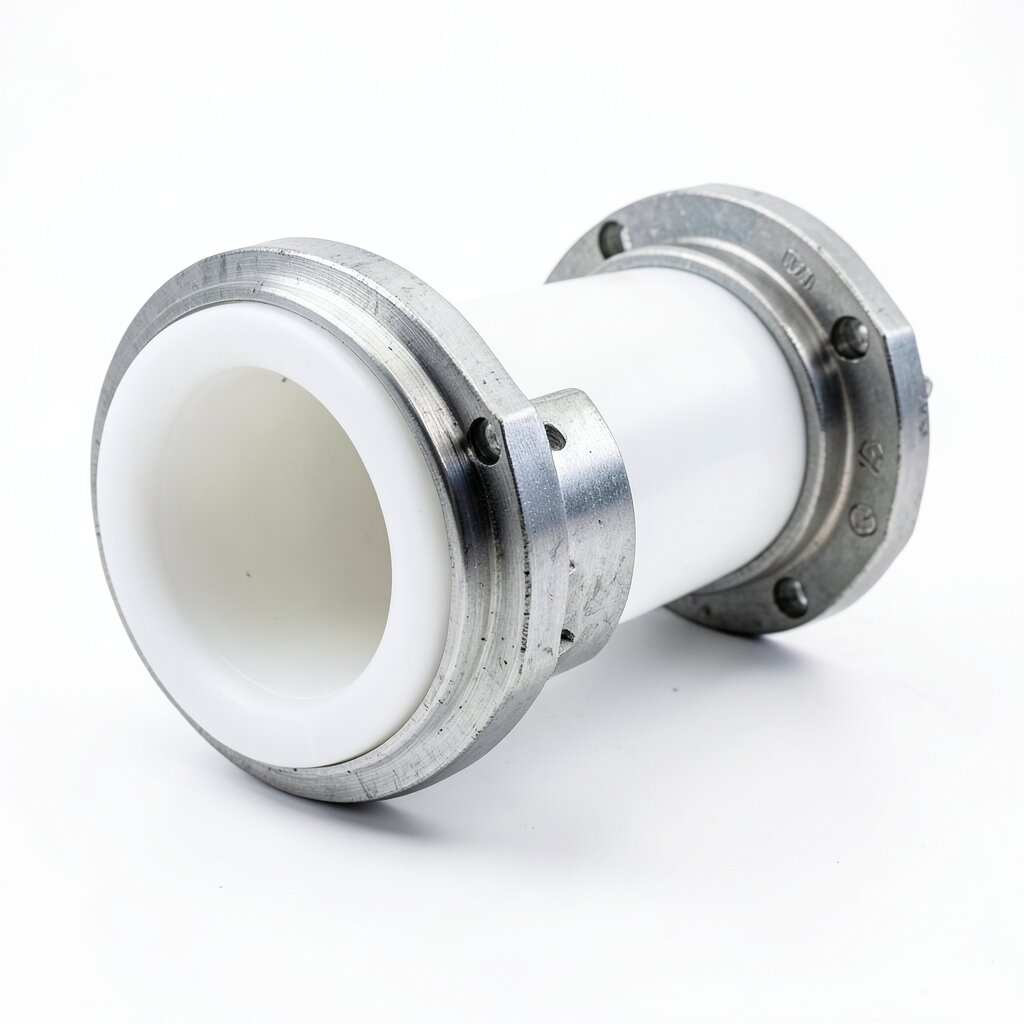
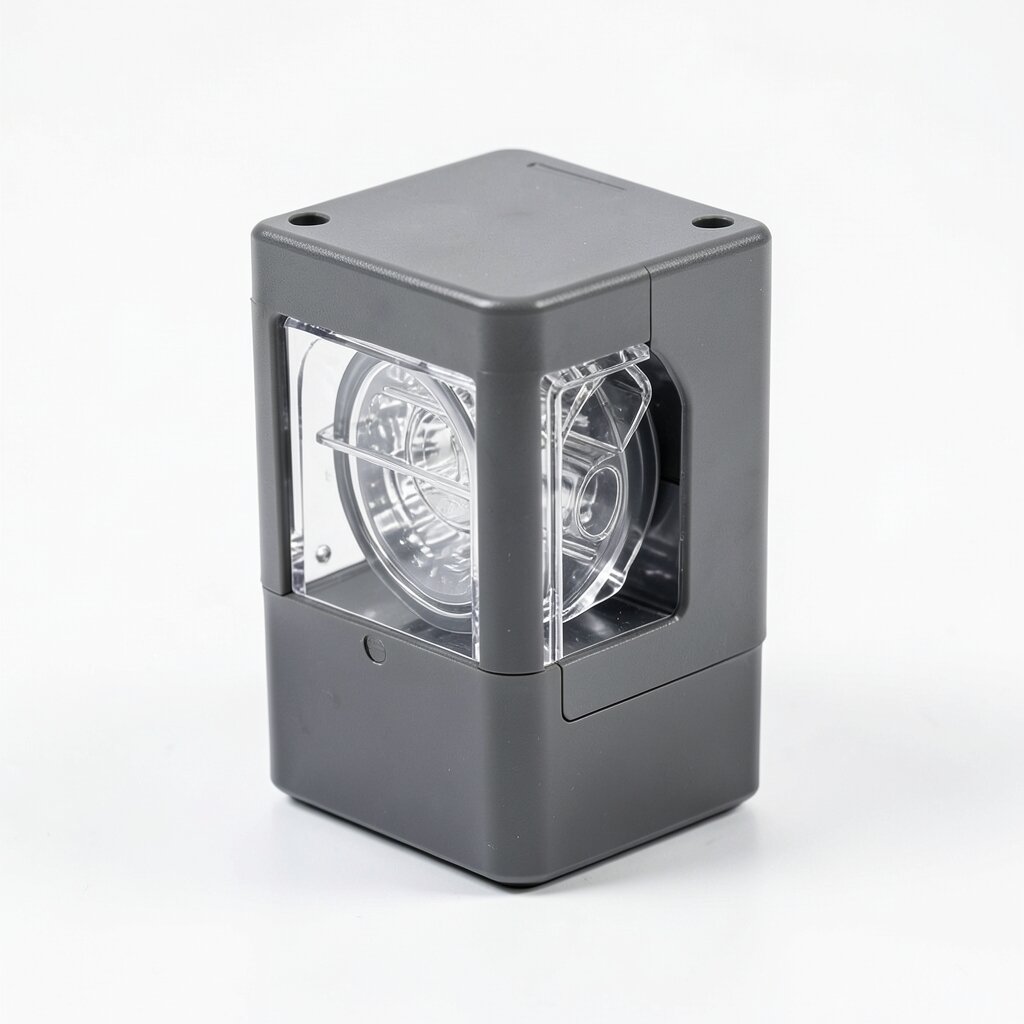
Economy corrosion-resistant in-line mixer with carbon-steel shell and rigid PVC liner — the cost-effective choice for water-treatment chemical dosing, dilute acid service, and electroplating rinse chemistry up to 70°C.
Product Overview
The ywmixing PVC-lined static mixer is the economy choice in the lined-mixer family. A carbon-steel pressure shell carries the mechanical and pressure load, while a 4-6 mm thick rigid PVC liner and PVC helical elements handle the chemical resistance duty. The mixer is designed for service where the chemistry is mildly corrosive — water-treatment reagents, dilute mineral acids, salt solutions, weak bases — but where the cost of a PTFE-lined or all-PTFE mixer cannot be justified.
The PVC liner is rated for 60°C continuous service (70°C short-term) and PN10 pressure. It is one of the lowest-cost corrosion-resistant liner materials, with a fully installed cost roughly 30-40% of the equivalent PTFE-lined mixer. For large municipal and industrial water-treatment projects, where hundreds of mixers may be installed across a treatment train, the cost difference is substantial. The trade-off is the temperature ceiling: above 70°C the PVC softens and the liner can distort.
Internally, the mixer uses a left-right helical element set of rigid PVC rods, 4-8 elements depending on the required coefficient of variation. Standard element twist is 180° (for Re > 10,000, the typical turbulent-regime operating point in water-treatment service). The L/D ratio of the housing is 6-10, with the lower end used for coagulant dosing and the higher end for pH adjustment or chlorination where the chemistry requires more residence time. End connections are flanged (ANSI 150, DIN PN10, JIS 10K) with PVC-faced flanges and EPDM gaskets.
Material Properties
Rigid unplasticized PVC (PVC-U) is the liner material. Its chemical resistance covers a wide range of low-temperature dilute chemistry: dilute mineral acids up to 50% concentration (HCl, H₂SO₄, H₃PO₄), most organic acids (acetic, citric, lactic) at ambient temperature, all alkalis, salt solutions (NaCl, CaCl₂, Na₂SO₄), and water with low chlorine residual (below 50 ppm free Cl₂). The temperature limit is set by the Vicat softening point of 72-75°C — the liner begins to soften at this temperature and will distort under any sustained mechanical load. As a result, the mixer is not suitable for hot CIP, steam, or any service above 70°C even for short periods.
The mechanical properties of rigid PVC are adequate for the liner duty. Tensile strength is 50-60 MPa, density 1.40-1.45 g/cm³, and the elastic modulus 3.0-3.5 GPa. The thermal expansion coefficient is high (70 × 10⁻⁶/°C, roughly 6× that of carbon steel) — this is why the liner is mechanically locked at the flanges and not bonded to the shell, so that differential expansion can be absorbed by the vented gap. The 2-3 mm vented gap is a critical safety feature: it accommodates expansion and serves as a leak-detection path.
The chemical resistance of PVC has several well-known limitations. It is NOT suitable for aromatic solvents (benzene, toluene, xylene), chlorinated solvents (methylene chloride, chloroform, perchloroethylene), ketones (acetone, MEK), esters (ethyl acetate), or concentrated mineral acids above 70°C. It is also unsuitable for service with strong oxidizers (concentrated HNO₃ above 50%, concentrated H₂O₂ above 30%) because these chemicals attack the polymer. For any of these services, the PTFE-lined mixer must be used instead.
The pressure shell is the same carbon steel (SA-516 Gr.70) or 316L stainless used in the PTFE-lined version. Since the shell is mechanically isolated from the process by the PVC liner, there is no chemical requirement on the shell material — the shell is selected purely on the basis of structural and economic considerations. The shell is hydrostatically tested to 1.5× design pressure before liner installation.
Construction Design
The construction of the PVC-lined mixer is similar to the PTFE-lined version: three concentric layers (steel shell, vented gap, PVC liner), with PVC helical elements mounted inside the liner. The principal differences are the liner thickness (4-6 mm PVC versus 3-5 mm PTFE), the liner material cost (PVC is roughly 1/4 the cost of PTFE per kg), and the liner attachment method.
PVC liner attachment uses a flared-end construction. The ends of the PVC tube are belled outward against a steel backing flange, then clamped in place by a steel retaining ring. This flared-end construction is mechanically robust and is field-proven in lined-piping service. The annular gap between the PVC liner and the steel shell is vented to atmosphere via a 1/2" NPT tell-tale port on each end of the mixer. If the liner ever develops a leak, process fluid enters the vented gap and is detected at the tell-tale before it can corrode the steel shell.
Internal elements are rigid PVC rods, twisted 180° left and right in alternating pairs. Elements are mechanically fastened to the liner at each end using PVC element holders that are solvent-welded to the liner. The 4-8 element set is selected based on the target σX, with 4 elements sufficient for simple coagulant dosing (σX ≤ 5-7%) and 6-8 elements required for pH adjustment or chlorination (σX ≤ 1-3%).
End connections are PVC-faced steel flanges with EPDM gaskets. The PVC face protects the gasket from the process fluid and provides a smooth, crevice-free transition from the lined pipe to the lined mixer. EPDM is the standard gasket material for water and dilute chemistry; FKM (Viton) is available for higher-temperature or mildly aggressive organic service. Bolting is galvanized carbon steel or 316L stainless; PTFE washers prevent galling and ensure even gasket loading.
Technical Specifications
| Parameter | Value |
|---|---|
| Liner Material | Rigid unplasticized PVC (PVC-U) |
| Liner Thickness | 4.0 mm (DN25-80) / 5.0 mm (DN100-200) / 6.0 mm (DN250-400) |
| Shell Material | SA-516 Gr.70 carbon steel (standard), 316L stainless (option) |
| Element Material | Rigid PVC (matched to liner) |
| Internal Structure | 180° left-right helical twist elements (4-8 elements) |
| Operating Temperature | -10°C to +60°C continuous / +70°C short-term |
| Design Pressure | PN10 (standard) / PN6 (DN300-DN400 option) |
| Vacuum Service | Limited (consult factory) — full vacuum requires external support |
| Connection Types | PVC-faced flange (ANSI 150, DIN PN10, JIS 10K) |
| Pipe Diameter Range | DN25 to DN400 |
| Flow Rate Range | 0.3 to 800 m³/h |
| Viscosity Range | ≤ 1,000 cP (water-like to light slurry) |
| Gasket Material | EPDM (standard), FKM (option for mild organic service) |
| Safety Features | Vented annular gap with tell-tale port for leak detection |
Frequently Asked Questions
Rigid PVC liner is rated to 60°C continuous and 70°C short-term. Above 70°C the PVC softens (Vicat softening point is 72-75°C) and the liner may distort under pressure. For temperatures between 70°C and 95°C, use the PP-lined mixer. Above 95°C, use PTFE-lined.
Rigid PVC is suitable for dilute mineral acids (HCl up to 20%, H₂SO₄ up to 50%, HNO₃ up to 30%), most bases, salt solutions, and water with low chlorine residual. It is NOT suitable for concentrated acids, aromatic solvents, ketones, esters, or chlorinated hydrocarbons.
The PVC liner is a thick-walled extruded tube locked between two flanges by trapezoidal spacer rings. The 2-3 mm annular gap is vented to atmosphere with a tell-tale port. No adhesive is used, so the liner can be field-replaced. The vented gap also accommodates thermal expansion differential between PVC (70 × 10⁻⁶/°C) and steel (12 × 10⁻⁶/°C).
Yes — the PVC-lined mixer is the most common selection for municipal and industrial water-treatment service, including coagulant dosing, pH adjustment, chlorination, and fluoride addition. The 60°C rating is well above any ambient water temperature, and the PVC liner handles the dilute chemistries involved (typically <10% reagent concentration).
Related Products