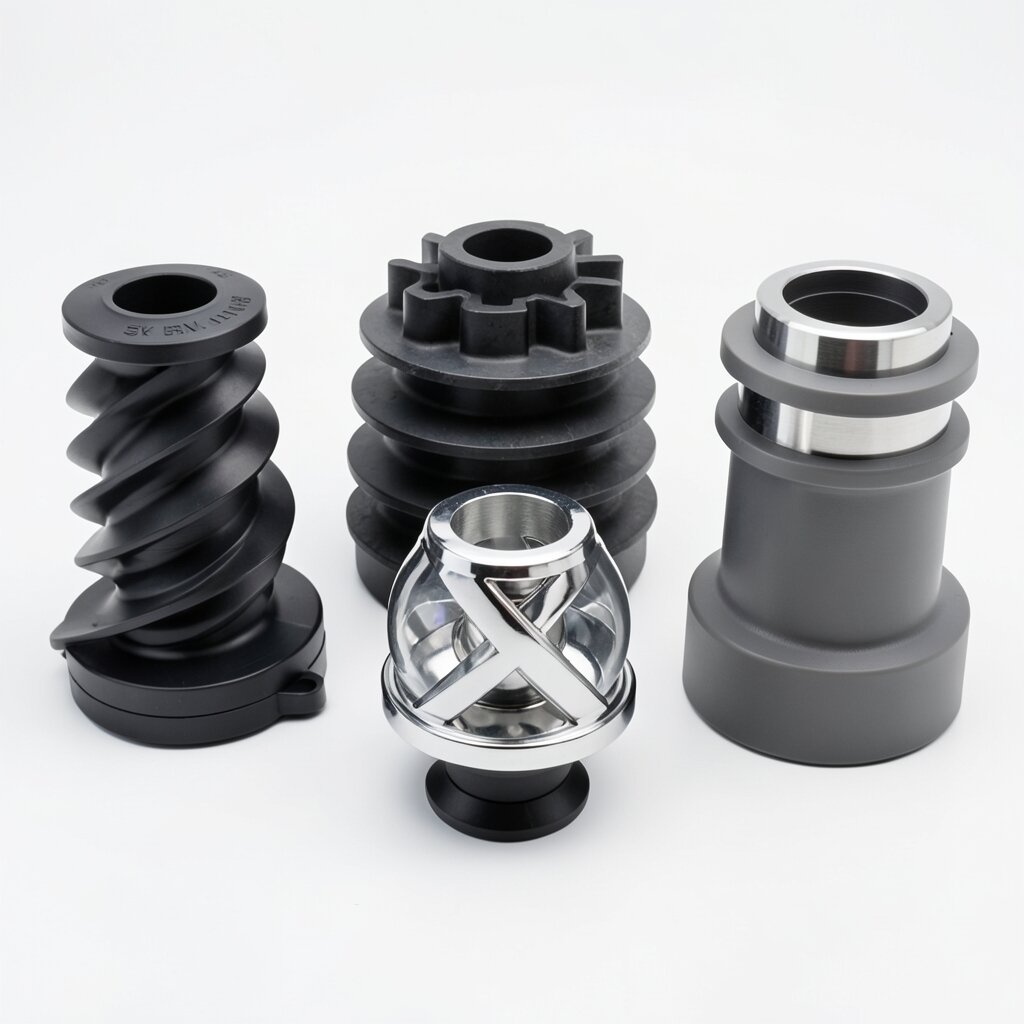
PTFE-Lined Static Mixer
Steel Shell PTFE Liner for Strong Corrosion
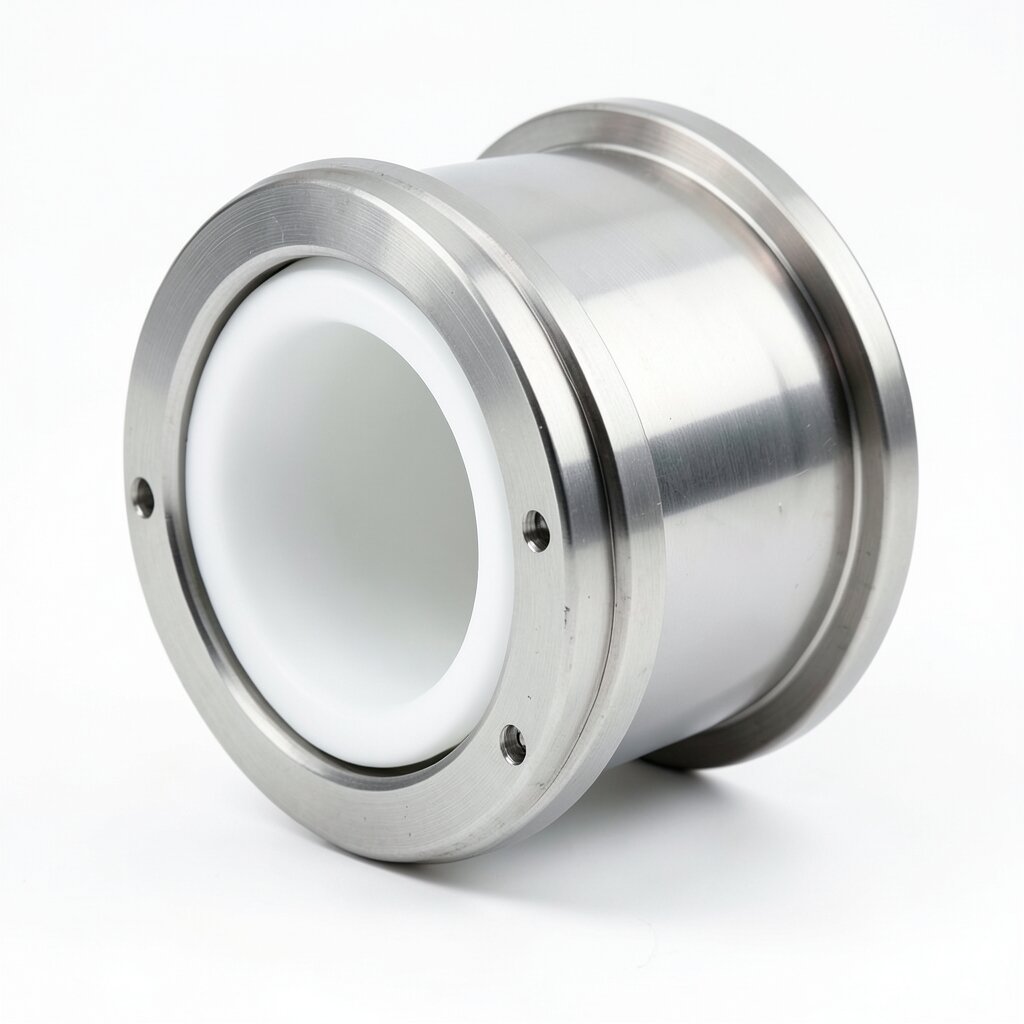
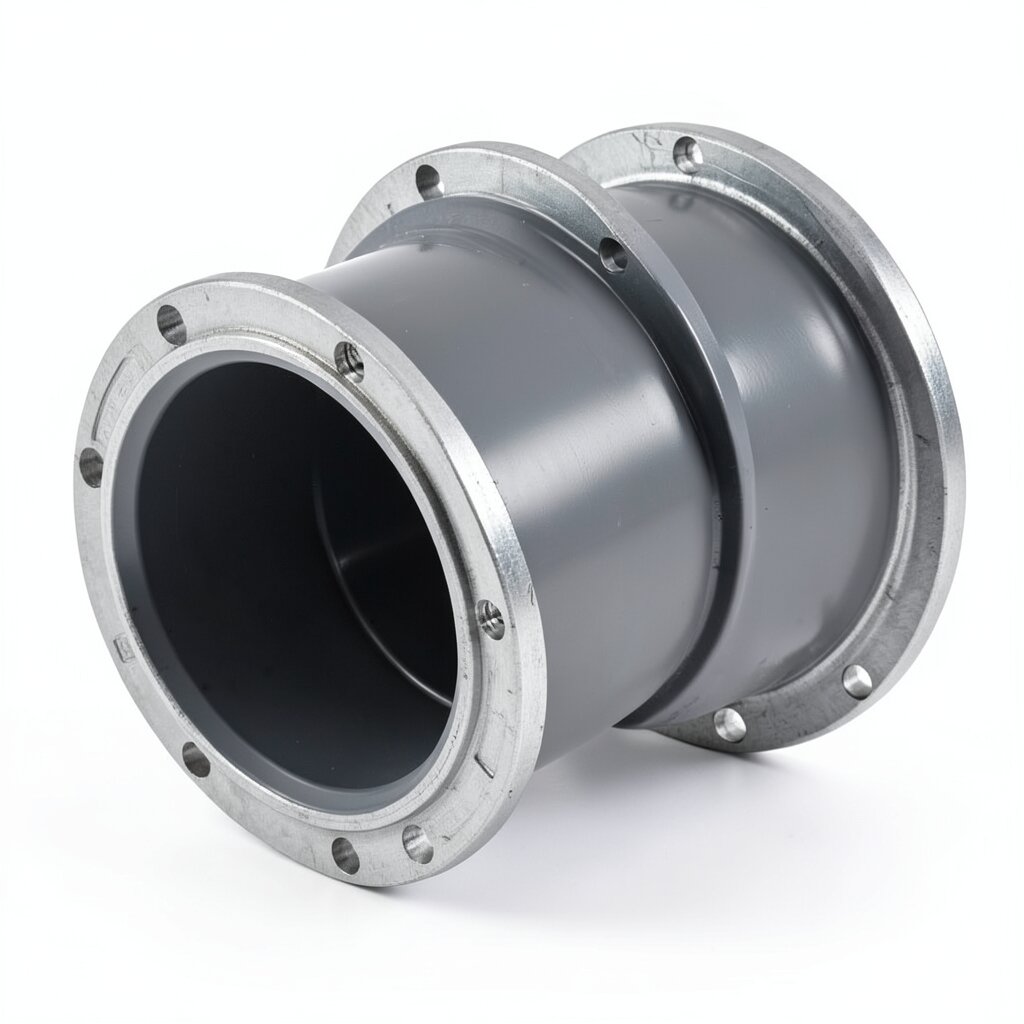
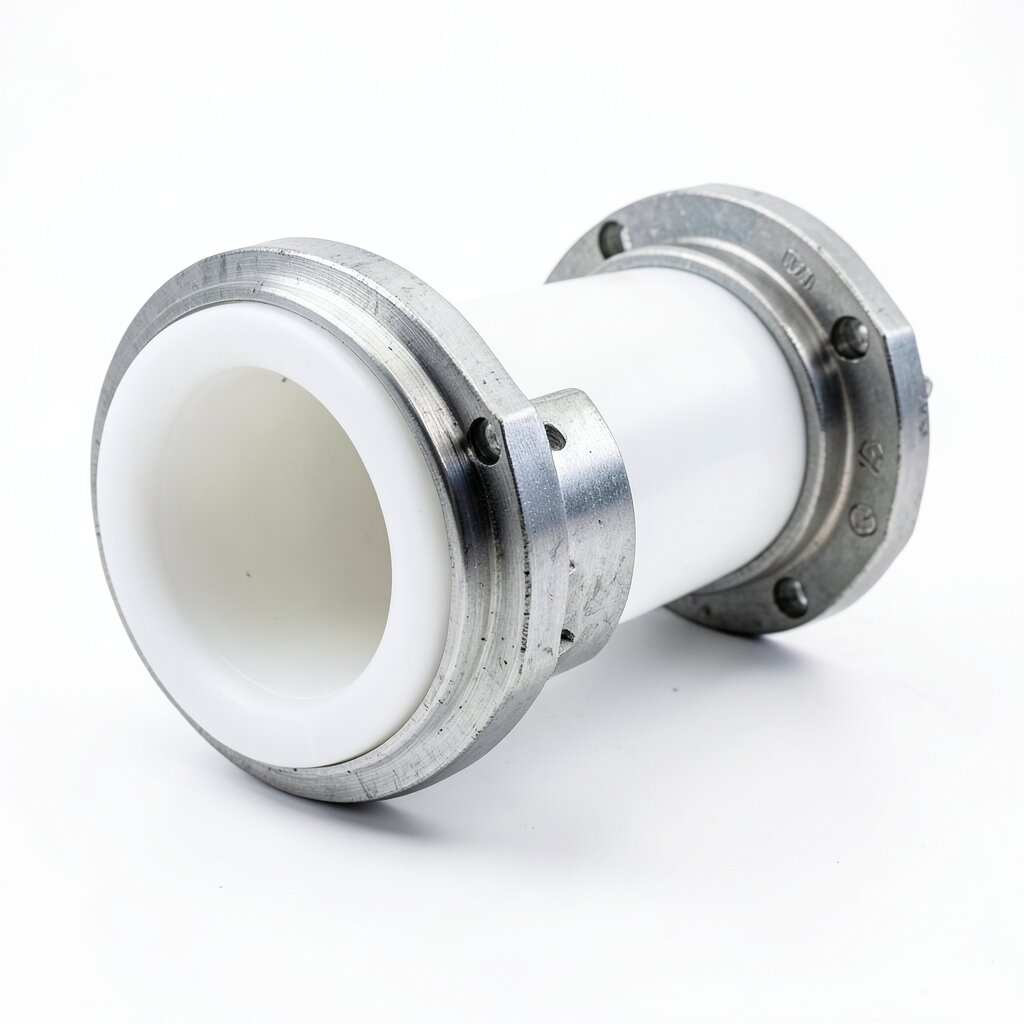
Carbon-steel pressure shell with a 3-5 mm PTFE liner and PTFE helical elements — the most chemically resistant material combination in our range, rated for hot concentrated acids, halogens, and strong oxidizers up to 200°C.
Product Overview
The ywmixing PTFE-lined static mixer is a heavy-duty industrial mixer built around a carbon-steel (or 316L stainless) pressure shell that is internally lined with a 3-5 mm virgin-PTFE tube. All wetted parts — the liner, the mixing elements, and the gaskets — are PTFE or PTFE-derivative, so the process fluid never contacts the steel. This construction gives the operator the mechanical strength and pressure rating of a steel pipe (PN10, PN16, or PN25) combined with the near-universal chemical resistance of PTFE.
The mixer is the workhorse of aggressive-chemistry service in chlor-alkali plants, sulfuric and nitric acid facilities, herbicide and pharmaceutical manufacture, and bromine handling. Where all-PTFE mixers are too expensive at large diameter, and all-PVC or all-PP mixers are limited in temperature and pressure, the PTFE-lined design offers the optimal balance: 200°C continuous service, full vacuum capability, and a pressure rating equal to the equivalent steel pipe. The trade-off is that PTFE is a poor heat conductor, so the mixer is not suitable for service that requires heat transfer across the wall.
Internally, the PTFE-lined mixer uses a left-right helical element set of solid PTFE, in 4 to 8 elements depending on the required coefficient of variation. Element twist is selectable at 180° (default) or 270° (for higher-viscosity media up to 5,000 cP). Element rod diameter is typically 0.10-0.15 × DN, and the L/D ratio of the housing is 6-12 depending on the target σX. End connections are PTFE-lined flanges (ANSI B16.5 Class 150, DIN PN16, or JIS 10K) with PTFE envelope gaskets.
Material Properties
Polytetrafluoroethylene (PTFE) is the benchmark corrosion-resistant polymer. Its chemical resistance is essentially universal: it is unaffected by all mineral acids (HCl, H₂SO₄, HNO₃, H₃PO₄, HF) at any concentration and at all temperatures below 200°C, by all organic solvents (with the limited exceptions of molten alkali metals, elemental fluorine, and some fluorinated solvents at extreme conditions), by all halogens, and by strong oxidizers including aqua regia, concentrated hydrogen peroxide, and ozone. PTFE's only real chemical weakness is alkali metals (sodium, potassium) and certain fluorinated compounds at high temperature.
The mechanical properties of PTFE are modest: tensile strength 20-35 MPa, elongation at break 200-400%, density 2.15-2.20 g/cm³. PTFE has no real melt point — it transitions from solid to a gel-like state above 327°C, and continuous service temperature is limited to 200°C (260°C short-term for filled grades). The thermal expansion coefficient is high (100-130 × 10⁻⁶ /°C), so the liner must be designed to accommodate differential expansion against the steel shell — typically a 2-3 mm radial gap, vented to atmosphere.
For higher-pressure and higher-temperature service, the PTFE can be replaced by PFA (perfluoroalkoxy), which has the same chemical resistance as PTFE but with a true melt point of 305°C and improved mechanical strength (PFA can be used up to 260°C continuous). FEP (fluorinated ethylene propylene) is selected for very low temperatures down to -200°C. For service that sees mechanical wear (slurries with sharp particles), modified PTFE with carbon or graphite filler is available; the filler improves wear resistance and reduces creep but slightly reduces chemical resistance.
The pressure shell — the steel component that never contacts the process — is typically SA-516 Gr.70 carbon steel for cost, or 316L stainless for elevated temperature (above 150°C) or for offshore / marine installations. The shell is hydrostatically tested to 1.5× the design pressure before the liner is installed, and a final pressure test of the complete assembly is performed after liner installation. The 4:1 design safety factor on PTFE creep at the rated temperature is built into the standard wall-thickness calculation.
Construction Design
The PTFE-lined mixer is built in three concentric layers. The outermost is the pressure shell — a carbon-steel or stainless-steel pipe spool with welded or flanged end connections, designed to ASME B31.3 or the equivalent regional pressure-piping code. Inside the shell sits the PTFE liner, a 3-5 mm thick tube manufactured from virgin or modified PTFE sheet that is welded (PFA/PVDF liner) or isostatic-molded (PTFE liner) into a seamless cylindrical form. Between the shell and the liner is a vented annular gap of 2-3 mm.
The vented gap is the safety feature that distinguishes a properly designed PTFE-lined mixer from a generic rubber-lined pipe. Each end of the mixer carries a small tell-tale port — typically a 1/2" NPT plugged connection — that is piped to a local sight glass or to the plant's continuous emissions monitoring system. If the PTFE liner ever develops a pinhole leak, process fluid enters the vented gap and is detected at the tell-tale before it can attack the steel shell. This early warning prevents the catastrophic shell-wall corrosion that has caused several serious incidents in lined-piping service.
Internal elements are solid PTFE rods, twisted 180° left and right in alternating pairs and locked into PTFE element holders that are welded or mechanically fastened to the liner at each end of the housing. The number of elements is selected from a chart that relates target σX, viscosity, and L/D ratio; standard offerings are 4, 6, or 8 elements. Element-to-liner attachment uses PTFE hot-gas welding, which produces a leak-tight, chemically resistant joint. Element-to-liner mechanical locking is used as a secondary retention in higher-pressure PN25 mixers.
End connections are PTFE-lined steel flanges with PTFE envelope gaskets (asbestos-free). The envelope gasket consists of a PTFE outer envelope with a non-asbestos fiber filler; the filler provides the mechanical seating force while the PTFE protects the filler from process attack. For services above 150°C, a flexible graphite filler is substituted. Bolting is 316L stainless with PTFE washers to prevent galling.
Technical Specifications
| Parameter | Value |
|---|---|
| Liner Material | Virgin PTFE (standard), Modified PTFE, PFA, FEP |
| Liner Thickness | 3.0 mm (DN25-50) / 4.0 mm (DN65-150) / 5.0 mm (DN200-500) |
| Shell Material | SA-516 Gr.70 carbon steel (standard), 316L stainless (high-temp/marine) |
| Element Material | Solid PTFE (standard), PFA, or modified PTFE |
| Internal Structure | 180° / 270° left-right helical twist elements (4-8 elements) |
| Operating Temperature | -30°C to +200°C (PTFE) / -200°C to +200°C (FEP option) / -30°C to +260°C (PFA option) |
| Design Pressure | PN10 / PN16 (standard) / PN25 (DN25-150 option) |
| Vacuum Service | Full vacuum with vacuum breaker and stainless support ring |
| Connection Types | PTFE-lined flange (ANSI 150, DIN PN16, JIS 10K) |
| Pipe Diameter Range | DN25 to DN500 |
| Flow Rate Range | 0.5 to 1,200 m³/h |
| Viscosity Range | ≤ 5,000 cP (PTFE) / ≤ 1,000 cP (PTFE with 270° elements) |
| Gasket Material | PTFE envelope with aramid or graphite filler |
| Safety Features | Vented annular gap with tell-tale port for leak detection |
Frequently Asked Questions
PTFE is one of the most chemically resistant materials available. It handles all concentrations of HCl, H₂SO₄ (up to 100%), HNO₃ (up to 70%), aqua regia, bromine, chlorine gas, and all organic solvents except molten alkali metals and elemental fluorine. Maximum service temperature is 200°C continuous, 230°C short-term.
The PTFE liner is inserted as a loose-fit tube and locked at the flanges by trapezoidal stainless steel rings. The 2-3 mm radial gap between liner and shell is vented to atmosphere through a tell-tale port so any leak can be detected before process fluid contacts the steel. No adhesive is used, so the liner can be replaced in the field.
Standard ratings are PN10 and PN16, with PN25 available on request for DN25-DN150. The pressure rating is limited by the PTFE liner, not the steel shell. Vacuum service is supported with a vacuum breaker and an external stainless support ring.
Yes. The liner is a separate component from the steel shell and the PTFE elements. Liners can be replaced in 4-8 hours per mixer in the field by a trained service technician. The steel shell is reusable; only the PTFE wetted parts are replaced.
Related Products