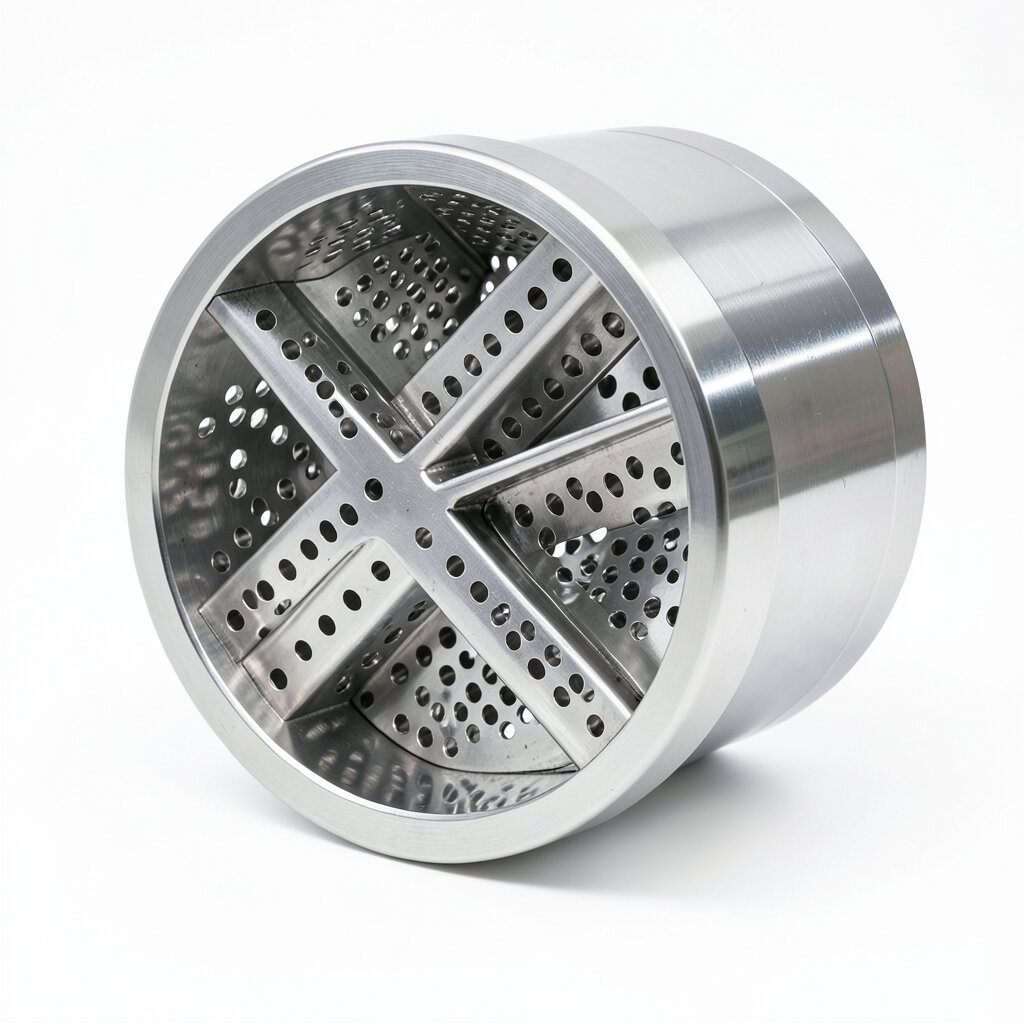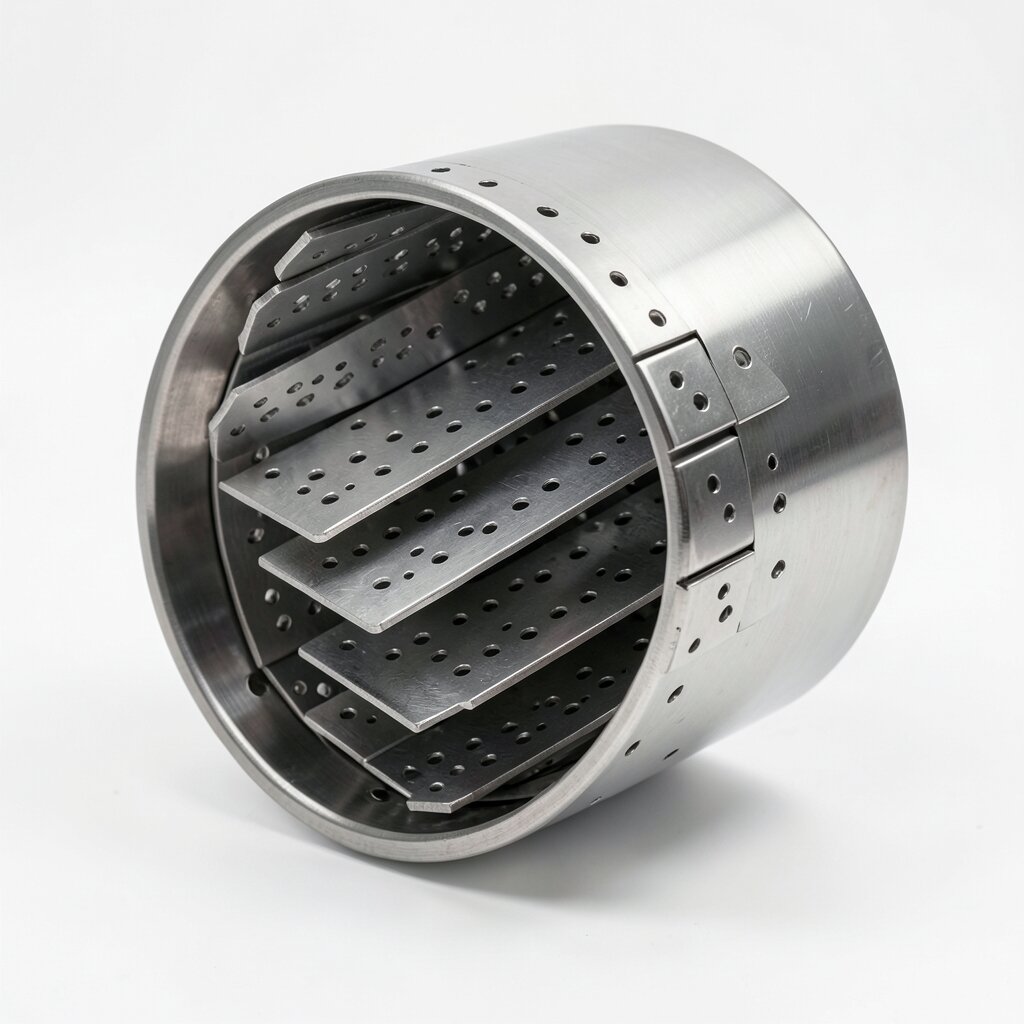
SDB Type Dual-Perforated Plate Static Mixer
Wide-channel anti-fouling mixer for fibrous and particulate service — 5-15 μm dispersion, σX ≤ 5%, with proven tolerance to fibers up to 25 mm and particulates up to 10 mm.
Product Overview
The SDB type dual-perforated plate static mixer is the ywmixing model designed specifically for fouling service. Where the SD single-plate mixer handles clean-to-moderately-dirty fluids and the SV corrugated-plate mixer demands cleanliness, the SDB is built around paired perforated plates that face each other with a 5-15 mm inter-plate gap and offset hole patterns. The two plates together behave as a single thick barrier with wide, oblique flow channels, rather than as a thin barrier with a fine hole array. The result is a mixer that passes fibers, pulp, and 5-10 mm particulates without clogging, while still delivering 5-15 μm dispersion precision in clean media and 20-50 μm in heavy slurry service.
This geometry gives the SDB two distinct advantages over its siblings. First, the wide, oblique channels are self-cleaning: the bulk flow continuously sweeps fibers and particulates past the plate surface, and the offset hole pattern means there is no flat stagnation face where debris can accumulate. Second, the dual-plate construction provides structural rigidity that allows the housing to operate at viscosities up to 100,000 cP (10⁵ cP) without plate deflection under viscous drag — a problem that limits the SD above about 10,000 cP and the SV above about 100 cP. The trade-off is dispersion precision: the wider channels produce coarser dispersions than the SD's single-plate geometry, and the engineer must accept 5-15 μm (clean) or 20-50 μm (fouling) in place of the SD's 5-10 μm and the SV's 1-2 μm.
Across the ywmixing family, the SDB occupies the fouling-service niche between the helical twist models (SK, SH) and the single perforated-plate model (SD). For applications involving pulp, paper-mill broke, primary sludge, mineral slurries, polymer-flocculated wastewater, and similar streams, the SDB is typically the first mixer specified because it is the only plate-type mixer in our range that can sustain continuous operation in fouling service without routine plate removal for cleaning.
Working Principle
The mixing action of the SDB is generated by the tortuous-path flow through successive dual-plate stages. Each stage consists of two parallel plates separated by a 5-15 mm gap, with the hole patterns offset so that fluid entering a hole on the upstream plate must make a 30-60° turn before it can exit through the nearest downstream-plate hole. The tortuosity of the path is the principal source of mixing; the change in flow direction at each hole exit produces a local jet that impinges on the opposite plate, generating a small mixing zone of intense turbulence. Over the full housing length, with 3-8 dual-plate stages in series, the cumulative effect is several hundred jet-impingement events that redistribute the fluid in the radial and azimuthal directions.
Quantitatively, the per-stage pressure drop is governed by Δp = ½·ρ·v²·Ks, where the loss coefficient Ks for a dual-plate stage is in the range 2.0-3.5 — somewhat higher than the SD's single-plate value of 1.5-2.5 because the offset geometry adds a turning loss. For a 6-stage housing the cumulative K is approximately 12-21, giving a total pressure drop of 0.2-0.5 bar at 2 m/s water service in a DN100 unit. The open-area fraction is typically 35-55% (higher than the SD's 30-50%) because the wide channels and large holes are needed to pass fibers and particulates.
Three design parameters govern the SDB sizing. The first is the offset ratio γ = δ/d, where δ is the lateral offset between the upstream and downstream hole centers and d is the hole diameter, typically 0.3-0.8. Smaller γ produces a more direct flow path with lower pressure drop but weaker mixing; larger γ forces the flow to turn more sharply and produces more vigorous mixing at the expense of higher Δp. The second is the dual-plate gap g, typically 5-15 mm, set by structural spacers that maintain the gap under thermal and mechanical load. The third is the inter-stage distance s, typically 1.0-2.0 × the housing diameter, which provides space for the jets to redevelop and the velocity profile to relax before the next stage.
In the turbulent regime (Re > 4,000 based on hole diameter), the SDB achieves 5-15 μm dispersion with σX ≤ 5%. In the laminar regime (Re < 2,300) — common in pulp and high-viscosity polymer service — the mixing mechanism shifts to viscous folding of stream tubes and the dispersion coarsens to 20-50 μm with σX in the 8-12% range. The SDB is unusual among plate-type mixers in that this laminar-fouling combination is exactly the duty for which it is designed, so the 20-50 μm / 8-12% σX performance is considered adequate rather than a limitation.

Technical Specifications
| Parameter | Value |
|---|---|
| Internal Structure | Paired perforated plates (dual-plate stages) with offset hole patterns, 5-15 mm inter-plate gap |
| Hole Diameter Range | 8-25 mm standard; custom 6-40 mm available |
| Open-Area Fraction | 35-55% (typical); 30-60% (extended range) |
| Channel Width (effective) | 15-50 mm wide tortuous path |
| Stage Count | 3-8 standard dual-plate stages |
| Housing L/D | 4-7 (typical); 3-10 (extended) |
| Dispersion Precision | 5-15 μm (clean turbulent) / 20-50 μm (fouling/laminar) |
| Viscosity Range | 1-100,000 cP (kinematic), 10⁵ cP upper limit |
| Pressure Drop | 0.2-0.5 bar typical at 2 m/s water in DN100; scales with v² |
| Non-Uniformity Coefficient | σX ≤ 5% (clean service) / σX 8-12% (fouling service) |
| Material Options | SS304, SS316L, Carbon Steel (PTFE/rubber lined), PVC |
| Connection Types | Flange (ANSI / DIN / JIS), Threaded (NPT / BSP), Welded |
| Temperature Range | -50°C to +300°C (metallic) / -10°C to +60°C (PVC) |
| Pipe Diameter Range | DN25 to DN600 |
| Flow Rate Range | 0.5 to 1,500 m³/h (model and pipe-size dependent) |
| Clogging Risk | Lowest among plate mixers; passes fibers to 25 mm, particulates to 10 mm |
| Fiber Tolerance | Up to 25 mm fiber length, 4% consistency pulp |
| Particulate Tolerance | 5-10 mm (standard geometry); up to 15 mm with extended open area |
Material Options
The SDB plate is available in four standard material grades, selected primarily for chemical compatibility with the process fluid and secondarily for structural rigidity under viscous drag. SS304 (1.4301, AISI 304) is the default for potable water, food-grade service, and dilute inorganic chemicals at temperatures up to 80°C. It tolerates chloride concentrations up to 200 ppm continuous without pitting and is the lowest-cost stainless option. For most municipal water-treatment and food-processing applications, SS304 SDB plates are adequate.
SS316L (1.4404, AISI 316L) is the workhorse for chemical industry service. The low-carbon formulation eliminates sensitization at the structural-spacer welds that hold each dual-plate assembly together, and the improved chloride resistance (1,000 ppm continuous) makes it suitable for chlor-alkali plant service, brackish-water desalination, and most mineral-acid applications. SS316L is also the standard material for pharmaceutical and biotechnology installations where the surface finish must be ≤ Ra 0.8 μm for CIP-cleaning validation.
Carbon steel (A516 Gr.70 plate / SA-106 pipe) is the most common material for large-diameter SDB mixers in DN300-DN600 service, particularly in mineral processing, pulp and paper, and large-scale municipal wastewater plants where the cost premium for stainless would be prohibitive. Carbon-steel SDB plates are usually supplied with an internal rubber lining (natural rubber, neoprene, or EPDM) for chemical resistance and abrasion protection. The rubber lining is bonded to the plate during vulcanization and is rated for 60-80°C continuous service depending on compound. For higher temperatures, PTFE or ETFE lining is used, with appropriate pressure derating.
PVC (Type I, Cell Classification 12454) is used for corrosive inorganic service (HCl, H2SO4, NaOCl) at temperatures up to 60°C. The mechanical strength of PVC limits its use to DN200 maximum and pressures below 6 bar. Above DN200, the engineer should move to metallic construction with PTFE lining. For temperatures above 80°C in corrosive service, metallic construction (SS316L or Hastelloy) is mandatory regardless of line size.
Gasket and seal selection follows the housing material and the process. EPDM is standard for water, dilute bases, and pulp service; FKM (Viton) for hydrocarbons, oils, and most organic solvents; PTFE envelope gaskets for high-temperature acid service above 150°C; and graphite-clad stainless for steam and high-temperature hydrocarbons above 200°C. For pulp and paper service, the engineer should specify a gasket material that is rated for the pH range of the stock (typically pH 4-9) and resistant to the lignin and extractive compounds that are common in pulp suspensions.
Installation Methods
SDB mixers are installed in-line in the process pipe using one of three standard connection types. Flanged connections (ANSI B16.5 Class 150, DIN PN16, or JIS 10K) are by far the most common. They allow the entire mixer to be removed for plate inspection and cleaning without cutting the pipe, and they accommodate the thermal expansion of the housing when the process sees more than 80°C differential. Flanged SDB mixers are specified for DN50 and above, or whenever the unit will see periodic maintenance — which is typical in pulp, paper, and wastewater service where the unit is opened every 1-3 months for plate inspection even though the SDB is designed for continuous fouling service.
Threaded connections (NPT or BSP) are used for small-diameter SDB mixers (DN25 to DN50) in low-pressure service — typically chemical skid packages, water-treatment pilot plants, and small-bore process lines. They are quick to install and disassemble, but limited to about 16 bar at DN50 and 40 bar at DN25. Welded connections are specified for high-pressure or high-temperature service where threaded joints would be a leak risk, and for permanent installations in mineral-processing and refinery service where the mixer is not expected to be removed during the plant's operating campaign.
The installation geometry follows the standard static-mixer practice with two SDB-specific modifications. First, the upstream straight-pipe run should be at least 5D (rather than the usual 3D) when the secondary stream is a high-viscosity fluid injected just upstream of the mixer, because viscous streams develop a uniform profile more slowly than low-viscosity streams. Second, for fiber-laden service, the engineer should install a 1-2D straight run of large-diameter pipe (or a flow conditioner) immediately upstream of the mixer to distribute the fibers uniformly across the pipe cross-section before they enter the first stage. Without this precaution, fiber bundles can concentrate near the pipe invert and cause uneven plate loading.
For gravity-flow service (such as primary sludge lines or thickener underflow), the SDB mixer is typically installed in a vertical section of pipe with downward flow, so that the mixer sees a flooded inlet and avoids air entrainment. For pulp and paper service, the mixer is usually installed horizontally, with the injection quill entering the pipe from above so that the chemical addition falls into the center of the flow stream. A flush connection on the inlet quill is recommended so that the quill can be cleaned during scheduled washouts without breaking the line.
Typical Applications
Pulp and paper stock blending. Pulp mills blend various stock streams (virgin pulp, broke, recycled fiber, filler slurries) at consistencies of 1-4% and flow rates of 50-2,000 m³/h. The SDB mixer is the standard in-mill mixer for this duty because it passes 2-25 mm fibers without clogging and produces σX ≤ 5% distribution of the various stock components. Compared to the SD, the SDB has been shown to operate continuously for 3-6 months between plate cleanings in mill service, versus 2-4 weeks for the SD in the same application.
Mineral processing slurry mixing. Flotation circuits, leach tanks, and tailings lines handle slurries with 5-40% solids by weight and particle sizes up to 5-10 mm. The SDB mixer installed in the slurry transfer line provides rapid dispersion of reagents (collectors, frothers, activators, depressants) without the particle segregation that occurs in agitated tanks at high solids loading. A DN200 SDB housing processing 150 m³/h of 25% limestone slurry at 1.2 m/s is a typical sizing for a 10,000 t/d flotation circuit.
Municipal wastewater primary treatment. Primary clarifiers are fed raw sewage at 1-3% solids and flow rates of 50-500 m³/h per clarifier. Polymer flocculant (cationic polyacrylamide at 0.5-3.0 mg/L) is injected upstream of the clarifier to enhance settling. An SDB mixer installed between the injection quill and the clarifier inlet produces uniform floc formation across the clarifier cross-section, reducing polymer consumption by 15-25% and improving settled-solids capture by 10-20% compared to diffused addition without in-line mixing.
Industrial wastewater with fibrous solids. Textile, food-processing, and pulp-and-paper effluent streams contain 1-10 mm fibers that would rapidly clog an SD or SV mixer. The SDB is the only plate-type mixer in the ywmixing range that can sustain continuous operation on these streams, with typical mean-time-between-cleaning intervals of 1-3 months depending on the fiber load. For heavily loaded streams, the engineer should specify the extended-open-area plate (40-50% rather than the standard 35-45%) and increase the stage spacing to 1.5-2.0 × DN.
FGD (flue-gas desulfurization) limestone slurry. Wet limestone FGD systems inject limestone slurry (10-20% solids, 50-150 μm particle size) into the absorber tower. An SDB mixer installed in the slurry recirculation line produces a uniform 100-200 μm droplet size at the spray nozzles, improving SO2 capture efficiency by 5-8% compared to un-mixed recirculation. The SDB's tolerance to the abrasive limestone particles (which would rapidly erode the SV's fine corrugations) is a major advantage in this service.
Model Comparison
| Parameter | SDB | SD | SV | SK | SH |
|---|---|---|---|---|---|
| Internal Structure | Dual perforated plates | Perforated plates | Corrugated plates | Helical twist | Dual-channel helical |
| Dispersion Precision | 5-15 μm | 5-10 μm | 1-2 μm | ≤ 10 μm | 1-2 mm |
| Max Viscosity (cP) | 100,000 | 10,000 | 100 | 1,000,000 | 1,000,000 |
| Pipe Diameter | DN25-DN600 | DN15-DN600 | DN15-DN1000 | DN15-DN500 | DN15-DN200 |
| Particulate Tolerance | 5-10 mm | 2-3 mm | < 0.5 mm | 5-10 mm | 2-3 mm |
| Fiber Tolerance | Up to 25 mm | Not recommended | Not recommended | Up to 15 mm | Not recommended |
| Best For | Fouling service | General medium-μ | Fine dispersion | High-viscosity | High-viscosity clean |
Frequently Asked Questions
The SD uses single perforated plates with 8-25 mm hole diameter. The SDB uses paired perforated plates (two plates in close contact) with offset holes, creating 15-50 mm wide flow channels that pass fibers, pulp, and 5-10 mm particulates without clogging. The SDB trades some dispersion precision for much higher fouling tolerance.
SDB mixers handle kinematic viscosities up to 100,000 cP (10⁵ cP). The dual-plate geometry provides structural rigidity that resists deflection under viscous drag, and the wider channels prevent the boundary-layer buildup that would otherwise raise pressure drop at high viscosity.
Yes. SDB mixers are specifically designed for fiber-laden service — pulp stock up to 4% consistency, paper-mill broke, primary sludge, and similar streams. The 15-50 mm channel width passes fibers up to 25 mm long without breakage or accumulation.
The SDB produces 5-15 μm dispersion in clean service and 20-50 μm in fiber-laden service. Coefficient of variation σX ≤ 5% is achieved in clean media; in heavy slurry service σX is typically 8-12%, which is acceptable for most chemical addition, dilution, and pH control duties.
Standard SDB housings contain 3 to 8 dual-plate stages. With 6 stages, the housing L/D is typically 4-7. Each stage consists of a back-to-back pair of plates with the holes offset, creating a tortuous path that promotes radial mixing while maintaining an open flow channel.
Related Products
SD Type Perforated Plate Static Mixer
General-purpose perforated plate mixer for medium-viscosity clean service.

SV Type Corrugated Plate Static Mixer
Multi-layer plates for sub-5μm dispersion in low-viscosity service.

SK Type Helical Static Mixer
180°/270° twist for high-viscosity fluids up to 106 cP.

SH Type Dual-Channel Static Mixer
For high-viscosity clean media and precision color blending.