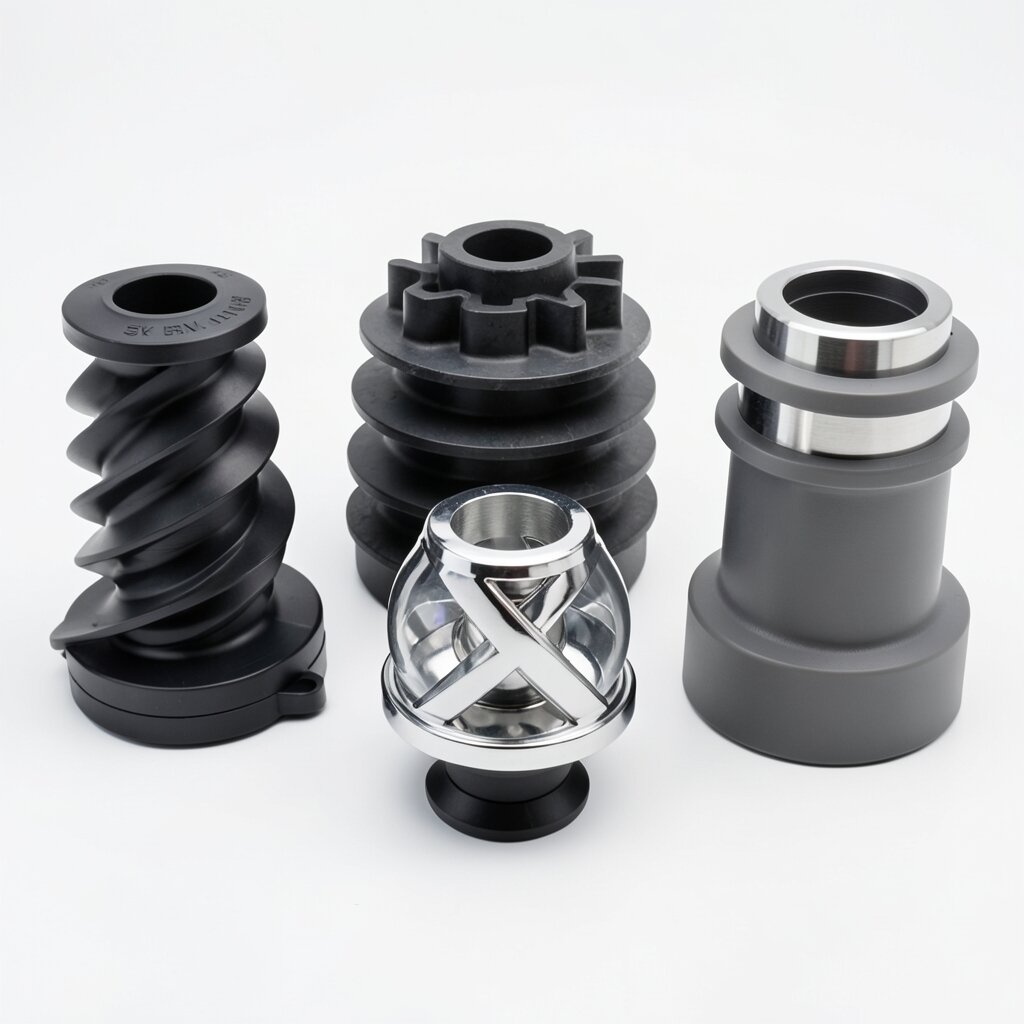
SX Type PTFE Mixing Element
Teflon Crossed-Bar Cartridge
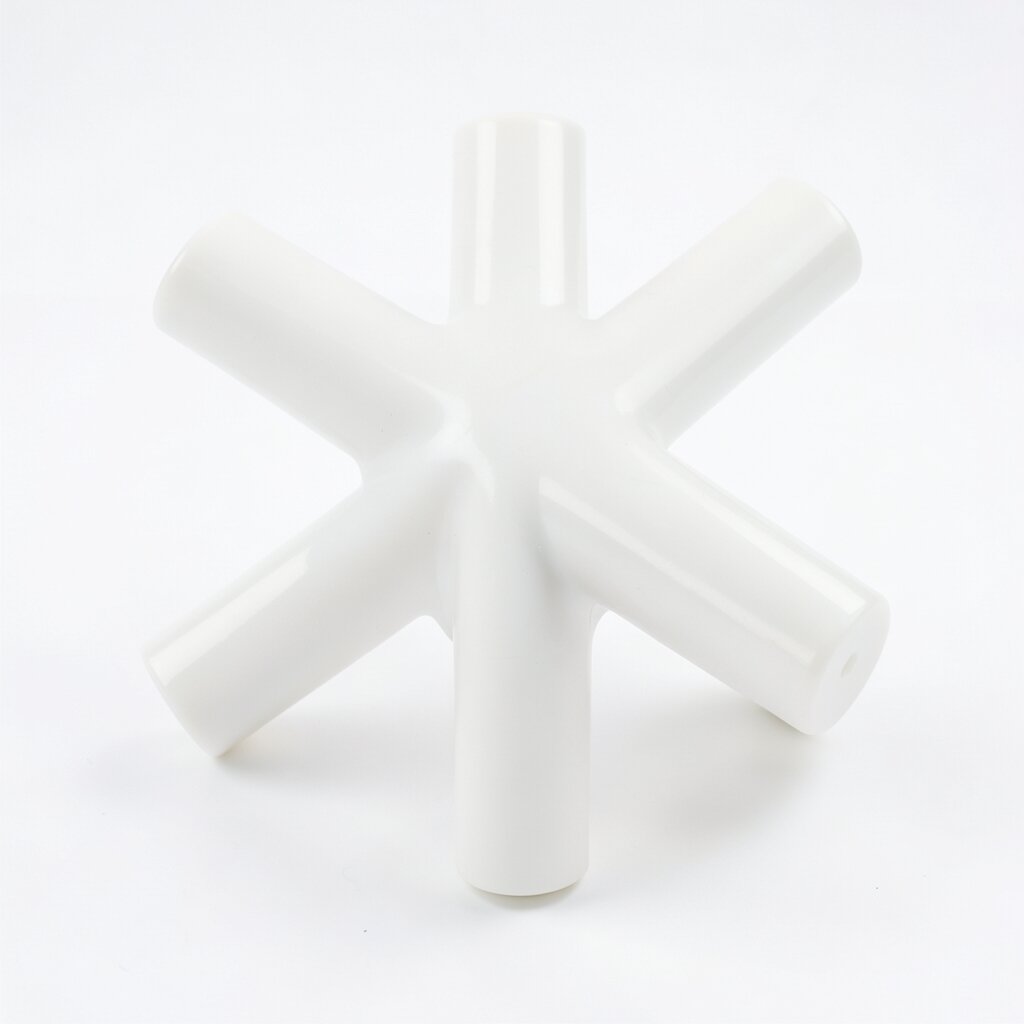
SX type PTFE (Teflon) crossed-bar mixing element for ultra-corrosive, solids-bearing service. DN15-DN150, 200°C continuous, universal chemical resistance. Used in HF, oleum, and pharmaceutical API lines.
Product Overview
The SX type PTFE mixing element is the open-geometry ultra-corrosion-resistant cartridge. The element is compression-molded from virgin PTFE as a single piece in small sizes (DN15-DN80) and is supplied as a multi-piece assembly with PFA-welded joints in larger sizes (DN100-DN150). The crossed-bar geometry provides roughly 60-70% open cross-section — slightly less than the metallic equivalent because the bar edges must be radiused to manage stress concentration — but still sufficient to pass fibers and soft particulates in the most aggressive chemical services.
Material Properties
Virgin PTFE is identical to the grade used in the SK-PTFE element: density 2.15 g/cm³, melting point 327°C, continuous service temperature 260°C, tensile strength 25-35 MPa, chemical resistance to virtually all industrial reagents below 200°C. The crossed-bar element uses slightly thicker bars (5-8 mm) than the helical element (3-5 mm) to compensate for the lower mechanical strength and to keep the bar deflection under 0.5 mm at the rated flow. Carbon-filled PTFE (25% carbon) is available for static-dissipative service in flammable-solvent lines.
Compatible Housings
The PTFE SX element fits a PTFE-lined steel housing (PTFE liner 3-5 mm thick over a carbon-steel shell) in DN15-DN150. End retention is by PTFE spacer rings and a PTFE-encapsulated stainless back-up ring. The element is supplied in three standard length configurations (L/D = 3, 5, 7), with the L/D = 5 size being the most common.
Installation & Replacement Guide
PTFE is soft and easily damaged — handle the element with clean cotton gloves and use only plastic tools during installation. Depressurize, drain, and remove the PTFE bayonet retaining ring by hand. The element is removed using the supplied PTFE extraction rod. Clean the housing with deionized water only — do not use solvents that could attack the PTFE liner at the O-ring grooves. Fit new PTFE-encapsulated FKM O-rings, slide the element in, and refit the bayonet ring by hand torque only. The replacement takes 15-25 minutes.
Technical Specifications
| Parameter | Value |
|---|---|
| Material | Virgin PTFE (ASTM D4894) or 25% carbon-filled PTFE |
| Element Geometry | Crossed bars 45°/90° rotation, 4-6 bar layers, bonded tie-rod |
| Bar Cross-Section | 5×15 mm (DN15-DN50); 6×20 mm (DN65-DN100); 8×25 mm (DN125-DN150) |
| Open Cross-Section | 60-70% of pipe bore |
| Pipe Diameter Range | DN15 to DN150 |
| Pressure Rating | PN6 at 20°C, derating to PN3 at 200°C |
| Temperature Range | -200°C to +200°C continuous; +260°C short-term |
| Viscosity Range | 1 cP to 10,000 cP |
| Particulate Tolerance | Up to 4 mm soft solid, fibers up to 20 mm length |
| Pressure Drop | ΔP = 0.4-0.8 × empty-pipe ΔP at Re = 1,000-10,000 |
| Mixing Precision | Coefficient of variation σX ≤ 8-12% at L/D = 5 (lower than SK due to bar tolerance) |
| Connection Types | Flange (DIN PN10, ANSI 150), wafer |
| Mass (DN100, L/D=5) | 1.5 kg per element |
Related Products