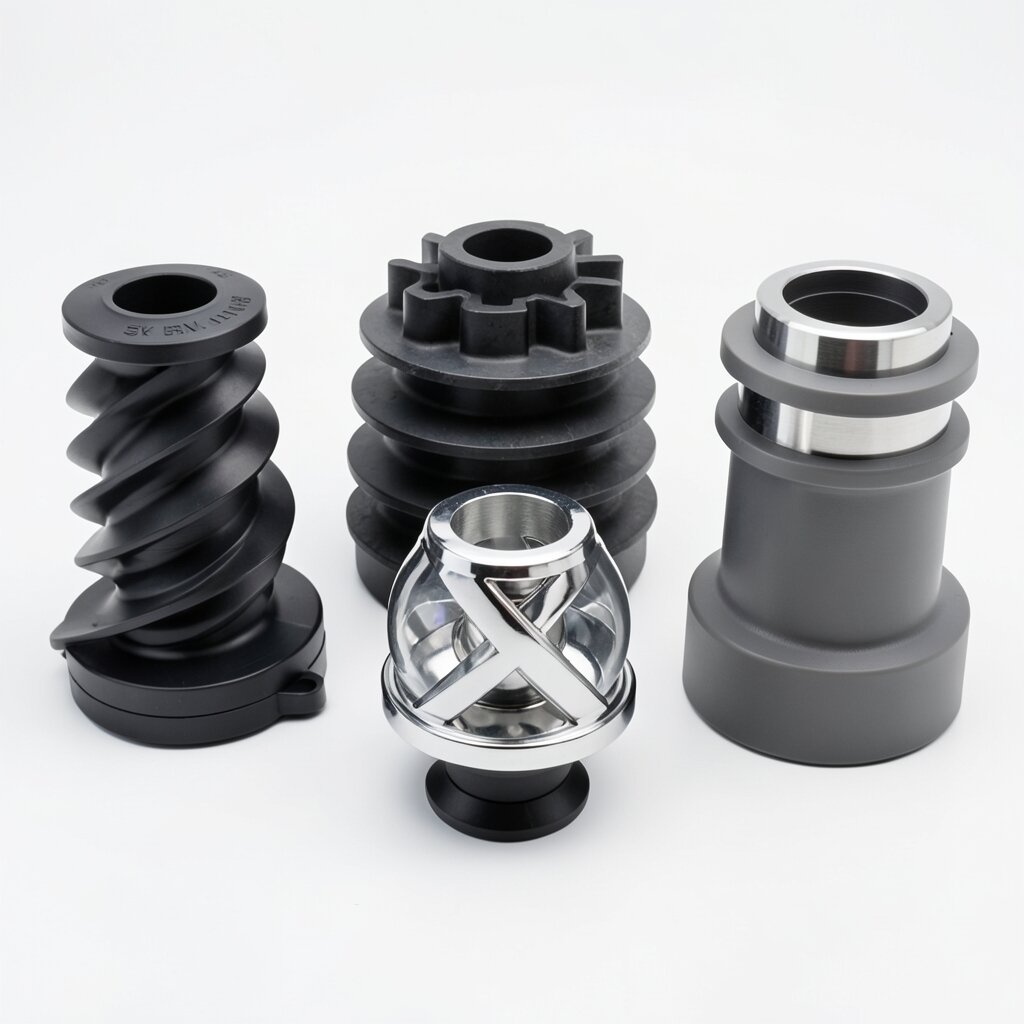
SX Type PP Mixing Element
Polypropylene Crossed-Bar Cartridge
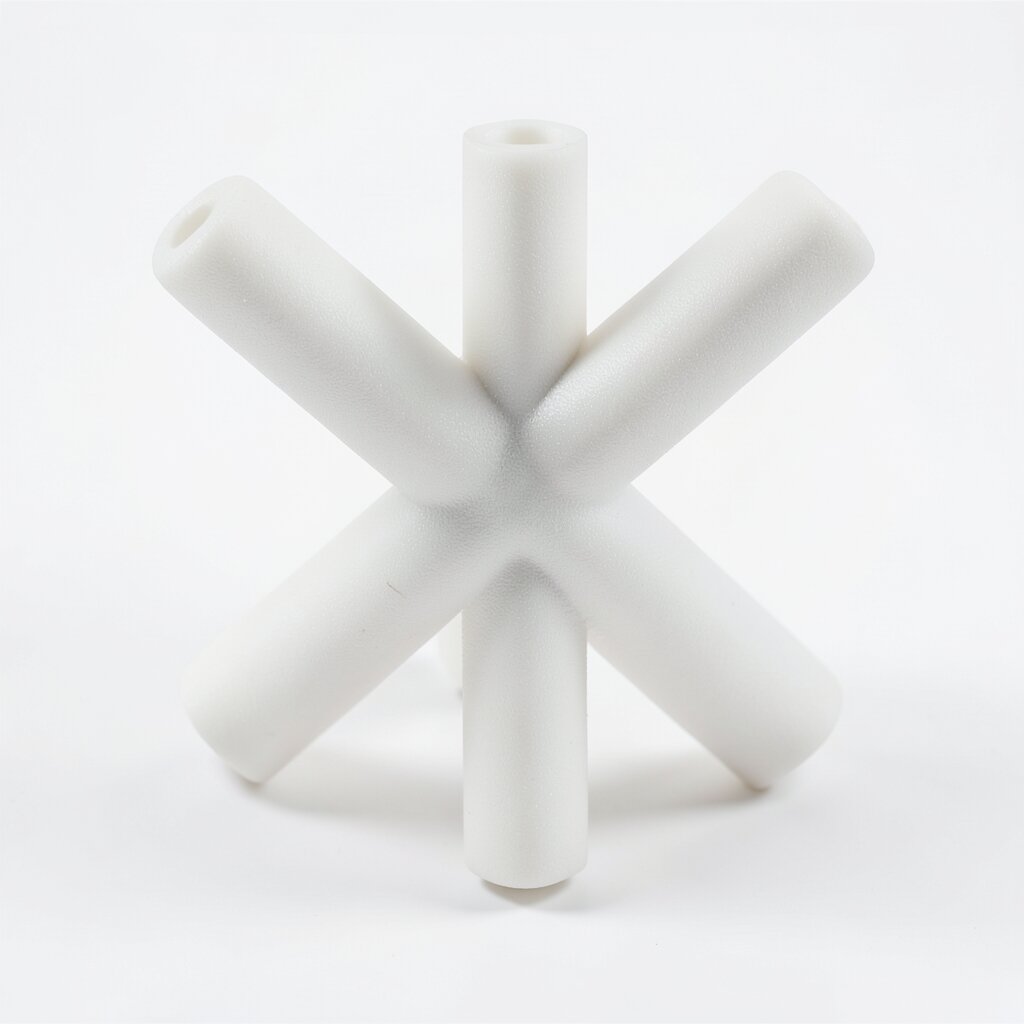
SX type PP (polypropylene) crossed-bar mixing element for corrosive, solids-bearing fluids. DN15-DN200, 80°C continuous, open geometry. Used in metal-finishing rinse and chemical slurry service.
Product Overview
The SX type PP mixing element combines the open crossed-bar geometry of the SX family with the chemical resistance of 30% glass-fiber-reinforced polypropylene. The element is injection-molded in two halves (bar stack and tie-rod) and welded together during assembly, which gives a fully corrosion-resistant cartridge for service environments where SS316L would pit and where the PP SK element would be too restrictive for solids-bearing flow.
Material Properties
PP-GF30 is the same grade used in the SK-PP element: 30% glass-fiber-reinforced homopolymer polypropylene with a heat-deflection temperature of 155°C, tensile strength of 80-100 MPa, and a chemical-resistance spectrum covering all mineral acids below 80°C, all alkalis, and most salt solutions. The injection-molded bar geometry has slightly more rounded edges than the metal equivalent, which reduces the fouling risk further but slightly degrades the mixing precision. The grade is FDA-compliant for food contact and meets EU 1935/2004, which makes it suitable for food-processing slurry duty where SS316L would either corrode or contaminate the product with metal ions.
Compatible Housings
The PP SX element fits the ywmixing PP-bodied SX housing in DN15-DN200, with PPGF end flanges (DIN PN10 or ANSI B16.5 Class 150) and EPDM gaskets. The element is also supplied as a drop-in for stainless SX housings where the chemistry is non-aggressive, using PTFE centering spacers. Pressure rating is PN6 at 20°C, derating to PN2 at 80°C.
Installation & Replacement Guide
The PP SX element is light enough for single-person handling. Depressurize, drain, and unbolt the end cover. Pull the element out by the central tie-rod, taking care not to bend the bars. Inspect the housing interior for chemical attack (stress whitening, cracking) and replace the housing if any damage is visible. Fit new EPDM cover gaskets, slide the new element in (the tie-rod end goes upstream), and torque the cover bolts in a star pattern to 12 N·m. The full replacement takes 10-20 minutes.
Technical Specifications
| Parameter | Value |
|---|---|
| Material | PP-GF30 (30% glass-fiber-reinforced homopolymer polypropylene), injection-molded |
| Element Geometry | Crossed bars 45°/90° rotation, 4-6 bar layers, welded tie-rod |
| Bar Cross-Section | 5×15 mm (DN15-DN50); 6×20 mm (DN65-DN100); 8×25 mm (DN125-DN200) |
| Open Cross-Section | 65-75% of pipe bore |
| Pipe Diameter Range | DN15 to DN200 |
| Pressure Rating | PN6 at 20°C, derating to PN2 at 80°C |
| Temperature Range | 0°C to +80°C continuous; +95°C short-term |
| Viscosity Range | 1 cP to 30,000 cP |
| Particulate Tolerance | Up to 6 mm solid, fibers up to 30 mm length |
| Pressure Drop | ΔP = 0.5-1.0 × empty-pipe ΔP at Re = 1,000-10,000 |
| Mixing Precision | Coefficient of variation σX ≤ 7-10% at L/D = 5, 6 bars |
| Connection Types | Flange (DIN PN10, ANSI 150), wafer |
| Mass (DN100, L/D=5) | 0.6 kg per element |
Related Products