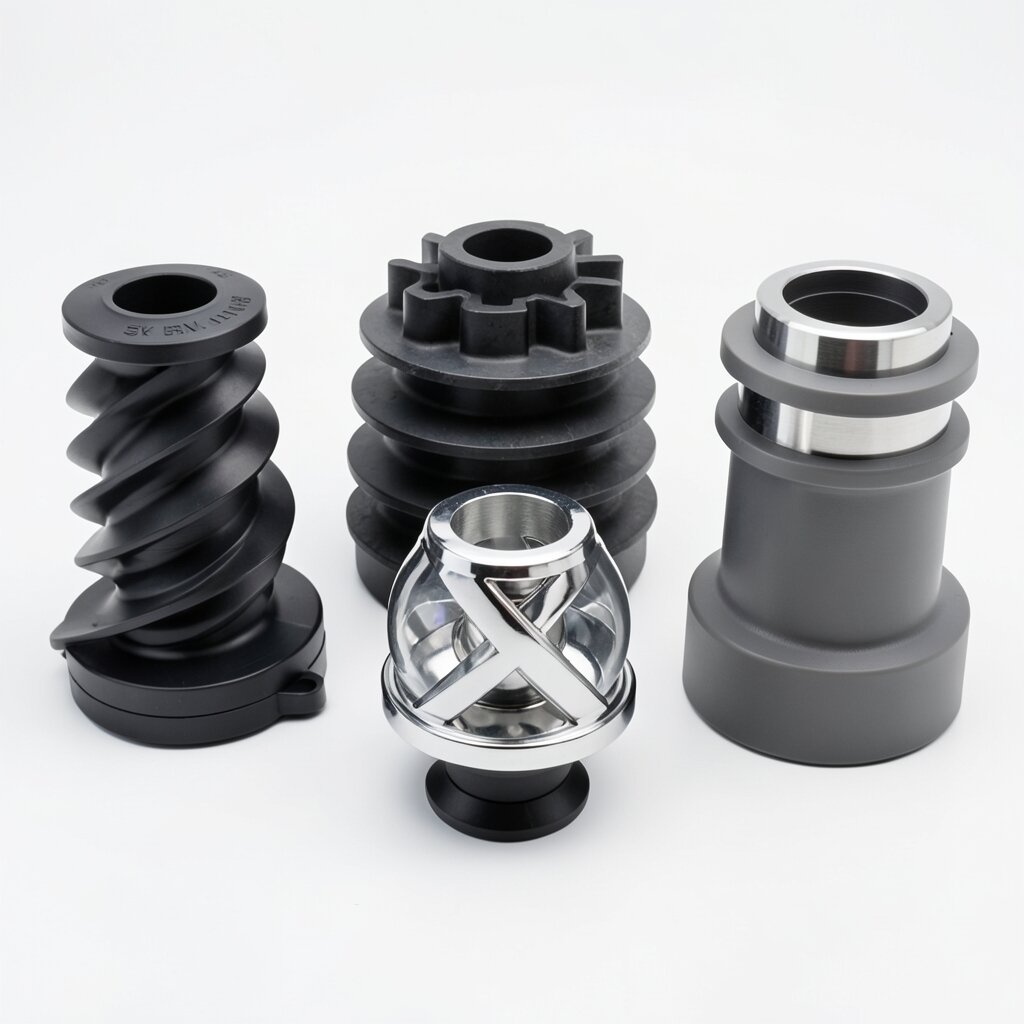
SK Type PTFE Mixing Element
Teflon Replacement Cartridge
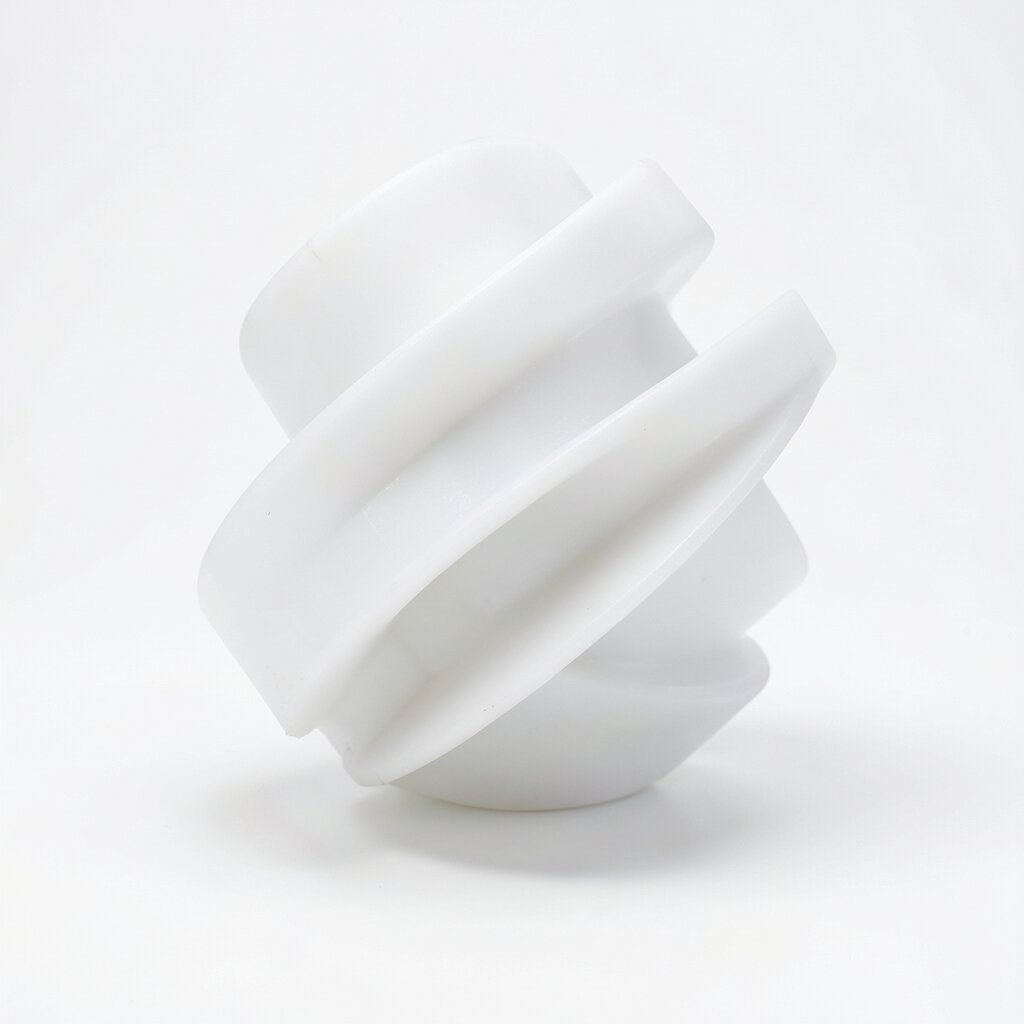
SK type PTFE (Teflon) helical mixing element for ultra-corrosive service. DN15-DN150, 200°C continuous, virtually universal chemical resistance. Used in HF, oleum, and solvent blending.
Product Overview
The SK type PTFE mixing element is the highest-purity, highest-chemical-resistance version of the helical replacement cartridge. Manufactured from virgin PTFE (and optionally carbon-filled for static-dissipative service), the element retains the standard 180°/270° twist geometry but trades mechanical strength for chemical inertness. PTFE is attacked by virtually no industrial chemical — molten alkali metals, elemental fluorine, and a few exotic fluorinated solvents are the only exceptions — which makes this element the universal choice when the chemistry is too aggressive for either stainless or PP.
Material Properties
PTFE is a fully fluorinated, semi-crystalline thermoplastic with a melting point of 327°C and a continuous service temperature of 260°C. The grade used for mixing elements is a free-flowing compression-molded virgin resin with a density of 2.15 g/cm³, tensile strength of 25-35 MPa, and elongation at break of 300-400%. The material is hydrophobic (contact angle 110°), non-adhesive, and will not wet out with virtually any process fluid. The chemical resistance spectrum includes concentrated H₂SO₄, HCl, HF (up to 60%), HNO₃, aqua regia, and all organic solvents below 200°C. The principal limitations are cold flow (creep) under sustained load, which is why PTFE elements are restricted to PN6 service, and the relatively low thermal conductivity (0.25 W/m·K) which limits heat-transfer mixing duty. Carbon-filled PTFE (25% carbon) is available for static-dissipative service in flammable-solvent lines, with surface resistivity below 10⁵ Ω/sq.
Compatible Housings
The PTFE element fits a PTFE-lined steel housing (PTFE-liner thickness 3-5 mm over a carbon-steel shell) or a solid PTFE housing in DN15-DN150. End retention is by PTFE spacer rings rather than metallic clips, because any metal-to-PTFE load point is a cold-flow initiation site. The PTFE element is supplied as a single-molded cartridge in small sizes (DN15-DN50) and as a multi-piece bonded assembly with PFA welds in larger sizes (DN65-DN150) to keep the differential thermal expansion within manageable limits.
Installation & Replacement Guide
PTFE is soft and easily damaged — handle the element with clean cotton gloves and never use metal tools on the blade surface. Drain and depressurize the housing, then remove the PTFE retaining ring (twist-off bayonet design) by hand. The element is removed using the supplied PTFE extraction tool — a ribbed rod that engages the cartridge's center bore. Clean the housing with deionized water; do not use solvents that could attack the liner at the O-ring grooves. Fit new PTFE-encapsulated FKM O-rings, slide the element in (orientation stripe faces the inlet), and refit the bayonet ring by hand torque only. Cold-flow in service means the O-rings should be inspected annually and replaced if the gap exceeds 5% of the free cross-section.
Technical Specifications
| Parameter | Value |
|---|---|
| Material | Virgin PTFE (ASTM D4894) or 25% carbon-filled PTFE for ESD service |
| Element Geometry | 180° or 270° helical twist, 2-4 elements, 90° cross-rotation |
| Twist Length (L) | 45 mm per 180° twist (DN15-DN50); 90 mm per 180° twist (DN65-DN100); 120 mm per 180° twist (DN125-DN150) |
| Blade Thickness | 3.0 mm (DN15-DN50); 4.0 mm (DN65-DN100); 5.0 mm (DN125-DN150) |
| Pipe Diameter Range | DN15 to DN150 |
| Pressure Rating | PN6 at 20°C, derating to PN3 at 200°C |
| Temperature Range | -200°C to +200°C continuous; +260°C short-term |
| Viscosity Range | 1 cP to 10,000 cP |
| Pressure Drop | ΔP = 0.9-1.8 × empty-pipe ΔP at Re = 1,000-10,000 |
| Mixing Precision | Coefficient of variation σX ≤ 7% at L/D = 7 (lower precision than SS316L due to larger blade tolerance) |
| Connection Types | Flange (DIN PN10, ANSI 150), wafer, threaded (PTFE body only) |
| Mass (DN100, L/D=7) | 1.1 kg per element |
Related Products