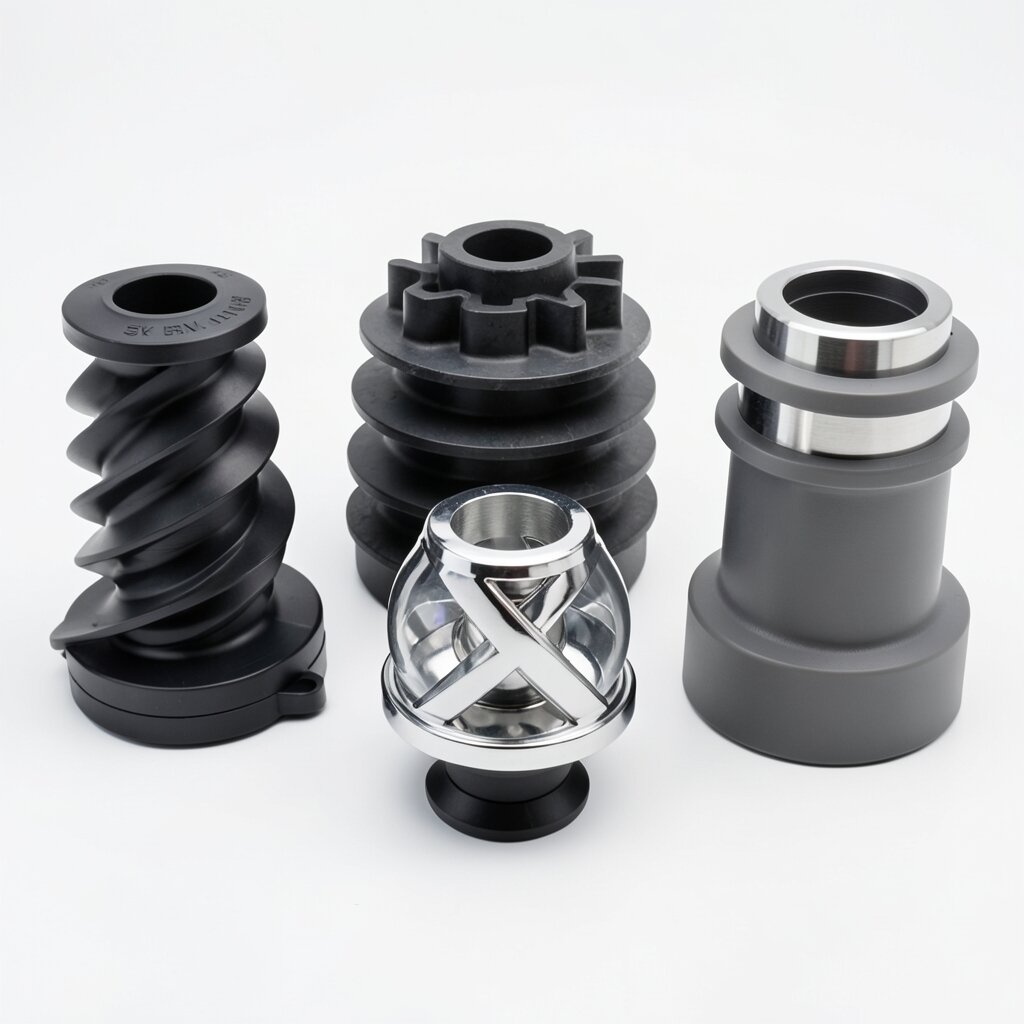
SK Type PP Mixing Element
Polypropylene Replacement Cartridge
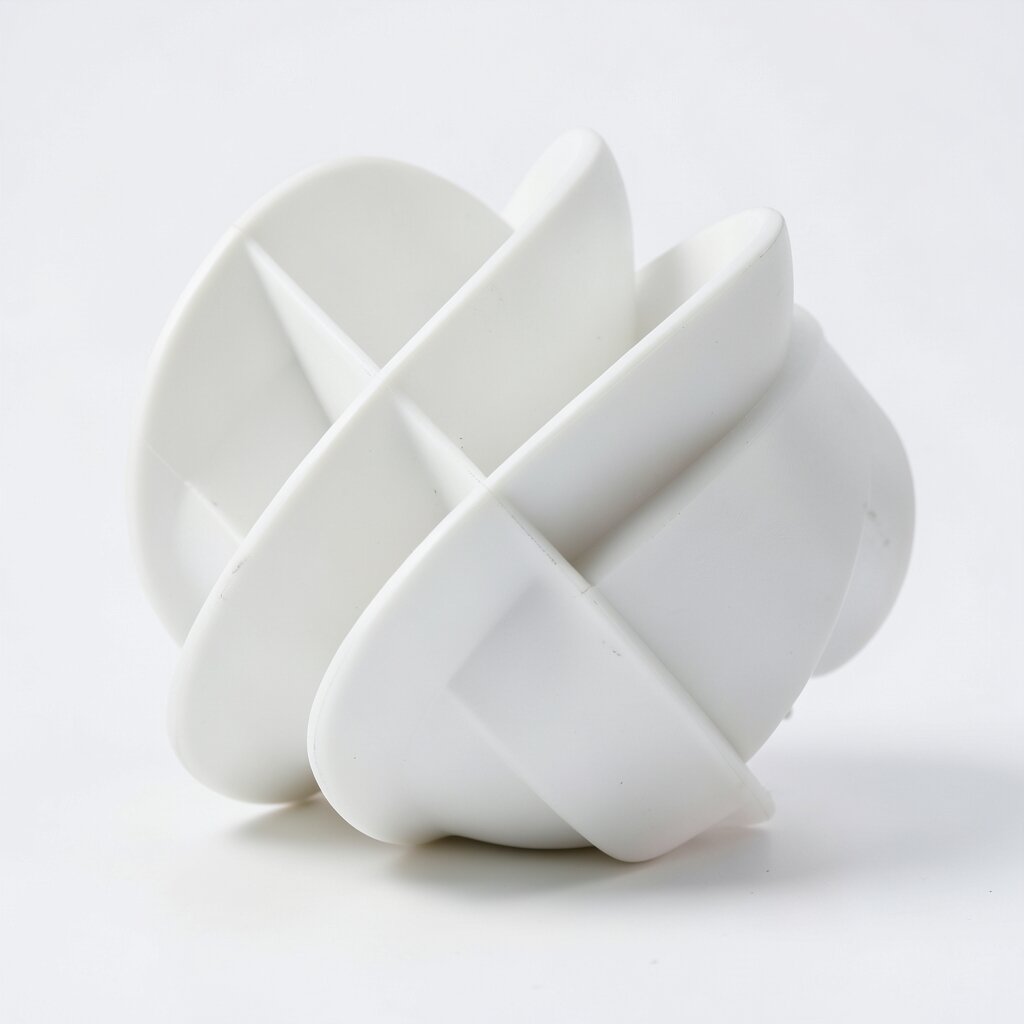
SK type PP (polypropylene) helical mixing element for corrosive chemical service. DN15-DN200, rated to 80°C and 6 bar. Ideal for HCl, NaClO, HF and mineral acid dosing lines.
Product Overview
The SK type PP mixing element is the polymer version of the standard SS316L helical cartridge, machined or injection-molded from glass-fiber-reinforced polypropylene. The same 180°/270° twist geometry is retained, but the construction material is switched to PP for applications where stainless steel would either corrode or be uneconomical. PP is inert to most mineral acids (HCl up to 36%, H₃PO₄ up to 85%, H₂SO₄ below 70%), alkalis (NaOH up to 50%), and saline solutions, and it does not require any surface finish or passivation.
Material Properties
Polypropylene is a semi-crystalline thermoplastic with a density of 0.905 g/cm³ and a melting point of 165-170°C. The grade used for mixing elements is a 30% glass-fiber-reinforced homopolymer (PP-GF30), which raises the heat-deflection temperature under load (HDT/A, 1.8 MPa) to 155°C and improves the creep resistance by a factor of 3-4 over unfilled PP. Tensile strength is 80-100 MPa and the chemical resistance spectrum covers virtually all mineral acids below 80°C, all alkalis, and most salt solutions. The material is not suitable for strong oxidizers above 60°C (concentrated HNO₃, oleum), aromatic and chlorinated solvents (benzene, toluene, CCl₄), or any service where the operating temperature exceeds 95°C continuously. PP is FDA-compliant for food contact up to 100°C and is approved under EU 1935/2004.
Compatible Housings
The PP element is designed to fit the ywmixing PP-bodied SK housing in the DN15 to DN200 range. These housings have a PPGF (glass-filled PP) body with EPDM or FKM O-ring seals, flanged to DIN PN10 or ANSI B16.5 Class 150. The PP element can also be supplied as a drop-in replacement for the SS316L element in an existing stainless housing where the chemical service permits, using PTFE spacer rings to centralize the element. Operating envelope is limited to 6 bar at 20°C, derating linearly to 2 bar at 80°C.
Installation & Replacement Guide
The PP element is lighter and more flexible than its metallic equivalent, which simplifies field replacement. After depressurizing and draining, the end retainer clips are removed using a non-metallic spanner to avoid chipping the housing flange face. The element is withdrawn by hand or with the supplied plastic pull-tab. New EPDM O-rings are fitted, the element is slid in (orientation marks face inlet), and the retainers are re-clipped. Total time for the swap is 10-15 minutes. Inspect the housing interior for stress cracking or chemical attack during the replacement interval; if any cracks are visible, the housing itself must be replaced.
Technical Specifications
| Parameter | Value |
|---|---|
| Material | PP-GF30 (30% glass-fiber-reinforced homopolymer polypropylene) |
| Element Geometry | 180° or 270° helical twist, 2-6 elements, 90° cross-rotation |
| Twist Length (L) | 40 mm per 180° twist (DN15-DN50); 80 mm per 180° twist (DN65-DN150); 120 mm per 180° twist (DN200) |
| Blade Thickness | 2.5 mm (DN15-DN50); 3.5 mm (DN65-DN100); 5.0 mm (DN125-DN200) |
| Pipe Diameter Range | DN15 to DN200 |
| Pressure Rating | PN6 at 20°C, derating to PN2 at 80°C |
| Temperature Range | 0°C to +80°C continuous; +95°C short-term (cleaning) |
| Viscosity Range | 1 cP to 50,000 cP |
| Pressure Drop | ΔP = 1.0-2.0 × empty-pipe ΔP at Re = 1,000-10,000 |
| Mixing Precision | Coefficient of variation σX ≤ 5% at L/D = 7, 4 elements |
| Connection Types | Flange (DIN PN10, ANSI 150), wafer, socket fusion |
| Mass (DN100, L/D=7) | 0.45 kg per element |
Related Products