SK Type Stainless Steel Blade
Individual Replacement Blade
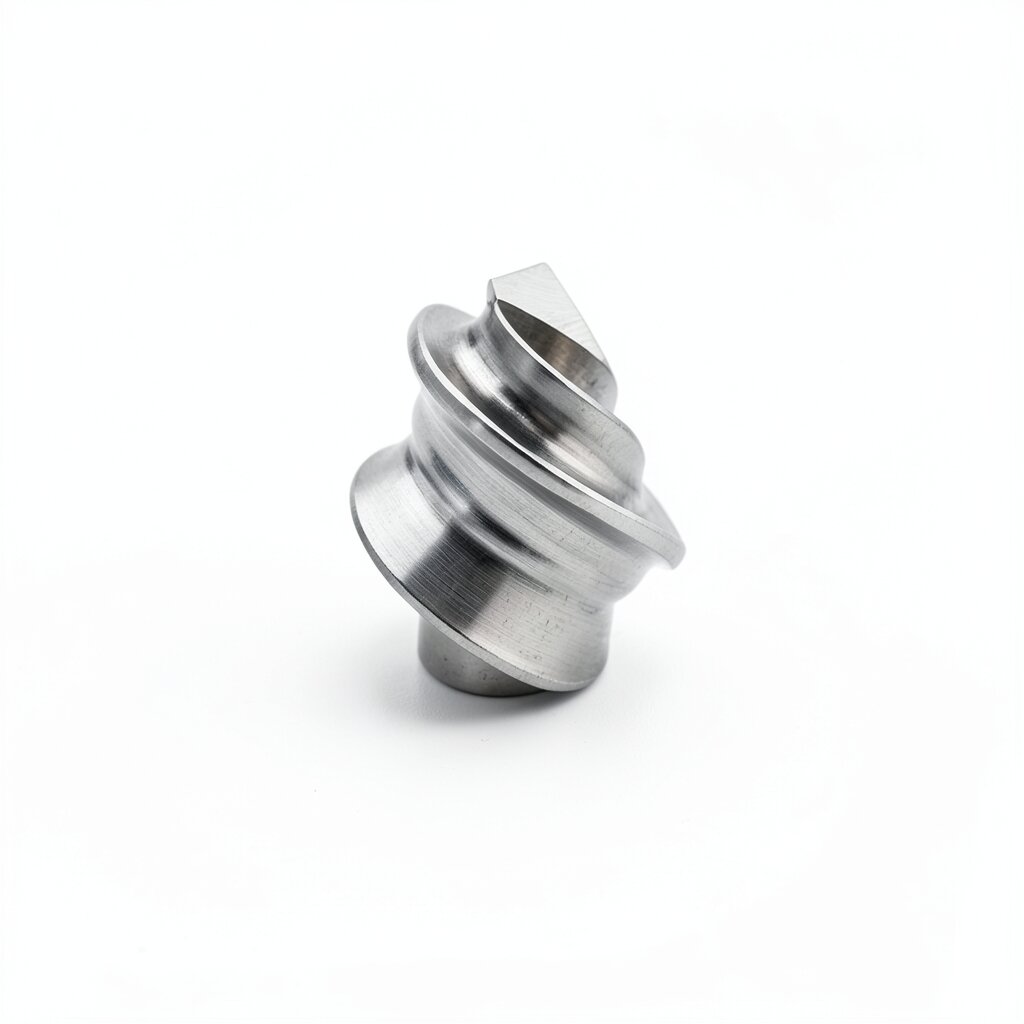
SK type SS316L individual replacement blade for in-house element repair and custom fabrication. 180°/270° twist, 0.8-3.0 mm thickness, supplied as loose piece for OEM and field-rebuild service.
Product Overview
The SK type SS316L blade is the individual replacement component supplied for in-house element repair, custom element fabrication, and OEM integration. The blade is the same SS316L twisted strip that is welded into the standard SK element, but is supplied as a single loose piece so that the customer can weld it into a custom housing, repair a damaged element, or build a non-standard L/D ratio. The blade is available in all standard twist geometries (180° and 270°), twist lengths (45-135 mm per 180°), and thicknesses (0.8-3.0 mm).
Material Properties
SS316L for the individual blade is the same UNS S31603 specification as the standard element, with the cold-rolled strip supplied to ASTM A240. The strip is slit to the required width (typically 1.5-5× the pipe diameter) and twisted on a mandrel to the specified angle. The twisting operation is performed at room temperature on the annealed strip, which produces a uniform twist without the work-hardening that would otherwise embrittle the blade edge. After twisting, the blade is stress-relieved at 1050°C for 30 minutes to restore the ductility. The final blade has a yield strength of 200 MPa minimum and an elongation of 40% minimum.
Compatible Housings
The individual blade is designed to be welded into any standard ywmixing SK housing (DN15-DN300) or into a customer-supplied housing that meets the dimensional and material requirements. The blade ends are prepared with a 45° chamfer for full-penetration TIG welding to the housing end ring. Multiple blades can be welded into a single element to achieve any L/D ratio from 3 to 20. The blade is also used to repair damaged elements in the field — a single damaged blade can be cut out and replaced without scrapping the entire element.
Installation & Replacement Guide
The individual blade is supplied with a technical datasheet that specifies the recommended welding procedure (GTAW with ER316L filler, 80-120 A, 12-15 V, 100% argon shielding). For element fabrication, the blade is clamped to a mandrel in a fixture that maintains the twist geometry, and the end-ring welds are made in two passes (root pass + cap pass). For field repair, the damaged blade section is cut out using a plasma cutter, the new blade is positioned, and the welds are made using a portable TIG welder. The full repair takes 2-4 hours depending on the element size, and the repaired element must be hydrostatically tested before being returned to service.
Technical Specifications
| Parameter | Value |
|---|---|
| Material | SS316L (UNS S31603) cold-rolled strip, ASTM A240 |
| Blade Form | 180° or 270° helical twist, loose piece |
| Twist Length (L) | 45 mm per 180° twist (DN15-DN50); 90 mm per 180° twist (DN65-DN150); 135 mm per 180° twist (DN200-DN300) |
| Blade Thickness | 0.8 mm / 1.0 mm / 1.2 mm / 1.5 mm / 2.0 mm / 2.5 mm / 3.0 mm |
| Blade Width | 1.5-5× pipe diameter (DN-specific) |
| Pipe Diameter Range | DN15 to DN300 (for OEM integration) |
| Pressure Rating | PN16 standard; PN25 / PN40 available |
| Temperature Range | -50°C to +300°C |
| Yield Strength | 200 MPa minimum |
| Elongation | 40% minimum |
| Surface Finish | 2B mill finish; can be electropolished to Ra ≤ 0.8 μm on request |
| Welding Procedure | GTAW, ER316L filler, 80-120 A, 12-15 V, 100% argon shielding |
| Packing | Individual cardboard tube, foam end-caps, vacuum-sealed polyethylene bag |
Related Products