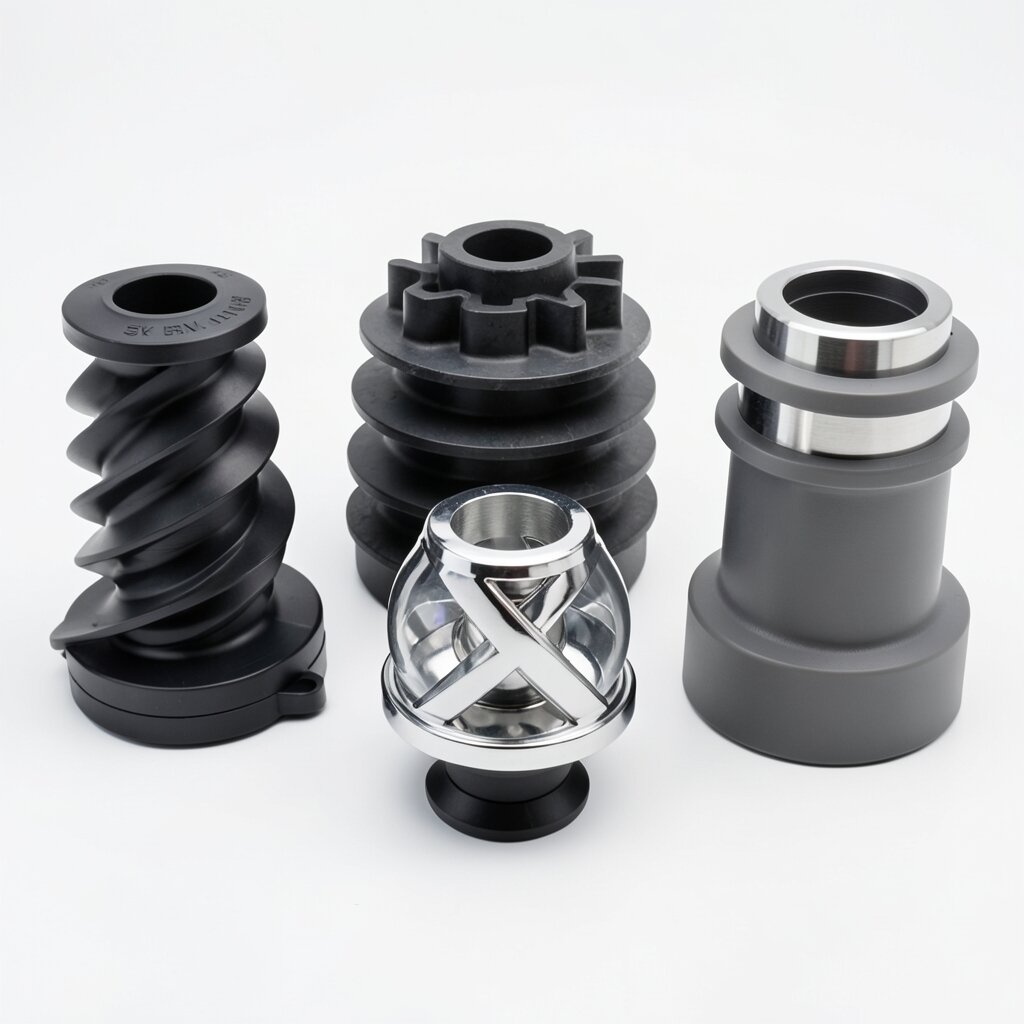
SS Venturi Injector
All-Stainless Steel Chemical Injector for Hot & Sanitary Service
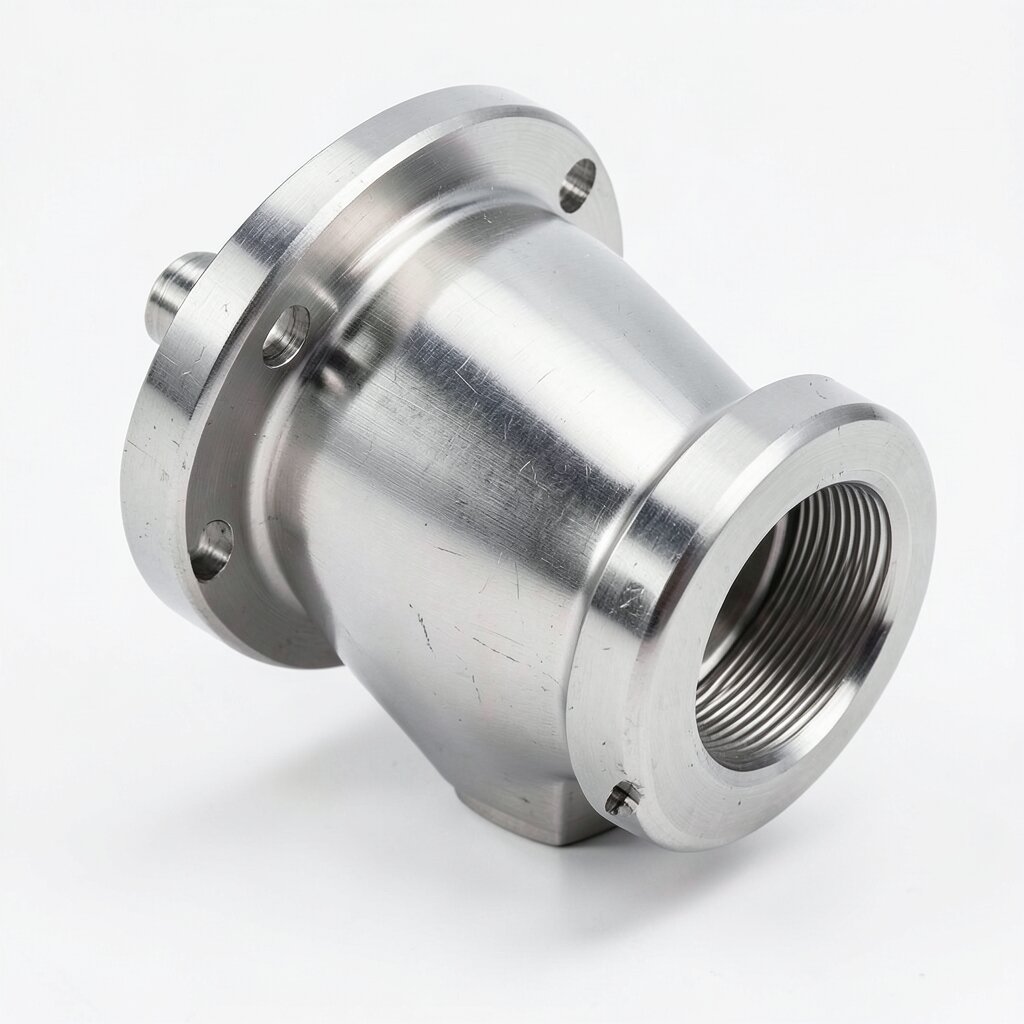
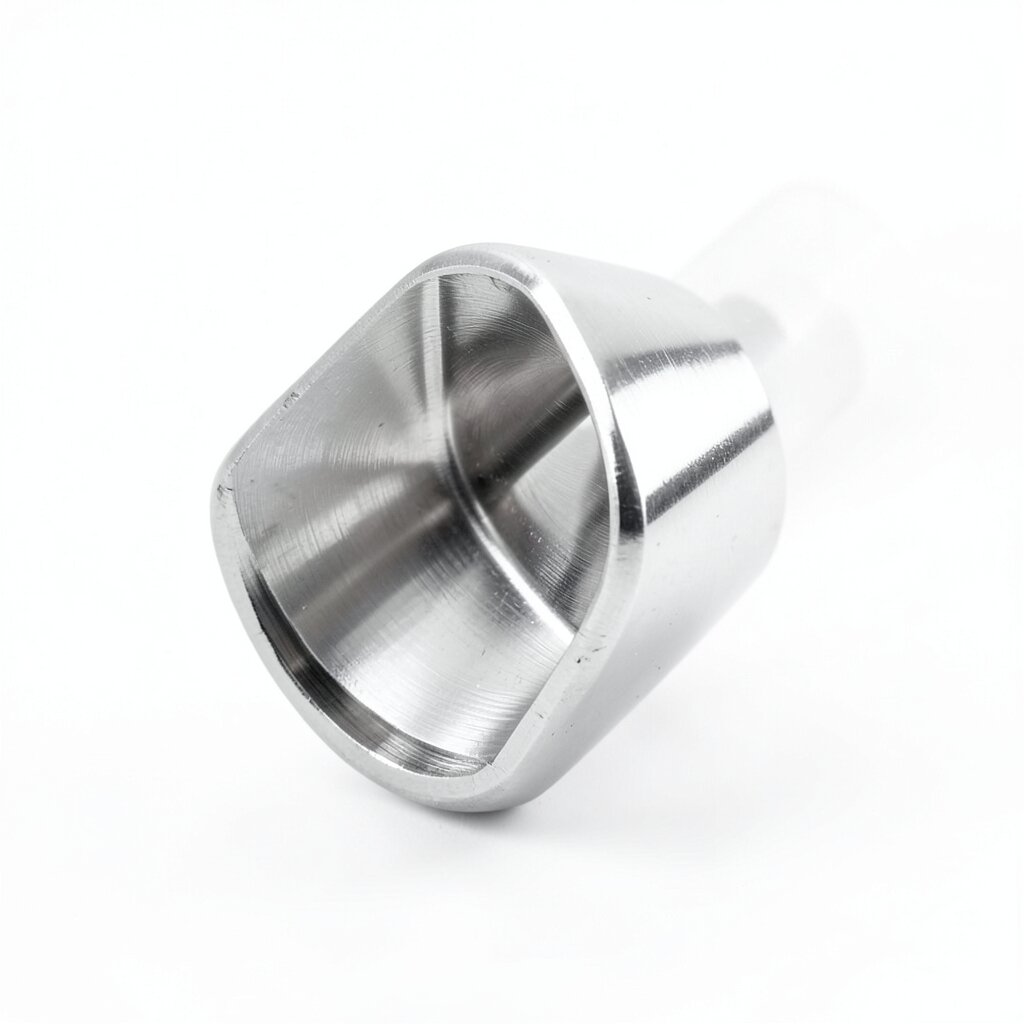
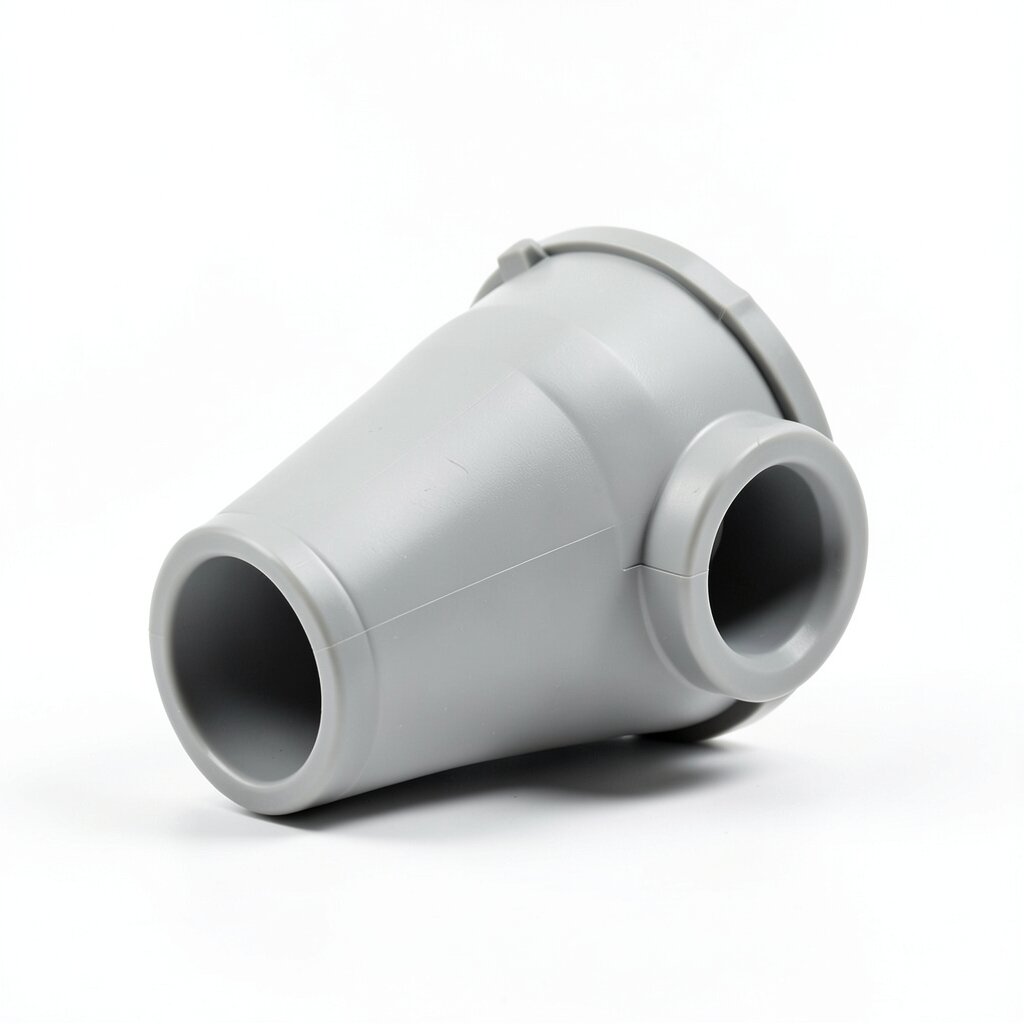
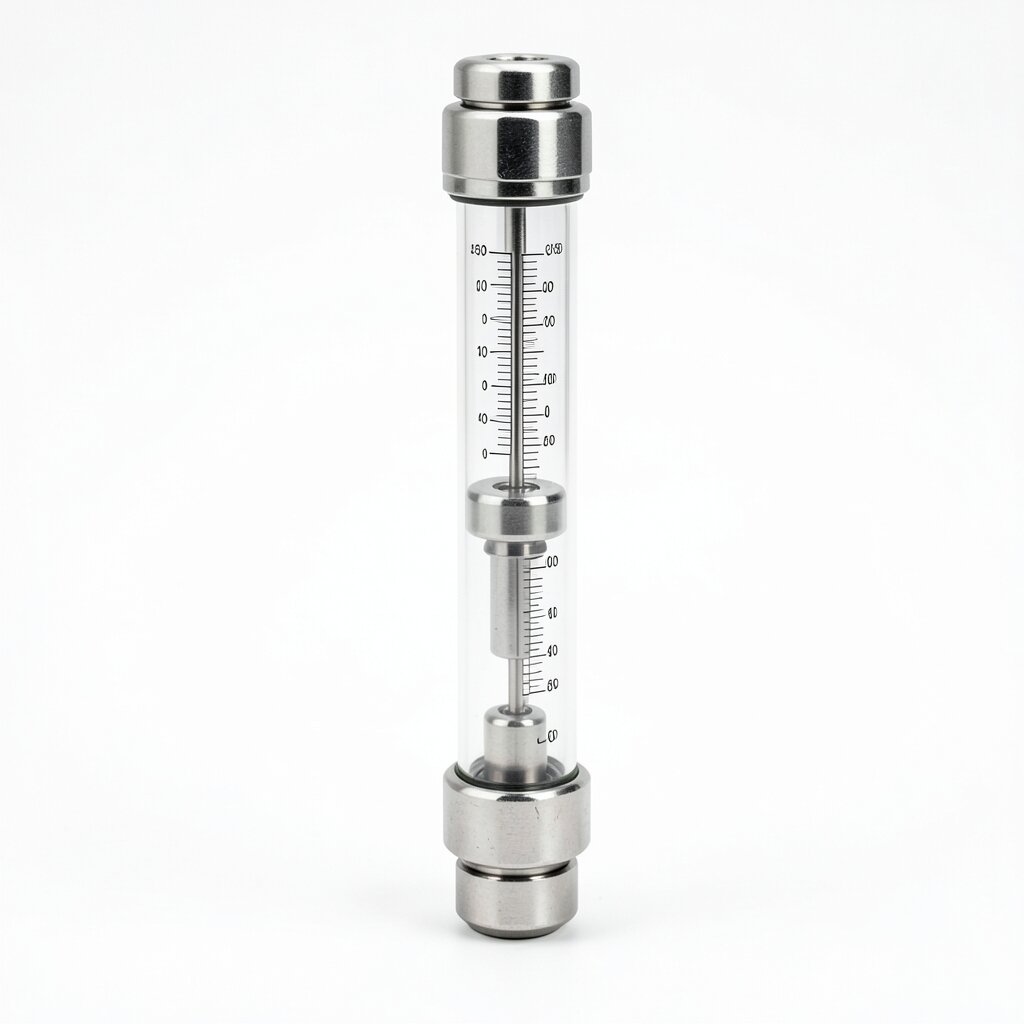
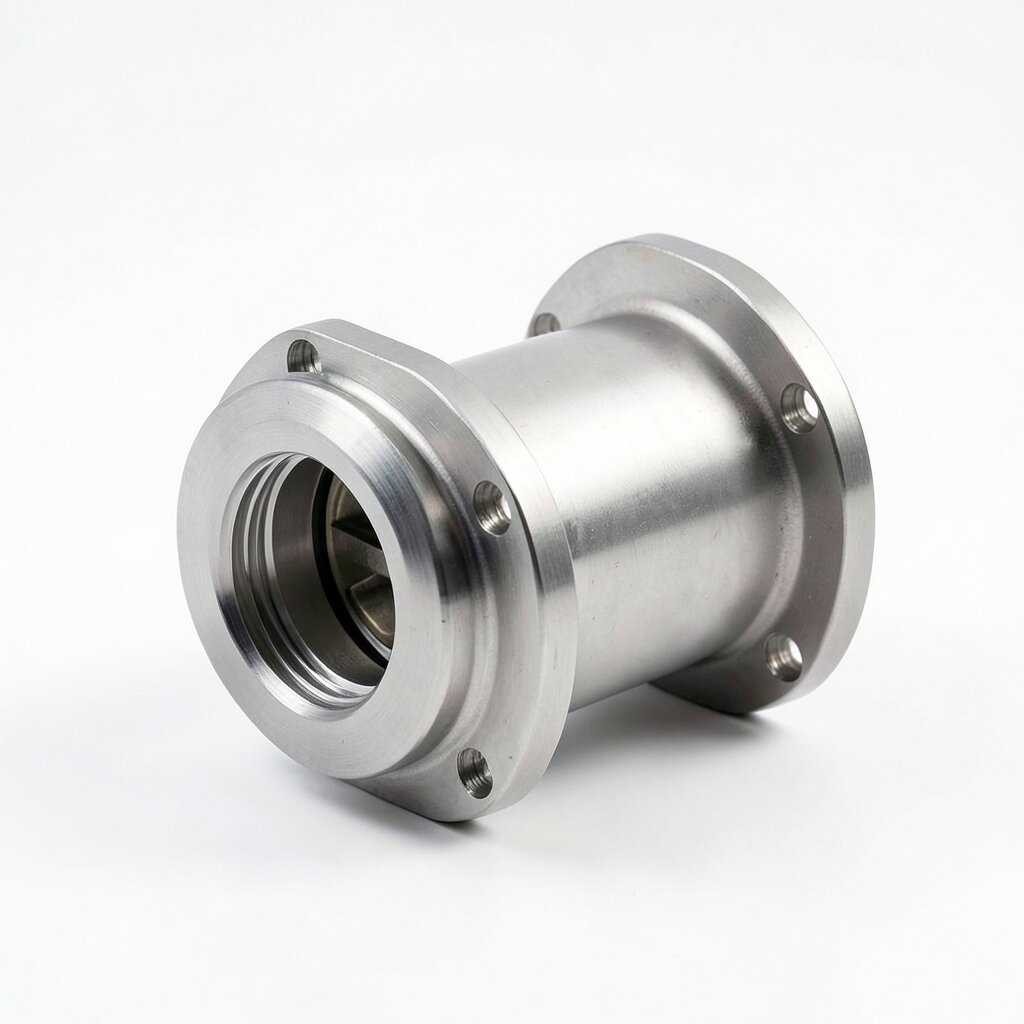
All-stainless steel (SS316L) Venturi chemical injector engineered for hot water, food-grade, pharmaceutical, and aggressive-chemistry service — 200°C rated, 16 bar motive pressure, electropolished wetted surface for sanitary CIP duty.
Product Overview
The SS Venturi injector is the all-stainless variant of our standard Venturi line, intended for installations where the body material must withstand high temperature, high pressure, or aggressive chemistry that would attack the PP or PVC alternative. The body is precision-machined from solid SS316L bar stock or fabricated from SS316L plate (for DN100 and above) with a fully welded construction. The throat is machined to a tolerance of ±0.05 mm, which is what allows the device to deliver a repeatable discharge coefficient Cd = 0.60-0.70 across the production run — important when multiple injectors are deployed in parallel and must share the same flow characteristic.
Three service environments drive the SS Venturi specification. The first is high-temperature water and CIP in food, beverage, and dairy plants, where the cleaning cycle reaches 80-95°C with 1-3% NaOH and 1% HNO3 rinses. PP softens above 60°C and is not usable here; SS316L handles the temperature, the CIP chemistry, and the steam sterilization cycles that follow. The second is hot-process chemical injection in chemical plants — for example, hot sulfuric acid injection at 120-180°C in a sulfonation process, or hot caustic injection at 150°C in a biodiesel transesterification reactor. The third is pharmaceutical and biotech, where the surface finish must support CIP/SIP validation and the wetted material must be documented for FDA / EMA submission.
The SS Venturi is also the right choice where the chemical includes organic solvents (which would attack PP and PVC) or hot oils (which would soften PP and require a metal construction for fire safety). For the most aggressive chemistries — concentrated sulfuric acid above 90%, hot concentrated NaOH above 50%, wet chlorine gas — the body is upgraded to higher-nickel alloys: Alloy 20 (Carpenter 20), Hastelloy C-276, or Inconel 625. These are available on request with extended lead times.
Design Features & Working Principle
The SS Venturi operates on the same Bernoulli principle as the standard PP/PVC Venturi, but with three engineering refinements specific to the high-performance duty cycle. First, the throat is machined with a converging half-angle of 21° and a diverging half-angle of 7°. The 21° convergence ensures that the flow remains attached to the wall at all operating points (no vena contracta effect), which gives a predictable Cd. The 7° divergence is below the natural boundary-layer separation angle, so the diffuser recovers 70-80% of the throat pressure drop without flow separation — important for minimizing the motive pressure loss.
Second, the suction port geometry is a lateral tap with a 6 mm bore on the throat centerline, located 1-2 mm downstream of the throat minimum. This position has been experimentally verified to give the lowest pressure coefficient (Cp = -0.92 to -0.95) and hence the highest suction lift, while remaining far enough from the diffuser start that the suction flow is not disturbed by the diffuser's pressure recovery.
Third, the end connections are flanged (DN50+) or tri-clamp (DN15-DN40), and the flange faces are machined flat to within 0.05 mm to ensure a metal-to-metal seal with the gasket. For tri-clamp service, the ferrules are machined to ISO 2852 or DIN 32676, with surface finish Ra ≤ 0.8 μm (electropolished optional to Ra ≤ 0.4 μm). The tri-clamp design allows the injector to be removed in under a minute for periodic throat inspection — important in sanitary service where the inspection interval is typically 3-6 months.
For high-temperature service above 150°C, the body is fitted with a thermal-expansion bellows on the suction line. The bellows absorbs the differential thermal expansion between the SS316L body and the (typically) carbon-steel motive pipe, which would otherwise stress the suction connection during heat-up and cool-down cycles. Without the bellows, repeated thermal cycling can crack the suction-port weld after 200-500 cycles.
Technical Specifications
| Parameter | Value |
|---|---|
| Body Material | SS316L (standard) / SS304 (economy) / Alloy 20 / Hastelloy C-276 (on request) |
| Throat Material | SS316L, machined to ±0.05 mm tolerance |
| Suction Port Material | SS316L, integrated with body (no threaded insert) |
| Seal Material | EPDM (standard) / FKM (Viton) / PTFE (high-temp) / FFKM (Kalrez, for hot acid) |
| Nominal Diameter (DN) | 15 / 20 / 25 / 32 / 40 / 50 / 65 / 80 / 100 / 150 |
| Motive Flow Range (DN15) | 0.5-2.5 m³/h |
| Motive Flow Range (DN25) | 1.5-7.0 m³/h |
| Motive Flow Range (DN50) | 6-25 m³/h |
| Motive Flow Range (DN100) | 25-80 m³/h |
| Motive Flow Range (DN150) | 80-200 m³/h |
| Throat-Inlet Area Ratio (β) | 0.45-0.55 (standard) / 0.30-0.40 (high-ratio) / 0.65-0.75 (low-ratio) |
| Motive Pressure (Continuous) | 16 bar (standard) / 25 bar (heavy-wall) |
| Motive Pressure (Proof Test) | 24 bar (standard) / 37.5 bar (heavy-wall) |
| Motive Pressure (Min. Burst) | 48 bar (standard) / 75 bar (heavy-wall) |
| Motive Pressure Drop | 5-25% of inlet pressure (β-dependent) |
| Suction Lift (Practical) | 4-6 m at 1 bar pressure drop; 7-9 m at 2 bar pressure drop |
| Injection Ratio Range | 0.1-5% (standard β) / 0.01-0.1% (low β) / 5-50% (high β) |
| Discharge Coefficient C d (Suction) | 0.60-0.70 (geometry-dependent, ±0.02 unit-to-unit) |
| Pressure Recovery (Diffuser) | 70-80% of throat pressure drop recovered |
| Temperature Range (SS316L, EPDM) | -40°C to +150°C |
| Temperature Range (SS316L, FKM) | -20°C to +200°C |
| Temperature Range (SS316L, FFKM) | -10°C to +250°C (special order) |
| End Connections (DN15-DN40) | Tri-clamp ISO 2852 (standard) / NPT threaded (optional) / flanged |
| End Connections (DN50-DN150) | Flanged ANSI B16.5 Class 150 / DIN PN16 / JIS 10K |
| Suction Port Connection | 1/2" NPT (DN15-DN40) / 3/4" NPT (DN50-DN80) / 1" NPT (DN100+) |
| Surface Finish (Standard) | Ra ≤ 0.8 μm (mechanically polished) |
| Surface Finish (Electropolished) | Ra ≤ 0.4 μm wetted surface |
| Thermal Expansion Bellows | SS316L, fitted to suction port for service > 150°C |
| Documentation (Sanitary Variant) | EN 10204 3.1 material cert, surface finish cert, FDA / USP Class VI compliance |
| Net Weight (DN25 SS316L) | 2.5 kg |
| Net Weight (DN100 SS316L) | 22 kg |
| Max Temperature (Continuous) | 200°C 60°C |
| Max Motive Pressure (Continuous) | 16 bar (25 bar HW) 6 bar |
| Solvent Resistance | Excellent (all common solvents) Poor (swells in aromatics, chlorinated) |
| Acid Resistance (Conc. H 2 SO 4 > 70%) | Limited (use Alloy 20) Limited (use PVDF) |
| Cost (Relative, DN50) | 4-5× 1× (baseline) |
| Weight (Relative, DN50) | 8-10× 1× (baseline) |
| CIP / Sanitary Compatibility | Excellent (electropolished) Not suitable |
| Thermal Expansion Bellows | Required > 150°C Not required |
| Service Life (Clean Water) | 15+ years 10+ years |
Frequently Asked Questions
SS316L contains 2-3% molybdenum, which improves chloride pitting resistance by a factor of 5-10 compared to SS304. The L (low-carbon) variant is mandatory for any welded construction because it prevents carbide precipitation at the grain boundaries during the cooling cycle of the weld — carbide precipitation in SS304 creates a chromium-depleted zone that is vulnerable to intergranular corrosion. SS316L is the standard for water-treatment chemicals that contain chlorides (NaCl, HCl, bleach) and for any service where the injector sees periodic cleaning with acidic or basic cleaners.
Yes. SS316L is the workhorse material for hot NaOH service up to 50% concentration and 200°C. Above 50% NaOH or above 200°C, specify the higher-nickel alloy (Alloy 20 or Hastelloy C-276) — caustic stress corrosion cracking can occur on SS316L at very high concentrations and temperatures. The standard SS Venturi is rated to 200°C continuous and 16 bar motive pressure, which covers the typical hot-CIP and hot-process injection duty.
Electropolishing removes the surface micro-roughness created by machining, leaving a surface finish of Ra ≤ 0.4 μm. The benefits are threefold: (1) reduced adhesion of biological material and process residue, which is critical for pharmaceutical and food-grade service; (2) improved corrosion resistance, because electropolishing enriches the surface in chromium and molybdenum relative to iron; (3) easier clean-in-place (CIP) — the smoother surface is faster to clean and uses less cleaning chemical. The electropolished variant is standard for sanitary and pharma service and is optional for industrial water-treatment.
The standard SS316L body is rated to 16 bar continuous motive pressure, with a 24 bar proof test and a 48 bar minimum hydrostatic burst. For higher-pressure service (16-40 bar), the heavy-wall variant with a thicker barrel and forged end flanges is offered. Above 40 bar, consult the factory for a custom design or consider a metering-pump-based system instead of a Venturi.
Yes, with the appropriate configuration. For CIP duty, specify the tri-clamp end connections, the electropolished interior (Ra ≤ 0.4 μm), and the FKM or EPDM seal materials rated for the CIP chemistry (typically 1-3% NaOH at 80°C followed by 1% HNO 3 at 50°C). The injector should be installed in a CIP loop with a minimum circulating velocity of 1.5 m/s to ensure proper cleaning of the throat and diffuser.
Related Products