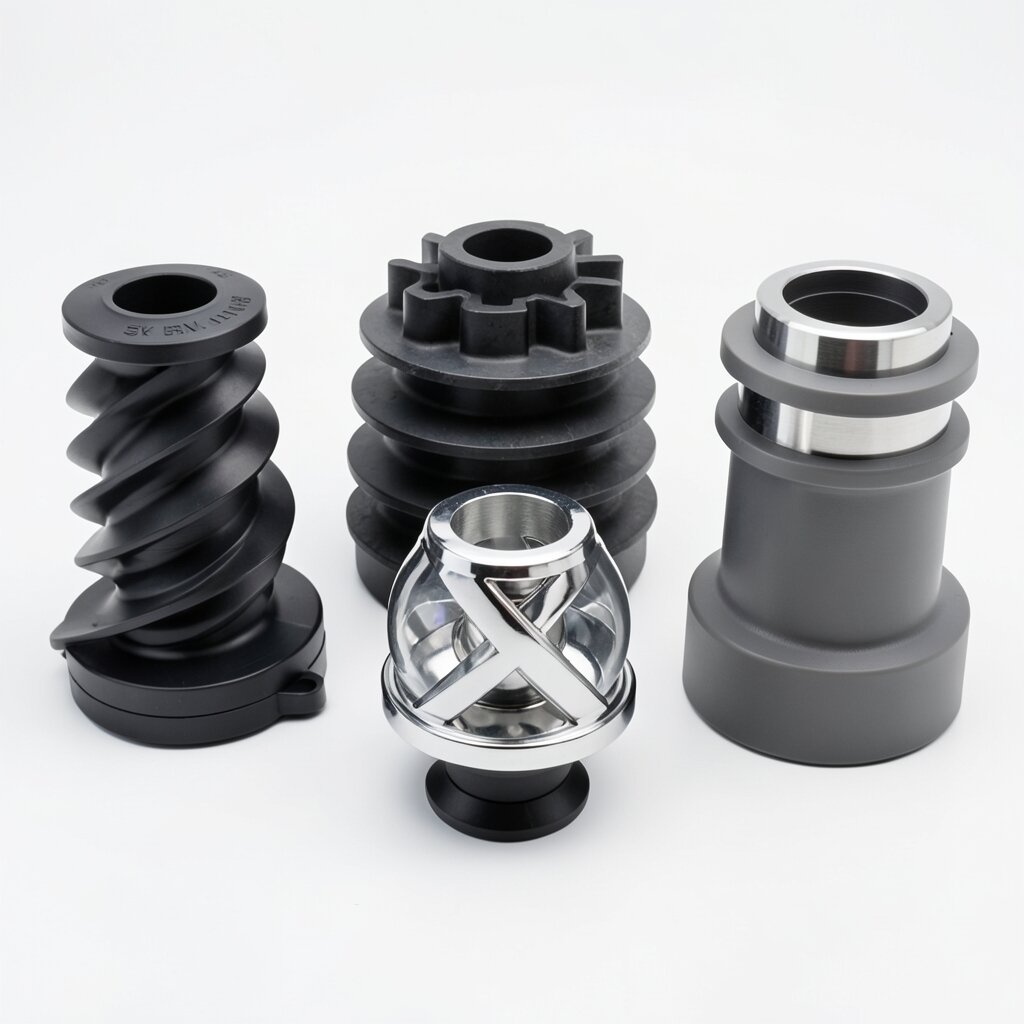
Precision Static Mixer
Stainless Steel Inline Mixer for Epoxy, Adhesives & Resins
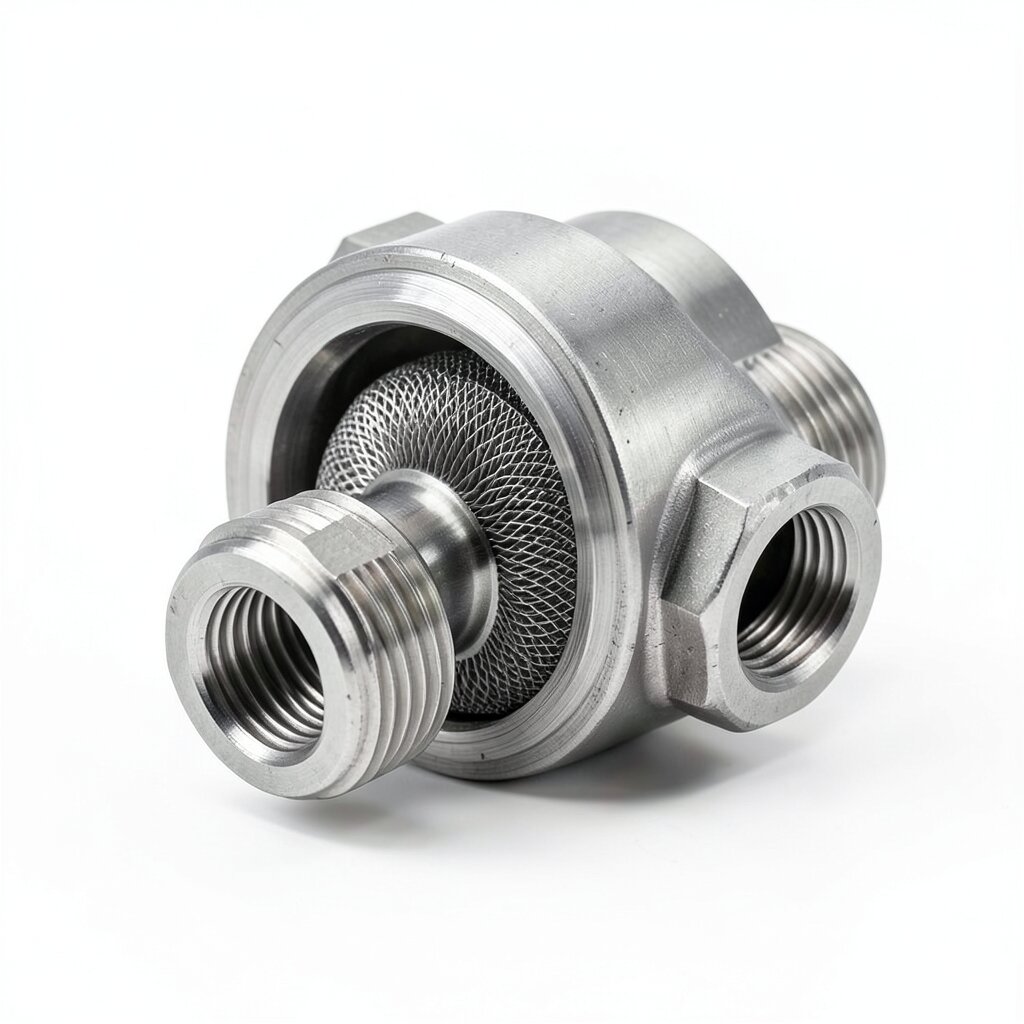
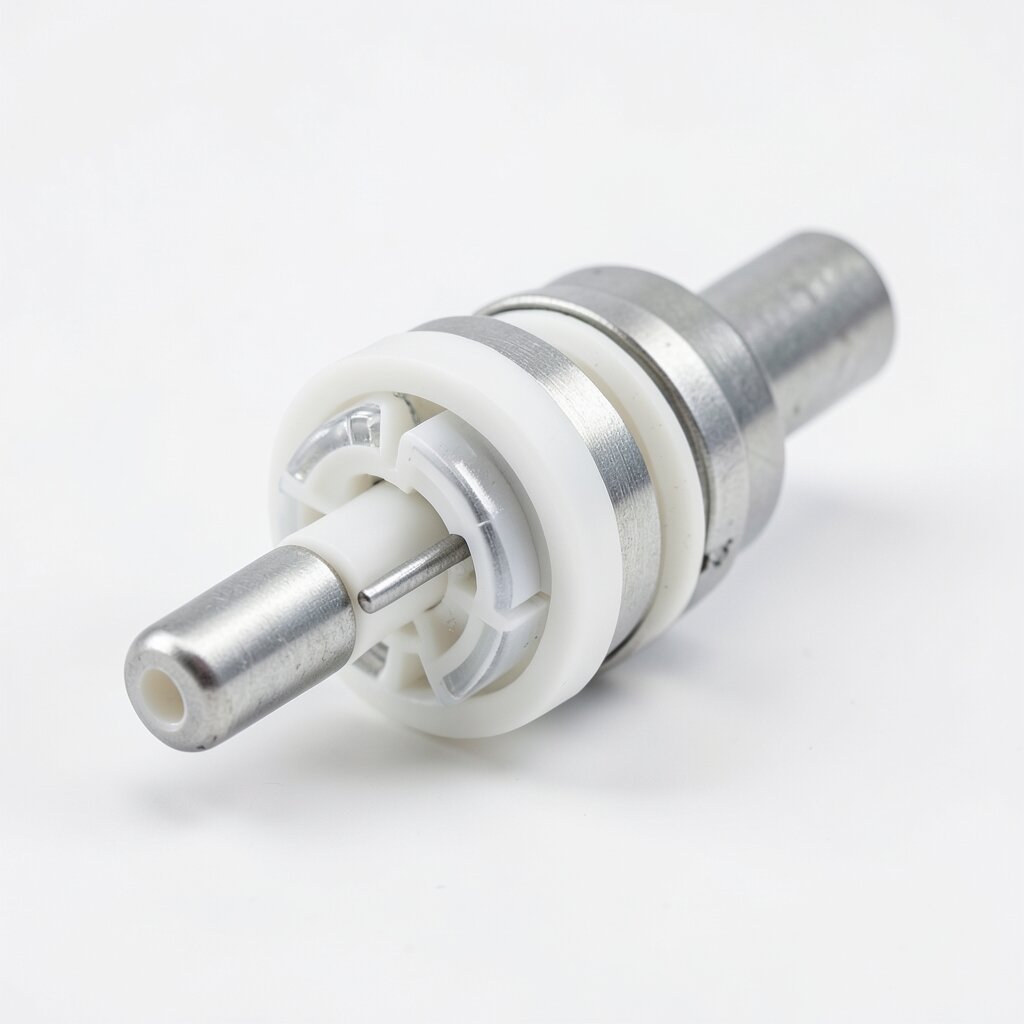
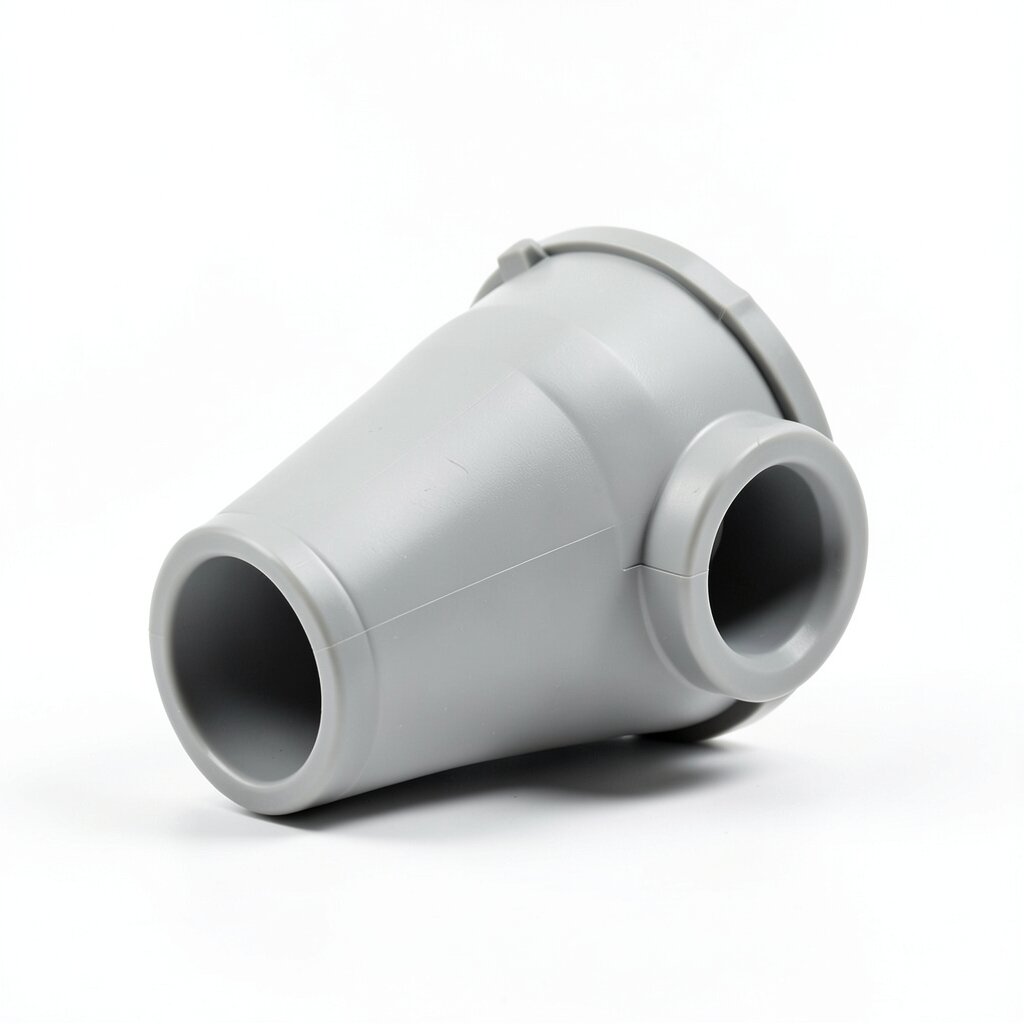
Stainless steel inline static mixer engineered for two-component adhesives, epoxies, polyurethanes, and silicones — repeatable CoV ≤ 1% at ratios from 1:1 to 100:1, with reusable and disposable cartridge options.
Product Overview
The precision static mixer is a small-bore inline mixing device built specifically for the metered dispensing of two-part reactive chemistries — epoxies, polyurethanes, methacrylates, silicones, polysulfides, and the family of structural adhesives used in automotive, electronics, aerospace, and medical-device assembly. It is a direct evolution of our industrial static-mixer line, redesigned around the unique demands of low-flow, high-precision dispense: short mix length, clean disassembly, low dead volume, and a housing that can be specified either as a reusable stainless assembly or as a disposable cartridge that is discarded at end-of-life.
Inside the housing, 12 to 32 right-hand/left-hand helical elements (SS316L for the reusable line, PP or PA66 for the disposable cartridge) are stacked in alternating rotation. Each element forces the stream to split, rotate 180°, and recombine with its neighbor; the cumulative effect over 24 elements is approximately 4 million theoretical sub-streams, which is what allows the mixer to deliver a coefficient of variation of 1% or better on the discharge — well inside the cure-window of even the most ratio-sensitive two-part systems.
Compared to dynamic (impeller) mixers used in the same service, the precision static mixer has no moving parts, no seals to wear, no electrical power, and an order-of-magnitude lower purge volume. The trade-off is that it cannot compensate for ratio error upstream — if the metering pumps drift off-ratio, the discharge will follow. For that reason, the mixer is designed to be paired with positive-displacement or gear metering pumps whose accuracy is independently verified, and the system-level design assumes a 0.5-1% pump accuracy as the floor for the achievable end-of-arm mixing precision.
Three product variants cover the bulk of the application space. The standard reusable stainless mixer is the workhorse for high-volume production cells where the dispense volume per shift is large and the cost-per-shot of a disposable cartridge is uneconomic. The disposable cartridge is the choice for low-volume or multi-chemistry cells, for pre-mixed-and-frozen applications, and for any process where cross-contamination between batches is unacceptable. The medical-grade variant adds a Class VI / USP <87> biocompatibility certification, gamma-stable construction, and a 100% lot-traceable element set.
Design Features & Working Principle
The mixing elements are pressed from 0.4-0.6 mm SS316L sheet (or injection-molded PP/PA66 for the cartridge variant) into a four-vane helical form. Each element has an outer diameter of 4.7-9.8 mm depending on the housing size, with a vane twist of 180° over the element length of 3.0-5.5 mm. Elements are stacked alternating R-H and L-H so that each joint is a 90° turn, and the cumulative twist over a 24-element stack is 12 full 180° rotations.
As the two metered streams enter the housing, they are immediately subdivided by the first element into four quadrants. The 90° turn at each element joint forces the quadrants to cross over into the adjacent channel; the next element then splits each quadrant again, producing 16 sub-streams. By element 12, the cross-section contains approximately 4,000 sub-streams; by element 24, the count exceeds 4 million. The residence time through a 24-element housing is on the order of 0.2-0.5 s at typical dispense rates, which is short enough to prevent premature reaction in most two-part systems (typical pot life > 30 s at dispense temperature).
The housing itself is a precision tube with an internal surface finish of Ra ≤ 0.8 μm. End connections are machined from bar stock and welded to the tube by orbital TIG; the welds are passivated and dye-penetration-tested before assembly. For the disposable cartridge, the housing is a single injection-molded PP or PA66 part with integral male/female luer or UNF thread, and the elements are ultrasonically welded in place — the entire cartridge is then bagged in a nitrogen-purged foil pouch for shelf life of 18-24 months at room temperature.
Three options that frequently matter in dispense applications: bayonet-mount cartridges for quick-changeover in production cells (change time < 5 s); integral static mixers with a purge port for color-change or chemistry-changeover with zero disassembly; and low-residence ("dead-volume") tips that reduce the wetted volume between mix point and dispense tip to as little as 0.05 mL — important for shot sizes in the 0.1-1 mL range where every microliter of internal volume is material wasted at the end of a run.
Technical Specifications
| Parameter | Value |
|---|---|
| Mixing Element Count | 12 / 18 / 24 / 32 elements (standard); custom up to 48 |
| Element Material (Reusable) | SS316L, 0.4-0.6 mm sheet, mirror finish |
| Element Material (Disposable) | Polypropylene (PP) or Polyamide 6.6 (PA66), natural or white |
| Housing Material (Reusable) | SS316L tube, SS316L end fittings, orbital TIG welded |
| Housing Material (Disposable) | Single-piece PP or PA66, ultrasonic-welded elements |
| Housing Bore | 5.0 / 6.3 / 8.0 / 9.8 / 12.0 mm (standard sizes) |
| Working Pressure (Continuous) | 16 bar (standard SS316L) / 70 bar (heavy-wall variant) |
| Proof Pressure | 24 bar (standard) / 105 bar (heavy-wall) |
| Burst Pressure (Min.) | 48 bar (standard) / 175 bar (heavy-wall) |
| Viscosity Range | 50 to 250,000 cP (metered streams individually) |
| Mix Ratio Range | 1:1 to 100:1 (by volume) |
| Discharge Coefficient of Variation | CoV ≤ 1% (24-element, 1:1 to 10:1 ratio, 1-500 cP) |
| Residence Volume (24-element, 6.3 mm bore) | 2.1 mL nominal; "low-volume tip" 0.05 mL post-mix |
| Temperature Range (SS316L) | -40°C to +200°C (EPDM o-rings standard) |
| Temperature Range (PP Cartridge) | 0°C to +80°C |
| Temperature Range (PA66 Cartridge) | -20°C to +150°C (dry); +80°C in water/glycol |
| End Connections (Reusable) | 1/4-28 UNF, 1/2-20 UNF, 1/8 NPT, 1/4 NPT, compression fittings |
| End Connections (Disposable) | Bayonet (Nordson-style), luer-lock, integral Luer taper |
| Surface Finish (SS316L Wetted) | Ra ≤ 0.8 μm (electropolished optional to Ra ≤ 0.4 μm) |
| Pressure Drop (24-element, 1:1, 50 cP, 20 mL/s) | 0.4-0.8 bar |
| Biocompatibility (Medical Variant) | USP <87> Class VI, ISO 10993-5, gamma-stable to 50 kGy |
| Pressure Rating | 16 bar std / 70 bar HW 4 bar 8 bar |
| Max Temperature | 200°C (EPDM) 80°C 150°C dry |
| Viscosity Range | 50-250,000 cP 50-15,000 cP 50-50,000 cP |
| Abrasive Filler Tolerance | High (carbide edge option) Low (softens at sharp edges) Medium |
| Reuse Cycles | 500-1,000 cycles Single use Single use |
| Cost per Shot (relative) | 0.3× (amortized over 500 cycles) 1.0× (baseline) 1.2× |
| Biocompatibility | Optional Class VI Not rated Class VI on request |
| Cleaning Method | Solvent flush / ultrasonic Replace Replace |
Frequently Asked Questions
When paired with two metering pumps of ±0.5% accuracy and a 24-element housing, the precision static mixer delivers a discharge CoV ≤ 1% at 1:1 to 10:1 ratios. For ultra-high ratios (100:1 and above), specify the long-housing (32-element) variant; the CoV widens to about 2-3% but remains well within the cure-window of most two-part epoxies.
Two variants are offered. The industrial reusable version uses SS316L elements and a sealed housing with end caps that allow disassembly, solvent flushing, and ultrasonic cleaning. The disposable cartridge version uses welded PP or PA66 elements and is replaced after the cartridge life is exhausted (typically 50-200 L of mixed adhesive, depending on chemistry).
The standard SS316L housing is rated for 16 bar continuous and 25 bar peak (1.5× safety factor on hydrostatic burst). For higher-pressure service up to 70 bar, a heavy-wall housing with a thicker element stack and forged end fittings is available; consult the factory with your fluid viscosity, flow rate, and peak-pressure profile.
Yes, with caveats. Abrasive fillers such as fumed silica, aluminum trihydroxide, or glass microspheres up to 50 μm particle size are tolerated in the SS316L element. For larger or sharper fillers (above 100 μm, or fibers such as milled carbon fiber), specify the carbide-edged variant; the element leading edge is hard-faced to RC 60-65 to resist erosion.
Three interface options are stocked: 1/4-28 UNF female thread for Nordson-style valve mounts, 1/2-20 UNF for larger robot-mounted dispense heads, and luer-lock for low-pressure medical and lab applications. Custom adapters (banjo, T-style, manifold-mount) are machined to drawing on request with a 10-day typical lead time.
Related Products