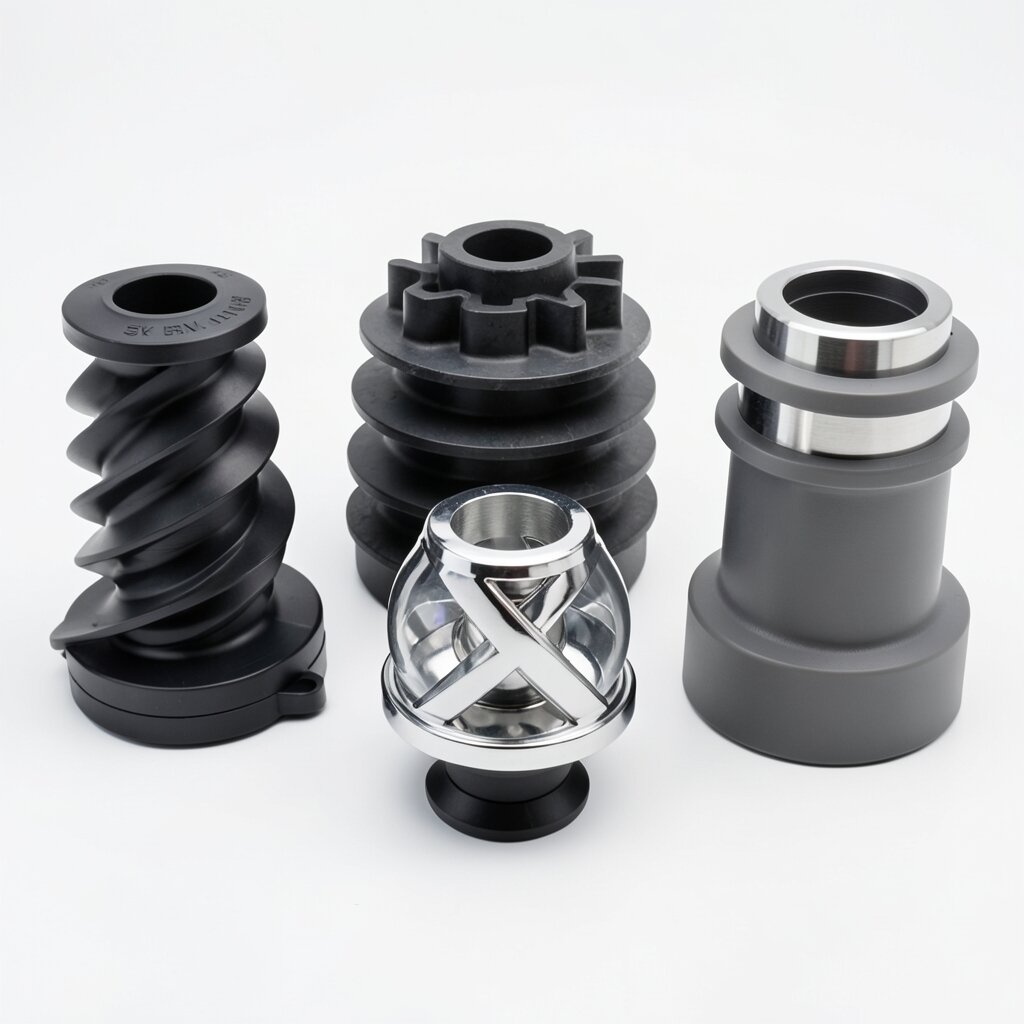
Dispensing Mixing Nozzle
Two-Component Adhesive Static Mixer Tip
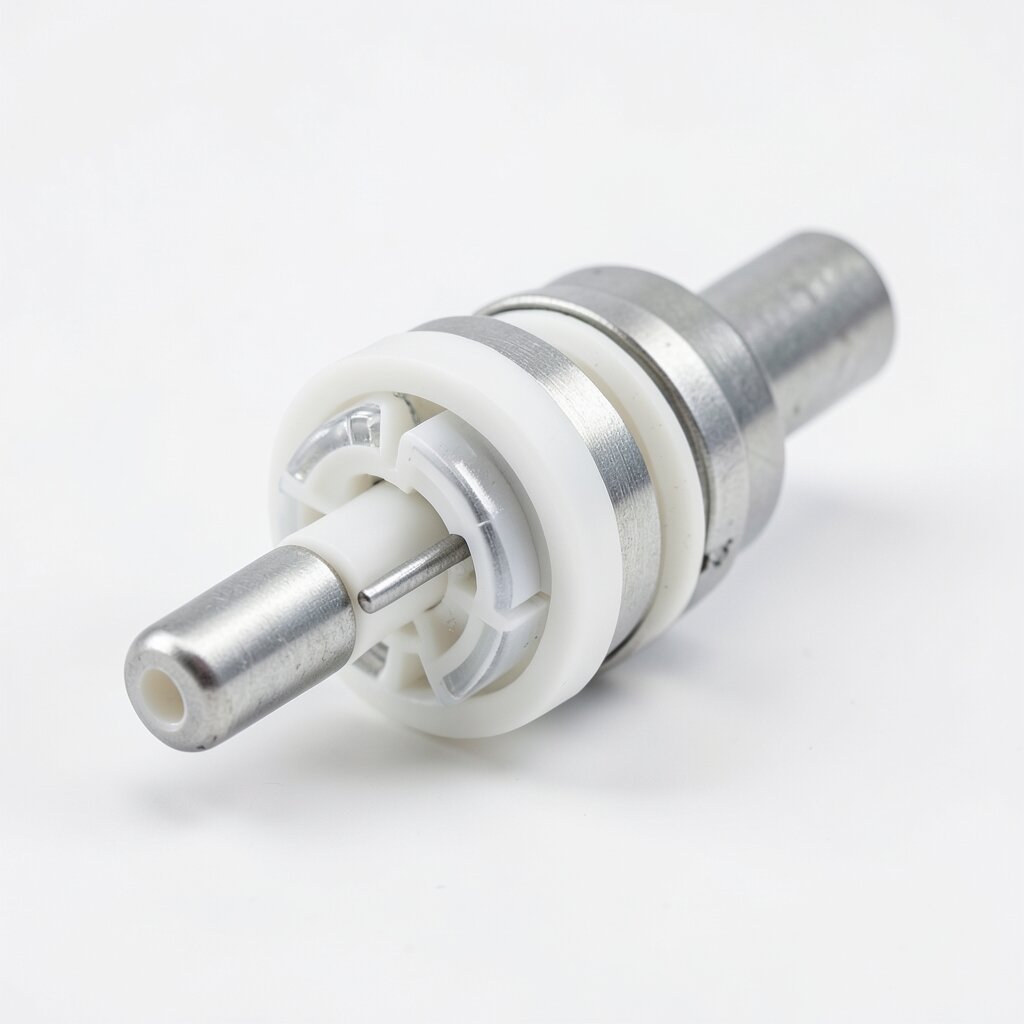
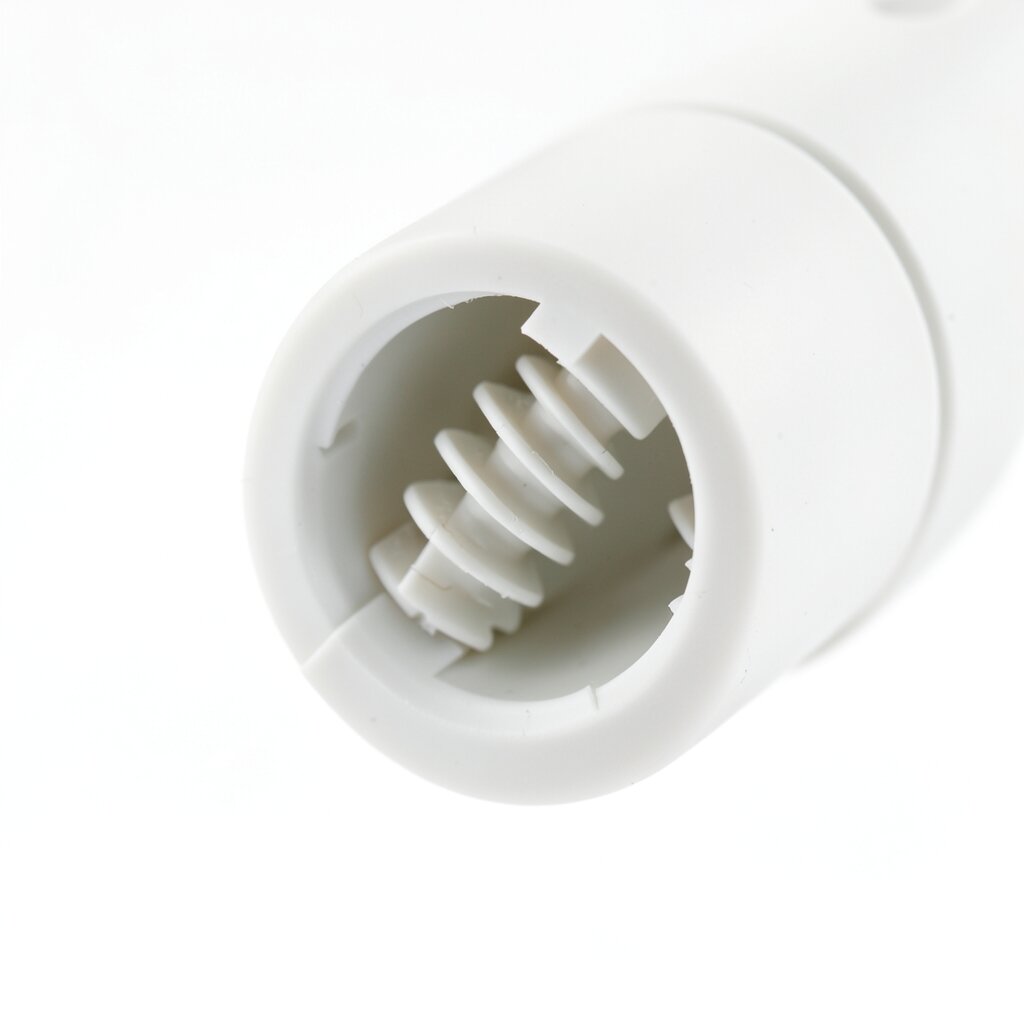
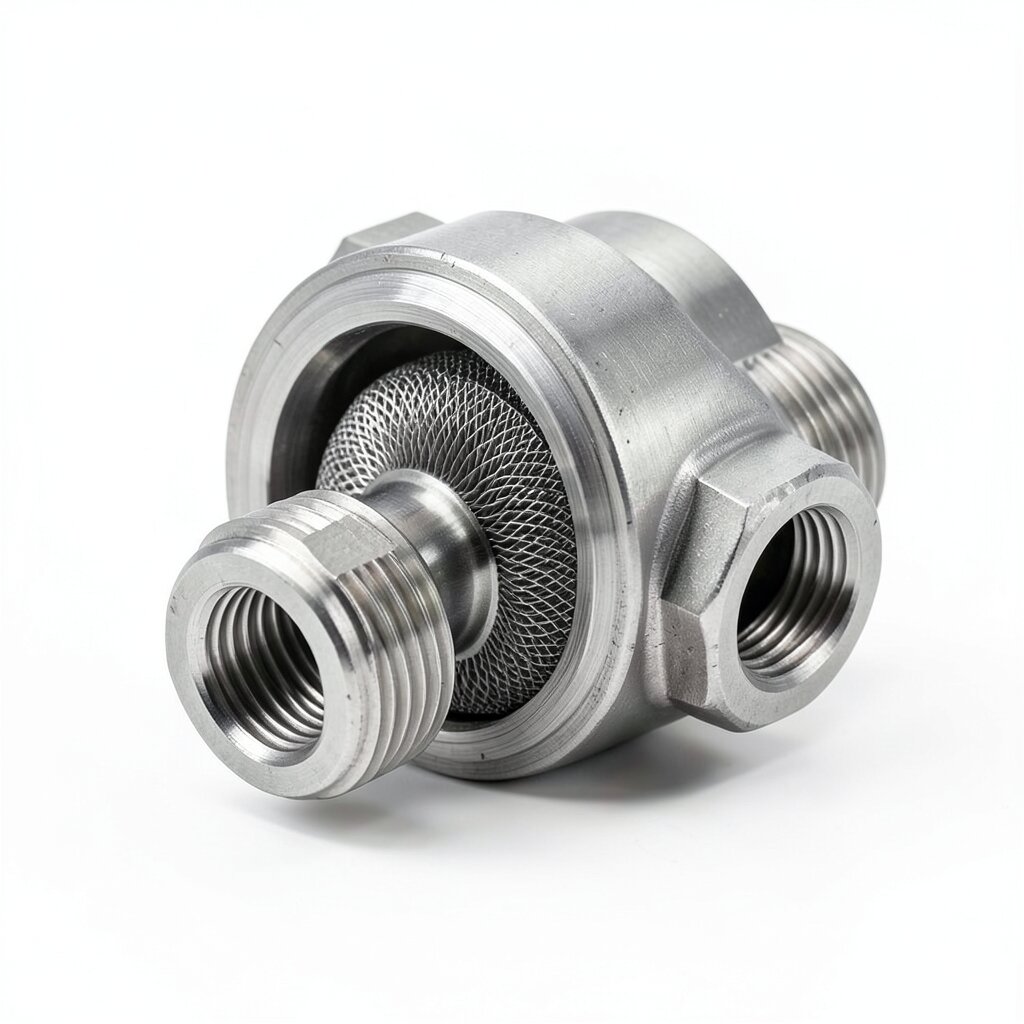
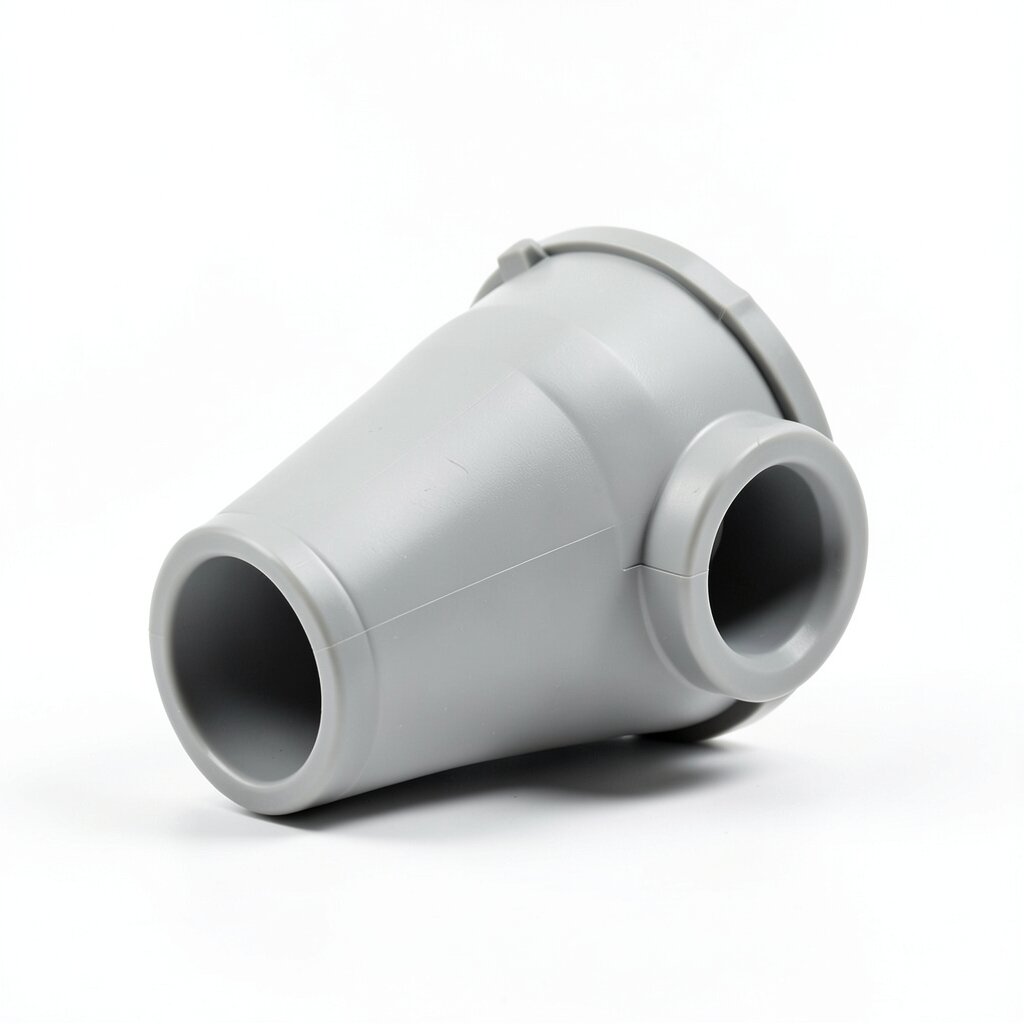
Disposable two-component adhesive static-mixer tip — 16 to 24 element PP/PA66 construction with bayonet or luer-lock interface, drop-in compatible with the major dispense-valve brands used in electronics, automotive, and construction assembly.
Product Overview
The dispensing mixing nozzle (also called a static mix nozzle, mixer tip, or mixing nozzle) is the consumable end of a two-component adhesive dispense system. It accepts the two individually metered streams from the dispense valve, performs the inline mix through a stack of 16 to 24 helical elements, and forms the final bead or shot at the orifice outlet. The unit is designed for single-shift or single-batch use and is replaced at the end of the run — the elimination of cleaning, purging, and cross-contamination is the central design driver, and it is the reason that two-component dispense lines in production environments are almost universally built around the disposable mixer concept.
Our dispensing nozzle line covers the three interface standards that dominate the global market: the 1/4 in. bayonet (also called the 7.5 mm bell-attachment system, used on Nordson 770-series, Fisnar, and most Chinese-brand dispense valves), the 3/8 in. bayonet (used on larger-volume Nordson and Henkel valves), and the luer-lock (used on medical, dental, and low-volume lab dispense). All three interfaces are dimensionally interchangeable with the major OEM products, so the ywmixing nozzle is a drop-in aftermarket consumable for installed dispense-valve populations without any tool-change or adapter requirement.
Inside the housing, the element stack is the same geometry as our precision static mixer (which is the reusable parent product), but with element count reduced to 16-24 (versus 24-32 in the reusable) to keep the post-mix tip volume small and the dispense pressure manageable on the downstream valve. The mixer's CoV performance remains ≤ 1% at 1:1 to 10:1 ratios — comparable to the reusable parent — because the element geometry is identical, just shorter.
The dispense tip itself is a separate precision-machined component, swaged or ultrasonically welded to the housing outlet. Three standard tip profiles cover 90% of the application space: the straight-cut cylindrical tip for general bead and dot dispense; the tapered tip for fine-needle dispense down to 0.3 mm orifice; and the Luer taper for medical and dental applications where a luer needle or cannula is attached by the user.
Design Features & Working Principle
The housing is injection-molded in one piece from medical-grade PP (Borealis BJ368MO or equivalent) or PA66 (DuPont Zytel 101L or equivalent), with a wall thickness of 1.2-1.5 mm. The mixing elements are injection-molded as a separate subassembly and then ultrasonically welded into the housing — this allows the element geometry to be molded to a tighter tolerance (the elements are 0.05 mm thick and the vane twist angle is held to ±2°) than would be possible in a single-shot mold. The result is a nozzle whose discharge CoV is within 0.2% of the OEM reference product, despite the absence of any metal or wear components.
The mixing elements are 4-vane helical form, with each element 2.5-3.5 mm long, twisted 180° over its length, and stacked alternating right-hand/left-hand rotation. The 16-element stack produces about 65,000 theoretical sub-streams at the discharge; the 24-element stack produces about 4 million. The difference matters mostly for high-ratio systems — at 1:1 and 4:1, the 16-element stack is sufficient; at 10:1 and above, the 24-element stack is recommended.
The interface is held in the dispense valve by a stainless-steel or PA66 retaining collar. The collar has two opposing tabs that slide into the valve's bell-attachment and then rotate 90° to lock. Removal is the reverse — rotate 90° back and pull. On the luer-lock variant, the housing carries a male luer taper that mates to a standard luer needle or cannula; the luer is held by a 6° tapered friction fit and a threaded collar.
Three design details that are not visible from the outside but matter in production: (1) the inlet port geometry is asymmetric on the high-ratio variants (10:1 and above), with the minor-component port offset toward the housing centerline so it enters the major stream as a thin annular sheet — this raises the local mixing intensity at the inlet and reduces the required element count; (2) the post-mix tip is short — typically 8-12 mm from the last element to the orifice — to keep the residence volume between mix point and dispense point below 0.3 mL, which is critical for fast-curing systems where any extra volume would waste material at end-of-shot; and (3) the outer surface of the housing is textured in the grip area, which makes the nozzle easy to handle with gloves during changeover.
Technical Specifications
| Parameter | Value |
|---|---|
| Mixing Element Count | 16 (standard) / 20 / 24 elements |
| Element Geometry | 4-vane helical, 180° twist per element, alternating R-H / L-H |
| Housing Material | Polypropylene (PP) or Polyamide 6.6 (PA66); natural, white, or UV-opaque (black) |
| Retaining Collar Material | SS304 (standard) or PA66 (low-cost variant) |
| Housing Bore (Inside Element) | 3.0 / 4.0 / 5.0 / 6.0 / 8.0 mm |
| Housing Length (16-elem, 5 mm bore) | 62 mm nominal |
| Housing Length (24-elem, 5 mm bore) | 92 mm nominal |
| Working Pressure (Continuous) | 4 bar (PP) / 8 bar (PA66) |
| Burst Pressure (Min.) | 12 bar (PP) / 24 bar (PA66) |
| Viscosity Range (Each Stream) | 50 to 15,000 cP (PP) / 50-50,000 cP (PA66) |
| Mix Ratio Range | 1:1 to 10:1 (standard); 1:1 to 50:1 (asymmetric high-ratio variant) |
| Discharge Coefficient of Variation | CoV ≤ 1% (24-element, 1:1 to 10:1, 1,000-15,000 cP) |
| CoV (Asymmetric, 10:1 to 50:1) | ≤ 3% at 50:1 |
| Residence Volume (16-elem, 4 mm bore) | 0.7 mL nominal |
| Residence Volume (24-elem, 4 mm bore) | 1.0 mL nominal |
| Post-Mix Tip Length | 8-12 mm (short-tip variant: 4-6 mm) |
| Tip Orifice (Standard) | 1.0 / 1.6 / 2.0 / 2.5 / 3.0 mm (custom 0.3-5.0 mm on request) |
| Tip Orifice (Luer) | Luer taper for needle/cannula attachment by user |
| Operating Temperature (PP) | 0°C to +80°C (continuous); +95°C short term (≤ 15 min) |
| Operating Temperature (PA66) | -20°C to +150°C (dry); 0°C to +80°C in water/glycol |
| End Connection (Standard) | Bayonet 1/4 in. (7.5 mm bell); Bayonet 3/8 in.; Luer-lock |
| Compatible Valves | Nordson 770 / Sulzer Mixpac / PVA / Fisnar / generic 1/4 in. bell |
| Shelf Life (Sealed Pouch) | 24 months (PP) / 18 months (PA66) at 5-25°C, < 60% RH |
| Packaging | 50 or 100 pieces per nitrogen-purged foil pouch, with desiccant |
| Biocompatibility (Medical Variant) | USP <87> Class VI (PP only), ISO 10993-5 |
| Pressure Rating | 4-8 bar 16-70 bar |
| Max Temperature | 80-150°C 200°C |
| Viscosity Range | 50-50,000 cP 50-250,000 cP |
| Abrasive Filler Tolerance | Low-Medium High |
| Reuse Cycles | Single use 500-1,000 cycles |
| Cost per Shot | Higher (replaced per shift/run) Lower (amortized over 500+ cycles) |
| Cleaning Required | None Solvent flush / ultrasonic |
| Cross-Contamination Risk | Zero (new nozzle per chemistry) Requires validated cleaning protocol |
| Typical Element Count | 16-24 24-32 |
| CoV Performance (1:1 to 10:1) | ≤ 1% ≤ 1% |
Frequently Asked Questions
Yes. Standard bayonet interfaces (1/4 in. and 3/8 in. retention collars) are dimensionally identical to Nordson 770-series and similar Sulzer Mixpac bell-attachment cartridges. The luer-lock variants match the Sulzer 50-series and PVA valve outlets. Cross-reference drawings are available on the technical datasheet so the user can confirm fit before ordering.
Each nozzle is sealed in a nitrogen-purged foil pouch with desiccant. Shelf life is 24 months for PP and 18 months for PA66 when stored at 5-25°C and < 60% relative humidity. Exposure to direct sunlight or temperatures above 40°C for more than 7 days will shorten shelf life and should be avoided.
The orifice is selected from the target shot size and the maximum allowable dispense pressure. A 1.0-1.6 mm orifice handles 0.05-0.5 mL shots at pressures up to 4 bar. For larger shots (0.5-5 mL) or high-viscosity adhesives, a 2.0-3.0 mm orifice is specified. Orifice sizes outside this range (below 0.5 mm or above 4.0 mm) are custom-machined and carry a 200-piece minimum order quantity.
Yes. For UV-curable chemistries, specify the UV-opaque housing variant — the PP body is compounded with 0.5% carbon black to block UV transmission below 400 nm. This prevents premature cure inside the nozzle element stack during pauses longer than 30 seconds. The standard translucent housing is not recommended for UV service because residual ambient UV will cure the adhesive in the element channels.
PP nozzles are rated for continuous service from 0°C to +80°C and short-term peaks (≤ 15 min) to +95°C. PA66 nozzles extend the range to -20°C to +150°C in dry service. For hot-melt or reactive systems above 150°C, the SS316L precision mixer (separate product line) is required.
Related Products