
Check Valve (Non-Return Pipe)
Screw-tip check valve that seals the melt channel during injection to prevent backflow — the single most important part for shot-weight repeatability in injection molding.
Product Overview
The check valve — also called the non-return pipe, screw-tip valve, or backflow valve — is mounted on the tip of the injection screw. During screw rotation (plasticizing), the valve opens to let melt accumulate ahead of the screw. At the start of injection, the valve closes against its seat so that the full screw stroke displaces melt into the mold rather than pushing it back over the screw flights. A worn or poorly fitted check valve leaks melt backward during injection, producing short shots, part weight variation, and dimensional drift that cannot be corrected by any controller setting. The ywmixing check valve is machined from vacuum-degassed tool steel, hardened, and lapped to its seat as a matched pair — the leak rate after 1 million cycles stays below 0.3% of shot volume, which keeps shot-weight repeatability inside ±0.2%.
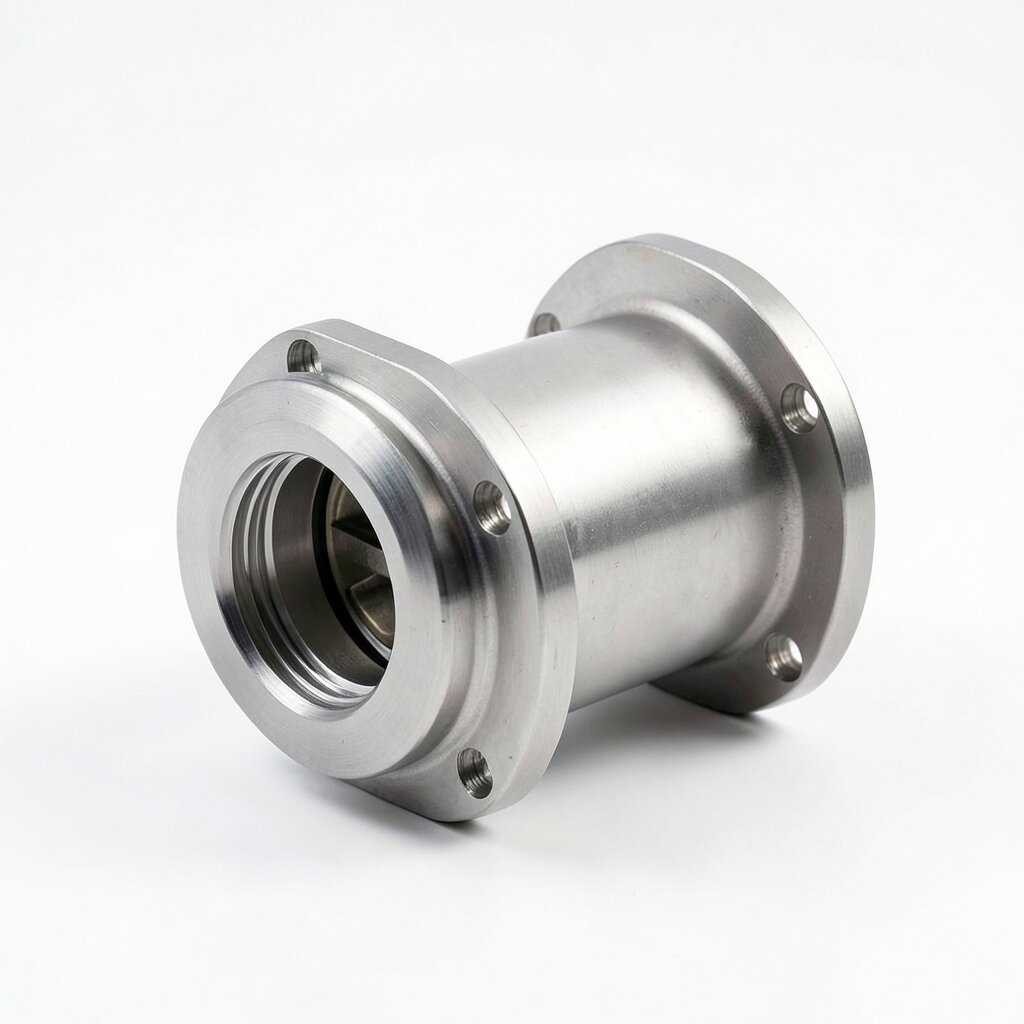
Ring-Type and Ball-Type Designs
Two closure mechanisms dominate the market, and ywmixing manufactures both. The ring (sliding-sleeve) design is the standard for general-purpose molding: a hardened ring slides axially on the screw tip, pushed forward by injection pressure to seat against a tapered seat face. It offers the fastest closure and lowest pressure drop during plasticizing, making it the choice for thin-wall and high-cycle molding. The ball-type design uses a hardened ball that seats in a conical pocket; it delivers a more positive seal at high melt pressures and tolerates slightly contaminated melts better, at the cost of a marginally higher pressure drop during plasticizing. For engineering plastics and recycled-content molding where melt cleanliness varies, the ball design is often preferred for its forgiving sealing behavior.
Materials and Hardness
Body components are machined from vacuum-degassed H13 or AISI 4140 depending on service: H13 for processing temperatures above 300°C and abrasive compounds; 4140 chrome-moly for general service. All components are hardened and tempered to 52-56 HRC (4140) or 46-50 HRC (H13, with the seat face nitrided to 1,000 HV). The sealing surfaces — ring OD, ball, and seat face — are ground and lapped to a 0.2 μm finish and matched as a set. For glass-filled and mineral-filled compounds, a TiN PVD coating (3-4 μm) on the ring and ball extends life 3-5× against abrasive wear. All ywmixing check valves are supplied as complete assemblies including the retaining ring, springs (where fitted), and seat — ready to install on the screw tip.
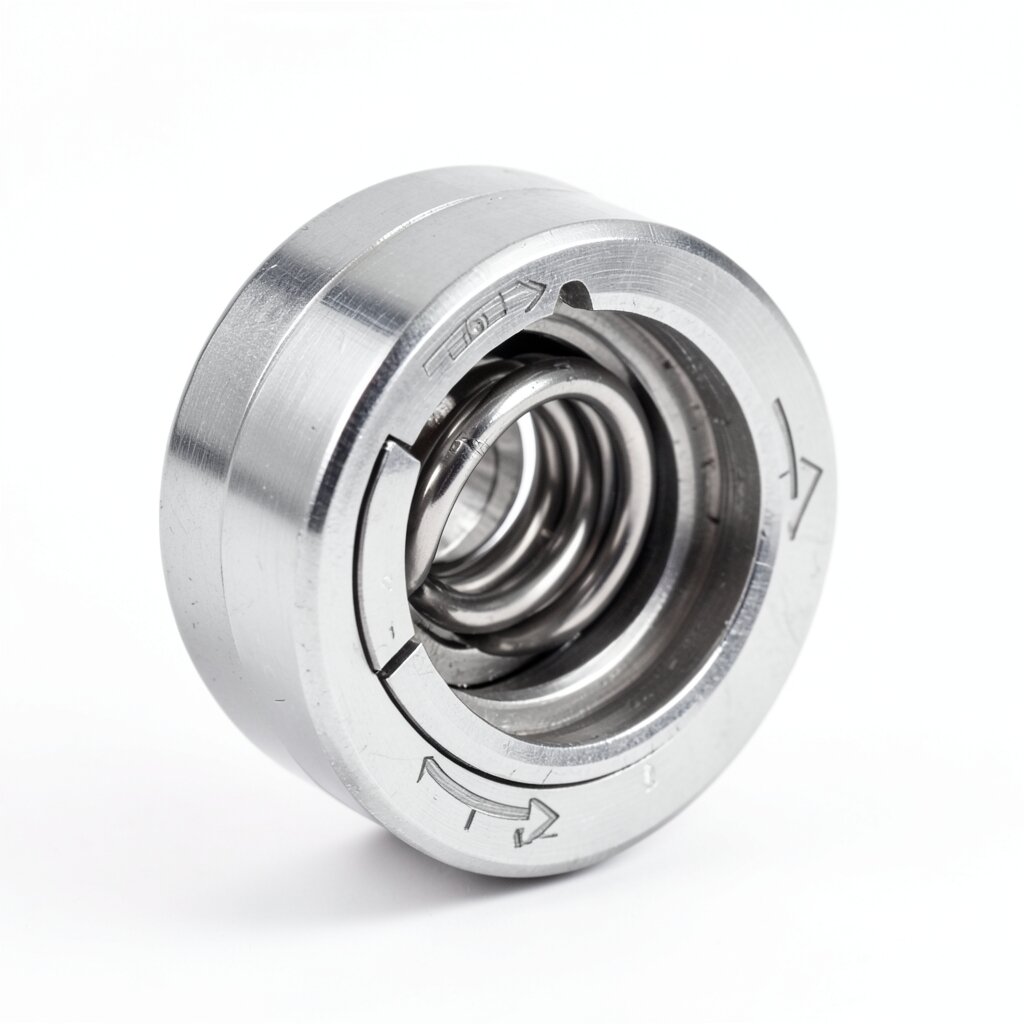
Why Shot-Weight Repeatability Matters
Every injection molding process specification, from ISO 9001 process validation to automotive PPAP, requires part weight within a defined window — typically ±0.5% for commodity molding and ±0.2% for precision molding. The check valve is the dominant contributor to weight drift: a 0.1 mm increase in seat clearance from wear adds roughly 1-3% backflow per cycle, immediately pushing parts out of specification. The ywmixing valve's lapped matched-seat construction holds leak rate below 0.3% of shot volume through one million cycles, which translates to months of stable production between overhauls. When the valve finally wears, the matched pair is replaced together — never just the ring — so the seat geometry that guarantees the leak rate is always restored.
Technical Specifications
| Parameter | Value |
|---|---|
| Screw Diameter Range | DN20 to DN80 (20-80 mm screw tip) |
| Closure Types | Ring (sliding sleeve) or Ball (conical seat) |
| Body Material | H13 (high-temp/abrasive) or AISI 4140 (general), vacuum-degassed |
| Hardness | 52-56 HRC (4140); 46-50 HRC + nitrided seat 1,000 HV (H13) |
| Seat Finish | Lapped 0.2 μm, matched pair (ring+seat or ball+seat) |
| Injection Pressure Rating | Up to 200 MPa |
| Leak Rate | ≤ 0.3% of shot volume after 1,000,000 cycles |
| Shot-Weight Repeatability | ±0.2% (with matched pair in good condition) |
| Melt Temperature Rating | Up to 400°C (H13); up to 350°C (4140) |
| Optional Coating | TiN PVD 3-4 μm (glass/mineral-filled compounds) |
| Supply Form | Complete assembly: ring/ball + seat + retainer + springs |
Installation and Maintenance
Installation is performed with the screw removed from the barrel: clean the screw-tip thread, apply high-temperature anti-seize, and torque the valve assembly to the value specified for your screw diameter (typically 150-400 N·m). Before reinstalling the screw, rotate the valve by hand to confirm free ring/ball travel. In service, watch for three wear signals: rising shot-weight variation (check valve leakage is the first suspect), visible scoring on the ring or ball OD, and increased cushion fluctuation. Replace the matched pair at the first sign of wear — operating with a worn valve accelerates seat erosion and can damage the screw tip. Most molders schedule check-valve replacement every 1-2 million cycles for unfilled compounds and every 500,000-1,000,000 cycles for glass-filled materials.
Applications
The check valve is used on virtually every reciprocating-screw injection molding machine. ywmixing supplies valves for commodity processing (PP, PE, PS, ABS, PC/ABS), engineering plastics (PA, PBT, POM, PC), and demanding compounds (30-60% glass-filled, mineral-filled, flame-retardant, and recycled-content blends). Ball-type valves are recommended for melt streams with regrind contamination; ring-type for high-cycle thin-wall molding. The valve also serves two-plate and hot-runner molds equally, and is available with anti-rotation features for machines with non-return valves in the screw-tip assembly.