
A chemical dosing loop is a chain, not a component: storage tank, metering pump, injection point, inline static mixer, analyzer sensor, controller — each link depending on the one before it. The venturi injector and the static mixer are the two links engineers most often specify in isolation. The venturi decides whether chemical actually enters the line at a controlled rate; the mixer decides how quickly that chemical becomes homogeneous enough for the sensor to read the truth. Specify either one wrong and the loop hunts.
The Dosing Loop, Component by Component
Published pH dosing system design guidance (air-emissions.com) lays out the full chain for a controlled-loop installation. The table below extends it with the failure modes we see in the field:
| Component | Job | What goes wrong when it is mis-specified |
|---|---|---|
| Storage tank + level measurement | Chemical inventory, pump protection | Pump runs dry on refill; air-lock kills prime |
| Metering pump + pulsation dampener | Feed-rate control; smooth pulsation into steady flow | Un-damped pulsation fatigues quills and skews calibration |
| Calibration column + relief valve | Verify actual dose; protect the line | Dose drifts undetected for weeks |
| Injection quill or venturi injector | Deliver chemical to the pipe centreline / draw it in by differential pressure | Wall injection: wall film, scaling, chemical never disperses |
| Inline static mixer, 4-6 elements | Homogenize within 5-10 pipe diameters | Sensor reads concentration swings that are mixing noise, not process |
| Sensor in flow cell + controller | Measure after mixing; trim the pump | Sensor upstream of the mixer — the loop chases noise forever |
What a Venturi Injector Can and Cannot Do
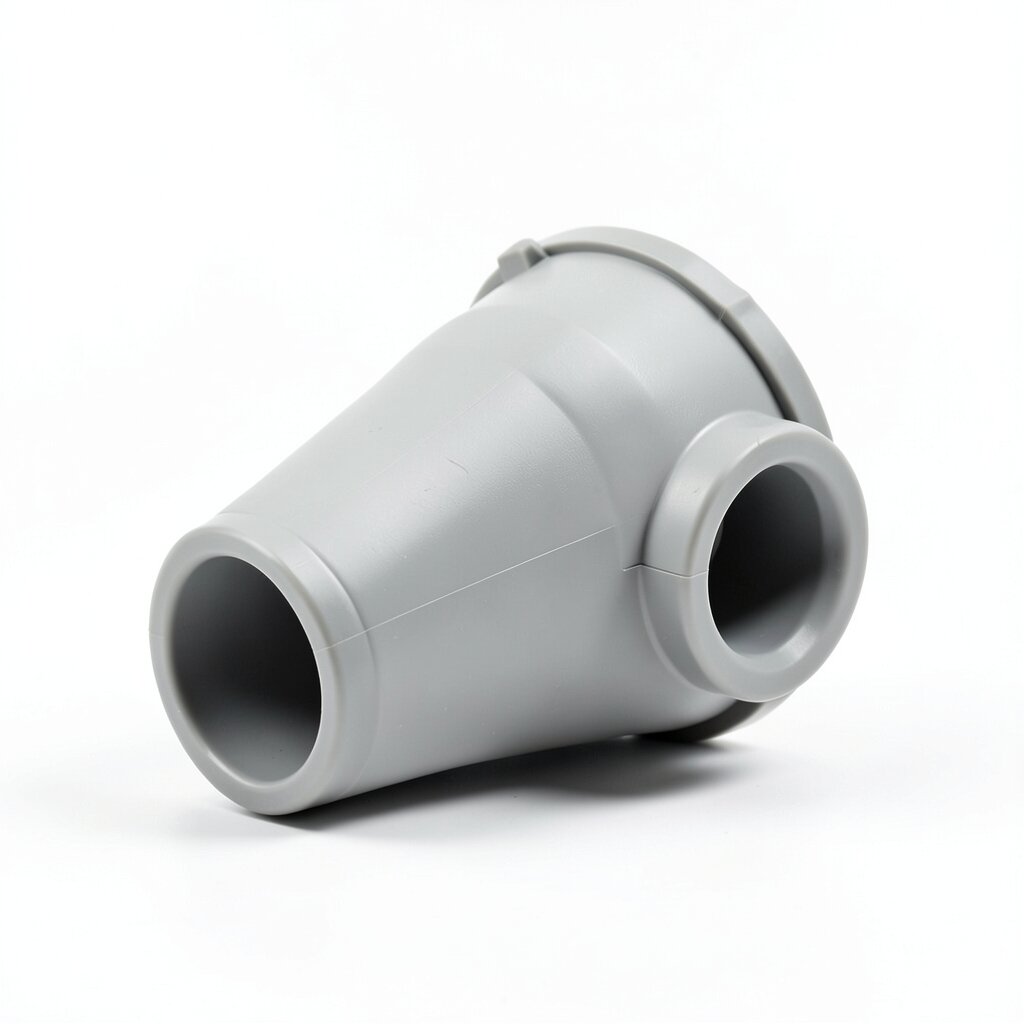
The venturi converts pressure head into velocity through a constriction; throat pressure drops below atmospheric and the dosed solution is entrained into the main stream. No pump, no power, no moving parts — which is exactly why it shows up in chlorination, irrigation, and remote water duties. But current supplier guidance is blunt about the limit: a venturi is not a universal substitute for a pump or injection quill, because its feed rate rides on the available pressure differential (ProMixUSA, venturi dosing guide).
Two findings from this round of research that should be in every dosing specification:
1. Backpressure is the deciding variable. A restrictive control valve, a long small-bore run, or a high-pressure membrane system downstream can erase the pressure margin the injector needs to draw chemical at all. Commissioning should include gauges or transmitters at inlet and outlet to prove the differential exists under real flow — and if the main line cannot provide stable hydraulics, a dedicated recirculation loop with its own pump is the honest answer (ProMixUSA).
2. The mixer is what makes the loop compact. Without a static mixer, the injection-to-sensor distance for complete mixing is 20-50 pipe diameters — which frequently does not fit in available piping. A 6-element static mixer cuts that to roughly 5-10 diameters (air-emissions.com pH dosing design guide). That single number is the difference between a dosing skid and a piping redesign.
| Injection method | Driving force | Best when | Main risk |
|---|---|---|---|
| Metering pump + centreline quill | Positive displacement — feed independent of line hydraulics | pH control, chlorination, any closed-loop trim duty | Cost; pulsation needs a dampener |
| Venturi injector + downstream mixer | The line's own differential pressure | Free stable head, no power at site, wide accuracy tolerance | Feed drifts with flow and backpressure |
| Pump + open wall tee | None — relies on pipe turbulence alone | Emergency temporary dosing only | Wall film, scaling, sensor noise — avoid in design |
Injection Point Rules That Protect the Mixer
Dosing practice notes from Reynolds & Bauhm converge on rules we apply directly: deliver reagent to the centreline, the highest-velocity region of the line, immediately upstream of the first element — never into dead legs, never just before a bend that traps reagent. A carrier-water ring around the quill dilutes concentrated acid or caustic on entry, cutting local corrosion and speeding dispersion. Fit a non-return / anti-siphon valve, and interlock against injection into a stopped line.
Downstream, geometry finishes the job: for water-like streams — coagulants, pH reagents, biocides — the stainless venturi injector plus an SV or SK mixer at 4-6 elements reaches normal CoV targets inside the 5-10 diameter window. Our water treatment guide works through coagulant and polymer duties in detail.
FAQ
Can a venturi injector replace a metering pump in a dosing loop?
No — it replaces the motive force, not the control. A venturi feed rate follows the available pressure differential, so dose drifts whenever line flow or backpressure moves. Use a metering pump with a centreline quill whenever dosing accuracy closes a control loop (pH, chlorine residual); reserve the venturi for duties where the pressure differential is free, stable, and accuracy tolerance is wide.
How far downstream can the pH or chlorine sensor sit?
Without a mixer, plan 20-50 pipe diameters between injection point and sensor for complete mixing — often more straight pipe than a plant has. A 6-element inline static mixer collapses that to roughly 5-10 diameters, which is what lets dosing skids stay compact (finding from published pH dosing system design guidance, air-emissions.com).
Where exactly should the chemical enter the pipe?
Through a quill that reaches the pipe centreline — the highest-velocity region — immediately upstream of the first mixing element. Never inject at the wall (reagent runs down as a film and scales), never into a dead leg, and never just before a bend that traps reagent (Reynolds & Bauhm dosing practice).
Which static mixer geometry suits water-like dosing streams?
Low-viscosity aqueous streams are SV/SK territory: 4-6 elements reach typical CoV targets in the turbulent regime, at 1.5-3 velocity heads per element for the SK helix and 2-5 for the SX cross-bar. Verify the pressure drop budget at peak flow, where turbulent dP scales with velocity squared.
Sources: ProMixUSA, "Venturi Injectors for Precise Chemical Dosing" (backpressure as deciding variable; system-not-component design); air-emissions.com, "pH Dosing System: Design, Chemical Selection, Automation" (20-50D vs 5-10D injection-to-sensor distance; component chain); Reynolds & Bauhm dosing, mixing & injection practice notes (quill placement, carrier-water ring, anti-siphon); ywmixing SX/SK specification pages (velocity-head pressure-drop ratings).